A beginner’s guide to wingsurfing & wingfoiling
Words: Tez Plavenieks
Photos: Oli Lane-Pearce, Mike Pringuer & Tez Plavenieks
Wingsurfing and foiling continue to grab headlines and attention. Being the new kid on the watersports block, but one with unique dynamism and visuals makes this so. Initially, SUPers may struggle to spot the synergy between holding a wing and swinging a paddle. Yet there’s plenty. So with that in mind, here’s the SUPM beginner guide to wingsurfing and foiling.
Why wing?
Any recreational paddler will probably tell you they have zero interest in inflating a wing and using wind for propulsion. Seasoned paddle boarders, however, used to milking and using the elements to their advantage, will perhaps recite a different story.
Wind plays a massive part in SUP. Understand and use it correctly to enjoy blowy sessions when other paddlers might struggle. Get it wrong, and the breeze can cause all sorts of issues. Not least getting back to shore if the direction’s offshore.
Flip this to riders who have downwind SUP experience, SUP surfing know-how and utilising Mother Nature to the best effect and the draw to winging is tangible. A wing can be an additional tool to enjoy even more time afloat, not just the extension of a paddle. Suppose Mother Nature’s not playing SUP ball and blowing dogs off chains. In that case, a wing (easily inflated and set up, plus intuitive to use) will get riders amongst it.
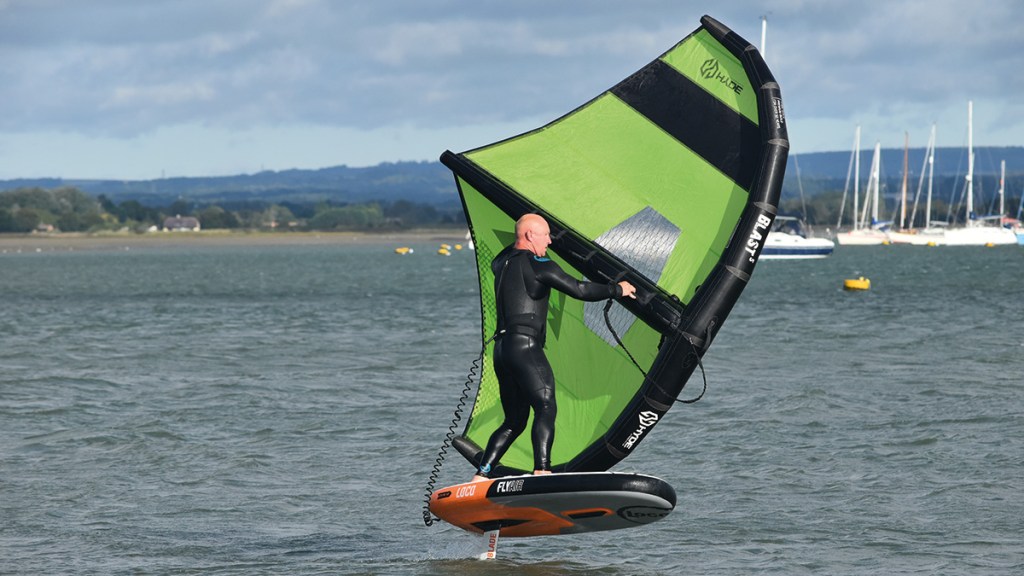
Wingsurfing can be done aboard any SUP with the addition of a central fin or drift stopper. This stops downwind glide and keeps the board on a straight and narrow. The additional gear isn’t as big an outlay with wingsurfing. One wing, a drift stopper (or similar), and you’re good on your usual sled.
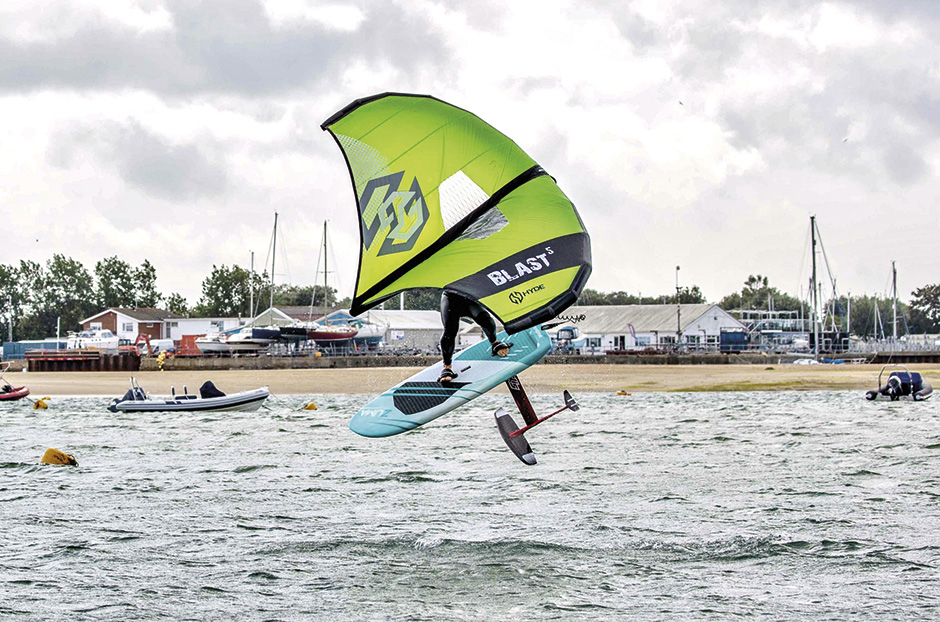
Adding a foil is the next step. A foil and foil board are arguably the most efficient ways to use a wing.
Foil boards can be a hybrid mix of paddling and foil platform, which further cuts costs and aids versatility (more on boards in a mo). And with already nailed down wing handling (born of wingsurfing), you’re already steps ahead.



Wings
Wingsurfing is the first port of call to learn how to handle a wing. Taking things one step at a time is the best approach. With either an inflatable or hard SUP, you’re free to begin your winging journey. Starting in mellow breeze strengths, it’s a case of ramping things up incrementally. And all within a few short sessions. It doesn’t take that long for experienced paddlers to get to grips with a wing. Wings aren’t as critical to sheeting angles as windsurf sails. And they’re much lighter and freer to use without not being attached to your board.
Wings come in various shapes and sizes and with different features. It was once thought a 4m wing is all you need. Yet this has proved to be incorrect. Wings, being inflatable ‘engines’, are low power. Therefore bigger riders will need around 6m to deliver the right amount of oomph. Lighter riders will get away with smaller sizes.
There’s a thought that bigger wings of 6m will see the tips caught on the water. This may happen. But it’s super easy to correct the wing’s angle, which is good to learn. Plus, when you get to the point of wanting to foil, a bigger wing will stand you in good stead for those first flights.
It’s worth considering your overall height when choosing a wing – and then looking at the design more closely. For instance, a more compact wing shape with pulled-in tips will benefit if you’re shorter in stature, and this should mean less wing tip clipping.
There are wings with material handles, wings with hard handles and wings with booms. It’s worth demoing (if you can) these different styles to get an idea of what you like and don’t.
As a general rule of thumb, wing sizes and weight could look something like this (note: this is just a rule of thumb):
Kids to young teen riders – 1.5m
Teens to 60kg riders – 4m
60 to 80kg riders – 5m
80kg to 100kg+ – 6m
Wing skating
Wing skating is another way to dial in your wing technique and enjoy land-based fun. This mightn’t be for everyone, but I’m a big advocate. Rolling round on a longboard skateboard or land paddle board with a wing in hand is good to practise and great fun. It’s also a way to fill the void when conditions may be too cold (particularly in winter) or just not right. Wear a helmet and pads, and you should be fine.


Foil boards
As mentioned, wingsurfing boards can be your standard SUP with a drift stopper attached. Or you may own one with a central fin. There are some multi-discipline SUPs on the market created with winging and paddling in mind. Old-school windsurfing longboards with daggerboards can also work well.
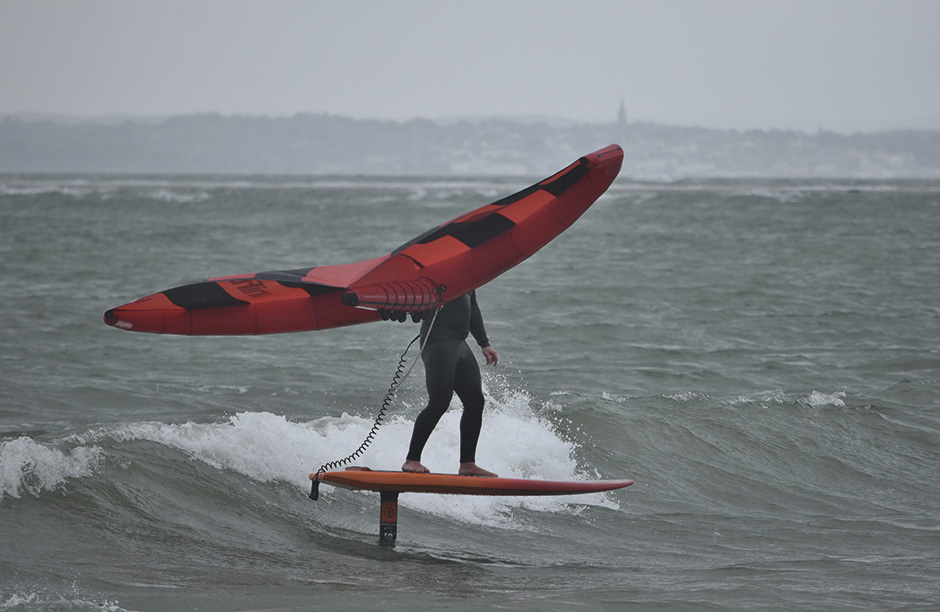
Foil boards are an evolution of previously popular compact, parallel rail surf SUP shapes. They have a few modifications that make them applicable to flying above the water.
Compact in length, you’re looking at between 6’ and 7’ for your first wing foiling sled. Higher volume and more width are good, to begin with too. This could be something like 6’2 x 140L x 29”. Those dimensions shouldn’t put any experienced paddler off. I say it often in my reviews, but dimensions aren’t the be-all and end-all. Foil boards are designed to be stable yet nimble. They’ll take a bit of getting used to initially, but a board like the one quoted above will feel big in a short amount of time.
It’s possible to get hold of hybrid foil boards that accommodate more than one foiling discipline. You could also plump for something that can be SUP foiled (sans wing). Some hybrid shapes can also be ridden in standard fin mode, ala SUP surfing, giving even more bang for your buck.
A big tip with boards is don’t go too small too soon. There’s a lot of ‘white noise surrounding wing foil boards and going low volume, and you can do this too quickly. A bigger platform is your friend at first, and it’ll help you learn all those foiling subtleties and have you up and flying quicker than something requiring a more dialled-in technique.
Also, inflatable foil boards are an option. They’re not quite as good as hard, but not far off. And they’ll suit any rider wanting an even easier time with storage and transport. Inflatable foil boards are really good for anyone travelling overseas to wing.
Foils
The hydrofoil part of your wing foiling set-up is THE most important bit. Choosing the wrong type will see your progression stall. Foils come in two styles these days (mostly) – high and low aspect foils. Avoid high aspect, to begin with, even though they’re the on-trend foil. And just as with board and wings, go bigger with your foil.
A front foil wing with around 2000cm2 will get most 80kg-100kg flying in 18-20 knots with a 5m/6m wing. With practice, perseverance and time on the water. Bigger is best, to begin with – be under no illusion. As I always say, if you want to learn how to foil but aren’t foiling because your kit isn’t suitable, then you’re not going to learn how to foil.
As well as front foil wings, you can choose foil mast length. Many choose to start on something shorter, around 70cm. This is fine but won’t cut it as you get better. As soon as you’re sustaining flight, you’ll want a mast closer to 85cm. With a longer mast, you have more leeway and won’t run the risk of the front foil wing breaching as often. Breaching (or over foiling) is where the front foil wing breaks the water’s surface, becomes aerated, and the power switches off. Instantly. Which results in a crash. Everyone goes through this. It’s par for the course while learning. A longer foil mast reduces the chances of this happening. Then, your clearance is better as you start to ride in windier conditions with choppier water states. And when foil gybing, a longer foil mast helps here.
Fuselages should be a tad longer when starting your wing foil journey. A longer fuse will give better pitch control (nose to tail) and feel more stable. As you improve, you may go for shorter to loosen up the ride.
Tail wings, as with front foil wings, should be bigger to start, and this will give more stability and help when levering the foil up into flight mode. As with all component parts, you can start to experiment and change bits once you’ve dialled in your skills.
Wind and conditions
When starting your wing foiling journey, conditions play as much a part as the equipment you’ll use. The general rule of thumb is more wind and flatter water, the better. Choppy, wavier locations won’t do you any favours initially. Everyone loves the idea of winging in waves, but it’s tricky to start. Lakes, estuaries or sheltered beaches with the limited chop, tide and current will help your progression massively.
As well as wind, again, riders love the idea of foiling in the lightest air possible. But sub-18 knot foiling is more technical than heading out in a blow. So don’t be put off. One beauty of wings is their depower. If it gets too much, you simply sheet out and calm returns. Unlike windsurf sails, wings depower so well that there’s a minimal time when you feel overpowered. And should you still not be inspired, jump back on your SUP for some high wind wingsurfing fun. The versatility of wings knows no bounds!
Safety
There’s no question you need to be mindful when learning how to wing foil, and a helmet and impact vest will see your confidence boost. As with SUP, it may also be wise to carry a means of communication – such as a mobile phone – tucked away in a waterproof pouch and stored on your person.
Leashes keep wing riders in contact with their boards and power source. A coiled waist leash can be the best choice for boards. I find these keep from getting snagged up on the foil and feel much better raised off the board’s deck.
In terms of which wing leash you go for is a personal preference. Some riders prefer coiled, while others prefer straight. Some also prefer attaching the wing leash to their waist belt, freeing up hands in the process. Whatever your choice of leashes, they should be fit for purpose and able to put up with the stresses and strains of wingfoiling.
Learning to wingfoil requires space. So a location without other water users nearby is ideal. Before going it alone, the best course of action is to get some lessons. There are plenty of providers who deliver coaching courses. It’s an excellent way to fast-track the learning process and be on your way to wingfoiling nirvana.
Summing up
When asked how easy wingfoiling is, I tell the person in question, easier than you think. If you have prior SUP, windsurf, kitesurf, sailing or a combination of experience, it’s not that difficult. As long as you abide by these three simple rules:
- The right equipment – go big, as I’ve already mentioned.
- The right place – sheltered, flat water will help no end.
- The right time – go out when it’s windy. Not when it’s light.
Like with everything, you’ll still need to put in the time and effort. But as with many existing SUP/wingfoilers winging could be the perfect complimentary sport for when it’s too windy to SUP.

 SUP Mag UK
Leave a comment