Improving at SUP – why bother?

Words: Andy Burrows
Photos: Andy Burrows & Peter Tranter
I am a fanatical paddler. I love all things to do with SUP. I go out paddling most days and constantly look to improve my stroke and capability. I see SUP as a continuous challenge of mind and body.
My ‘improvement’ is now very slow, glacial even. This is because I’ve been paddling enthusiastically for over five years now. I have gone through various stages (and rates) of development. In some ways, it is surprising that I maintain such a vivid interest in the activity. But SUP resonates with me like no other physical activity I have ever done. It is good for my body, mind and my soul. Without it, there would be a massive gap in my life. It’s no longer an obsession but an intrinsic part of my being.
When I first started, I was keen to introduce others to the fantastic sensations I encountered. On a bright sunny day, a friend joined me on the water to understand why I had become so taken away by this new activity.
After half an hour, she stood confidently and paddled around with reasonable control. This was good progress, and I thought I had attracted another convert. I asked her if she would do it again, and she said, “No, that’s it ticked off the list. There’s not enough to it to do it again.”
I was taken aback. Not enough to it? OK, she could stand up on flat water and scoot around clumsily. But had she mastered it? She didn’t even realise how ‘raw’ she was.
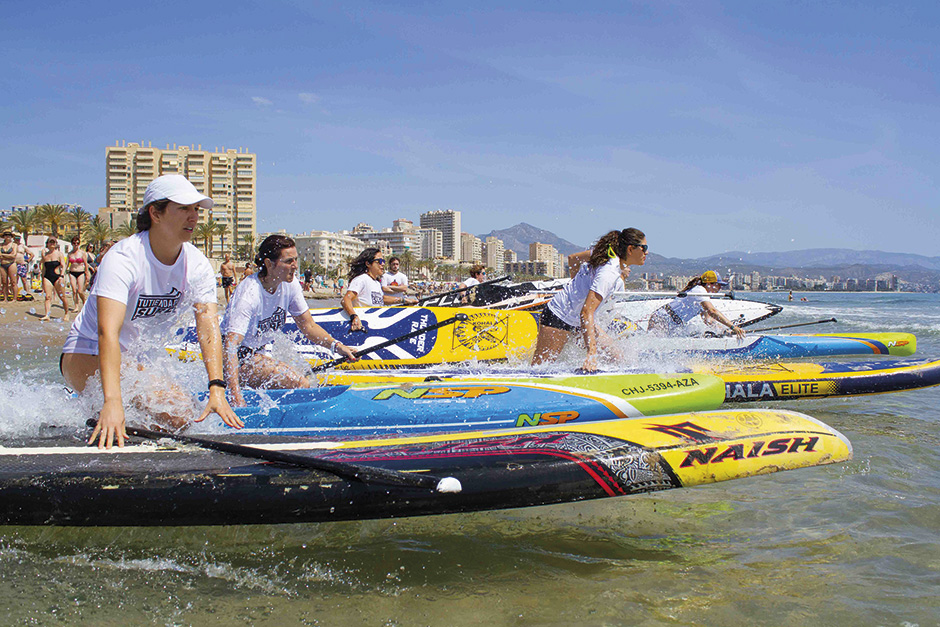
Five years later, I was training in a brutal 25-knot onshore wind with a one-metre swell in the Mediterranean. I was doing upwind and downwind sets on my new downwind board, trying to push myself to the limit. I was getting a real buzz out of the whole thing—the struggle into the wind, the enjoyment of catching the bumps, and blasting back to shore.
I spotted a couple blowing up their inflatables on the beach. My mind was slightly confused. I was not expecting to see anyone else on such a day, and 10-foot inflatables seemed beyond ambitious for the conditions.
Fifteen minutes later, as I joined the bumps on my way back, I saw the couple exiting the water. They had kneeled a few metres into the water and then kneeled their way back.
I felt for them, so I made my way to shore to chat. After exchanging pleasantries, I mentioned a sheltered area nearby where they could practice their technique.
“Oh, I think we are well beyond that stage,” came the answer. I nodded and said my goodbyes. “Well beyond that stage?” I said to myself. They had not even entered rudimentary competence yet thought they were approaching expert status.


How perception can influence experience
These stories are examples of how perception can influence experience. In the first story, my friend couldn’t see the complexity of paddling, and in the second, the couple thought they were better than they were and had a less-than-ideal experience because of it.
When I first started SUP, I thought I was much better than I actually was. Only when I started paddling with other, more experienced paddlers did I realise how much I had to learn. My mindset of false competence was dangerous because I was putting myself in situations I could not handle. It also stopped me from looking to improve because I didn’t realise how much potential was left in me.
Improvement is now the oxygen that energises my paddling. It excites me, and it challenges me.
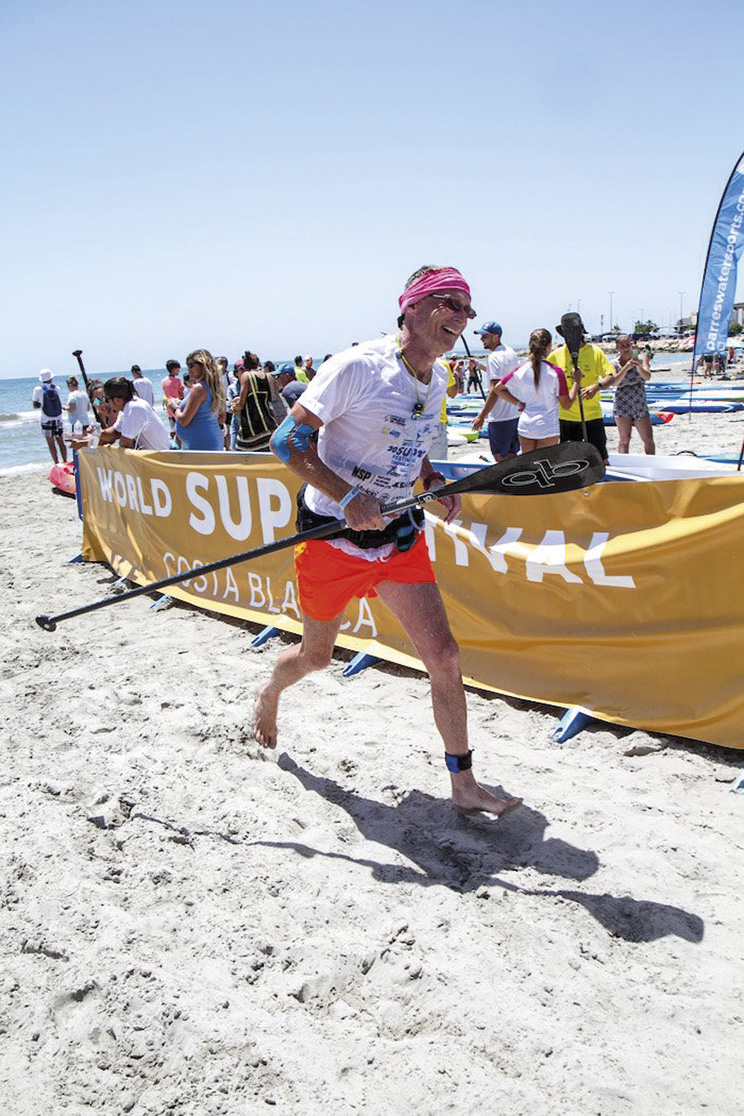
This focus on improvement, ‘wanting to get better,’ fuels many of the people I paddle with. Underneath this desire are different motivators. For some, they like to race. Obviously, if you like to race, you are looking to produce better results in competition. Racing is a powerful motivator for paddling improvement. It can also be a ‘demotivator’ if the paddler doesn’t attain the results they either expect or desire. There is a mix of internal and external motivation factors in racing. If one treats a race as a personal challenge (EG., me vs. the sea), it is primarily internal motivation. If one treats it is a race where a finishing position is the primary objective, then racing becomes an external motivation.
Internal motivation is more sustainable and enjoyable than external
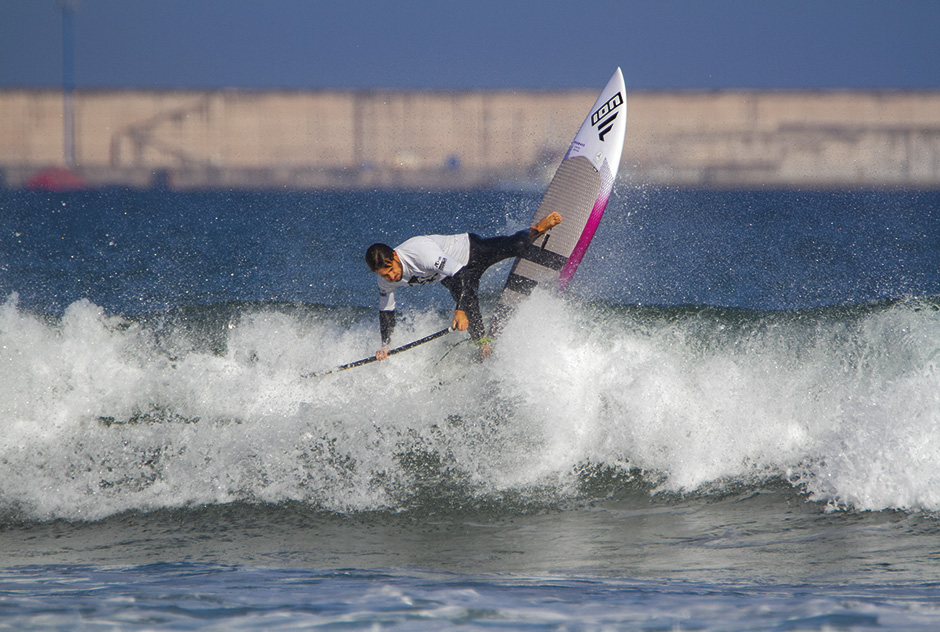
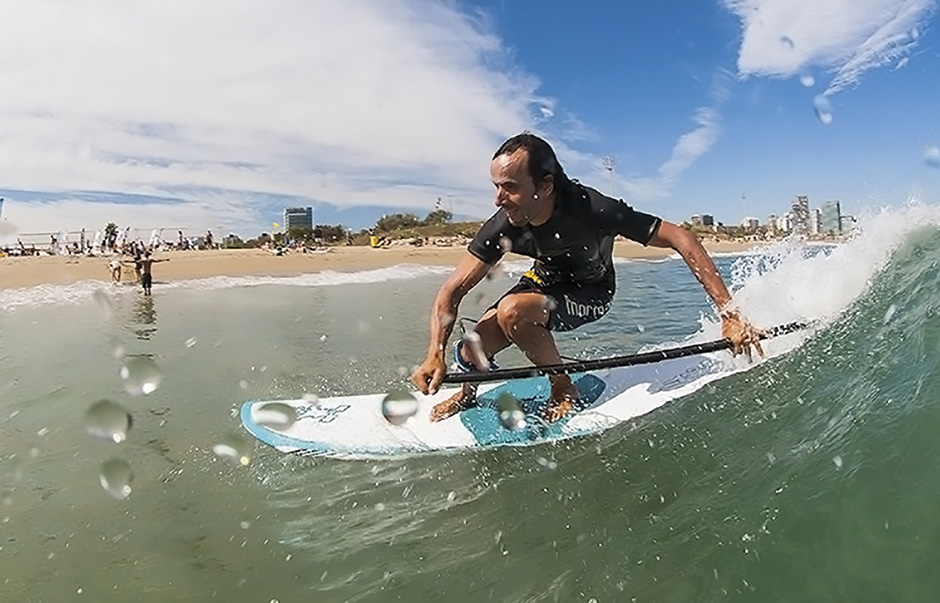
For some people, improvement is about being able to do more on the water. Downwinding and SUP surfing are examples of activities in which you need to develop a high level of skill to enjoy participation. Once you have it, you are rewarded with rich feelings and a desire to push the envelope further. Usually, these challenges are not based on comparative performance against other paddlers but on personal performance against the prevailing conditions. This becomes what might be called the search for (internally motivated) ‘mastery’.
Some people might desire the ability to participate more fully with others. Any SUP group will have people of mixed ability. The level of competence or capacity of individuals may limit the range or ambition of the whole group. Being part of a SUP group enjoying a shared experience is highly ‘socially enriching’.
Improvement fuels the feeling of making progress. The desire to progress is intrinsic in many people. With SUP, there are many opportunities to ‘progress’, but the paddler must be aware of them. The progression pathway is there: range, speed, skills, handling different conditions, riding different boards, or confidence.


Improvement: where to start
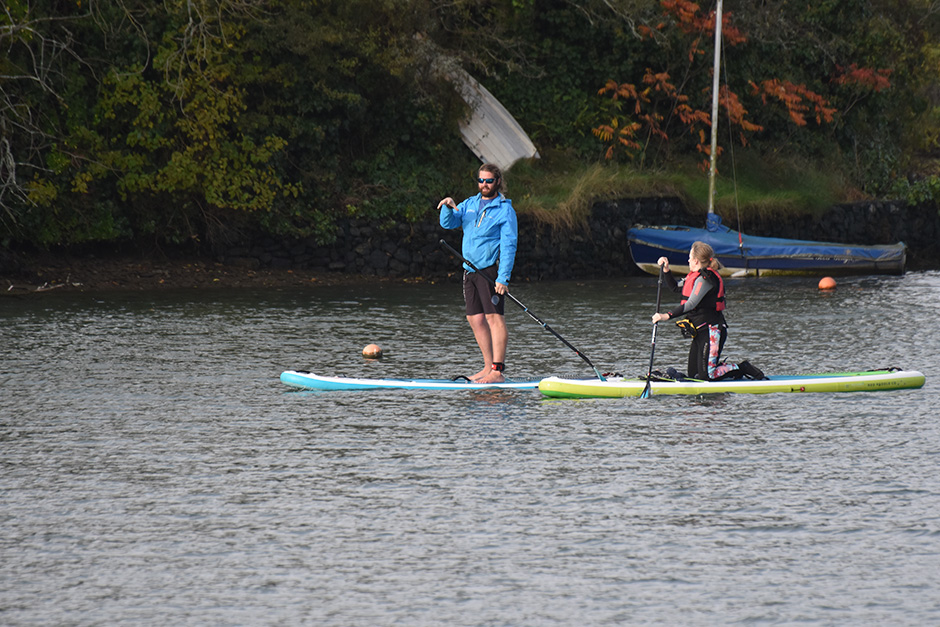
The starting point is about being clear about your current level of ability. One of the best ways to instigate improvement is to find a coach or a paddle buddy. Paddling with others is an excellent vehicle for improvement. Finding someone who is ‘better’ than you provides a yardstick to measure against.
Setting a goal creates desire. This could be in the form of an event, a race or an achievement. When I started paddling, I found covering a distance of a kilometre exhausting. I then discovered that people were paddling the Great Glen (92 km) in one go. Such was my limited experience; I could not believe it was possible, but it helped reset my personal goals to more ambitious and demanding ones. So 5 km became a target, then 10 km. Then speed became important, and now, handling more extreme conditions is my main focus.
Investing in kit is motivating. You look to improve because you don’t want your money wasted. Buying a new paddle or board will motivate someone to develop their skills further. A good kit undoubtedly helps a paddler improve. Inflatables are great for beginners. Some inflatables can be used in more advanced situations. But (outside of whitewater) using hard boards is when most paddlers start to understand the water. Hard boards can be shaped to a much higher degree than any inflatable, offering greater adaptability for use. A lightweight carbon paddle offers a step change in experience compared to a heavier, more awkward, aluminium-shafted version.
What could you get out of it?
I see people on paddleboards coming out on the Loch when the sun comes out. This is great. They scoot about for an hour or so and return. Their experience has undoubtedly been enjoyable. But in my mind, this is not SUP, as I understand it. Yes, I am in danger of sounding ‘elitist’, and I don’t want to. To me, SUP requires awareness and inquiry. It requires the paddler to be curious about what they are doing and how they are doing it. It requires a concern for technique, observation of paddling conditions and how the board behaves, how the body is feeling and how all these aspects could be improved.
A whole new world will open up if you can get an improvement mindset
- You can go to places you’ve never been to before.
- You can meet and paddle with amazing people.
- You can challenge yourself in ways you never thought possible.
- You can participate in amazing events in amazing places.
- You can feel stronger and fitter.
- You can feel like you have gained a purpose.
OK, I know this sounds like heavy stuff, but I maintain SUP is far more than it appears to most novices. It’s a fantastic activity that can resonate with many aspects of the human experience. To locate its hidden secrets, you need to adopt an improvement mindset.
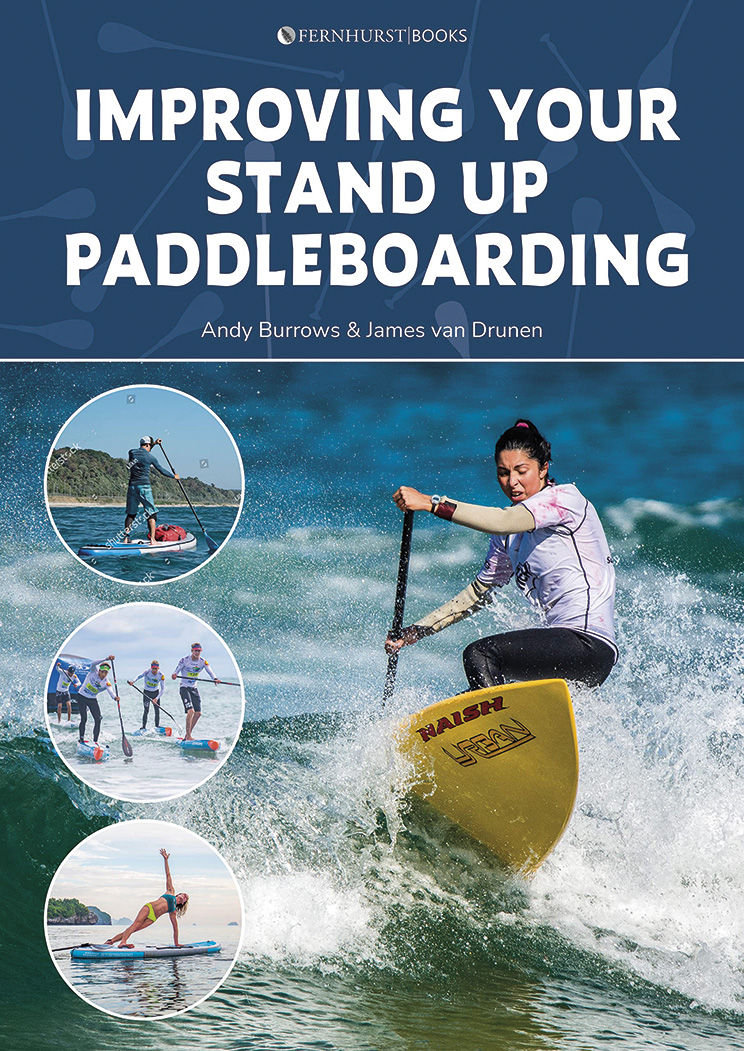
Andy Burrows is the author of the book ‘Improving your Stand Up Paddling.’ He spends most of his time living in Spain, where he paddles with some of the best in the world.
https://fernhurstbooks.com/books/permalink/172/improving_your_stand_up_paddleboarding

 SUP Mag UK
Leave a comment