Should we race in big ocean conditions?
Words: Sarah Thornely (www.supjunkie.co.uk)
Photos: Antony Thornely for SUPjunkie
So, what happens when you turn up to an event knowing ahead of time that the conditions are going to be a little challenging and hey presto, they really are!
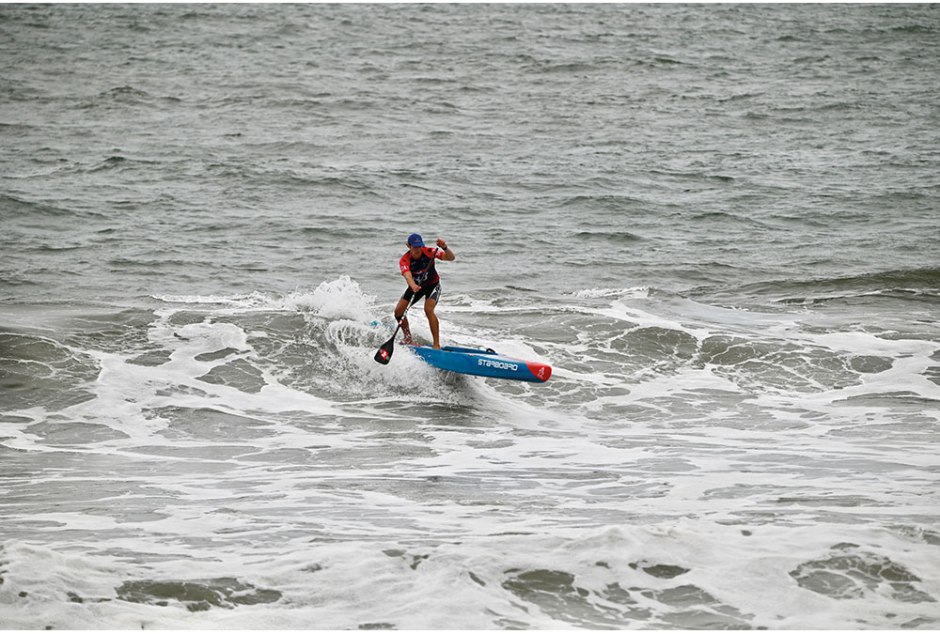
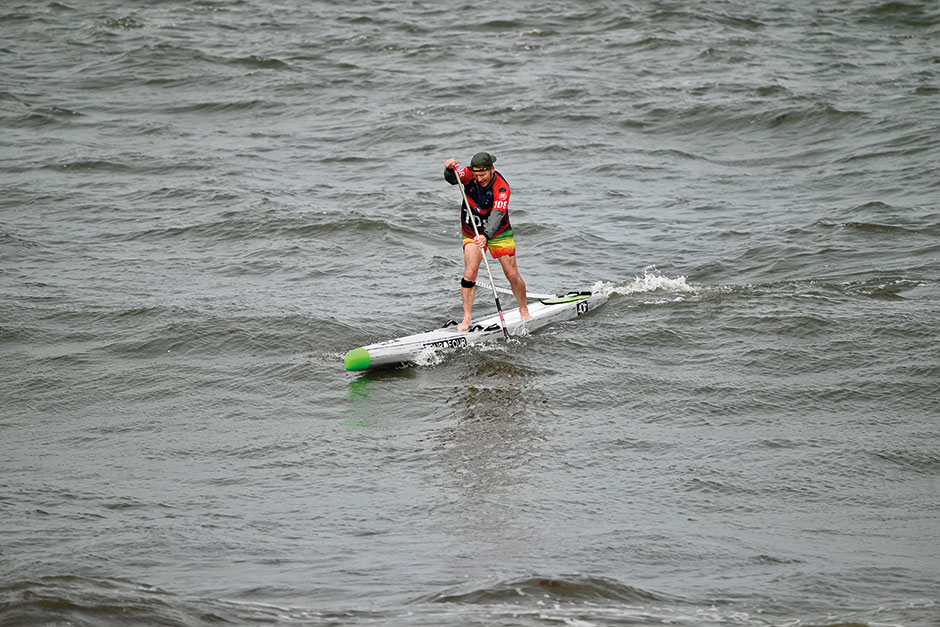
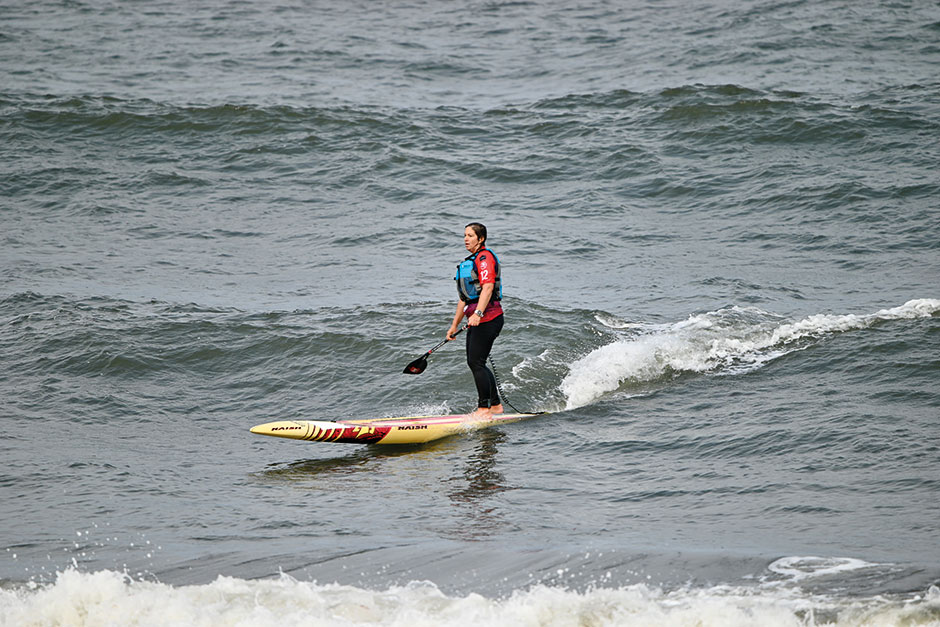
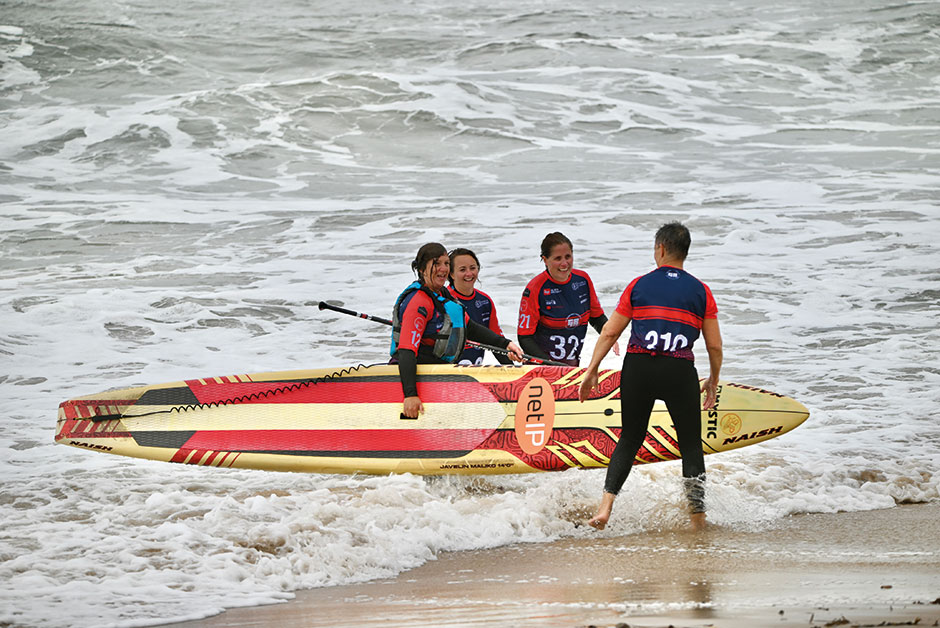
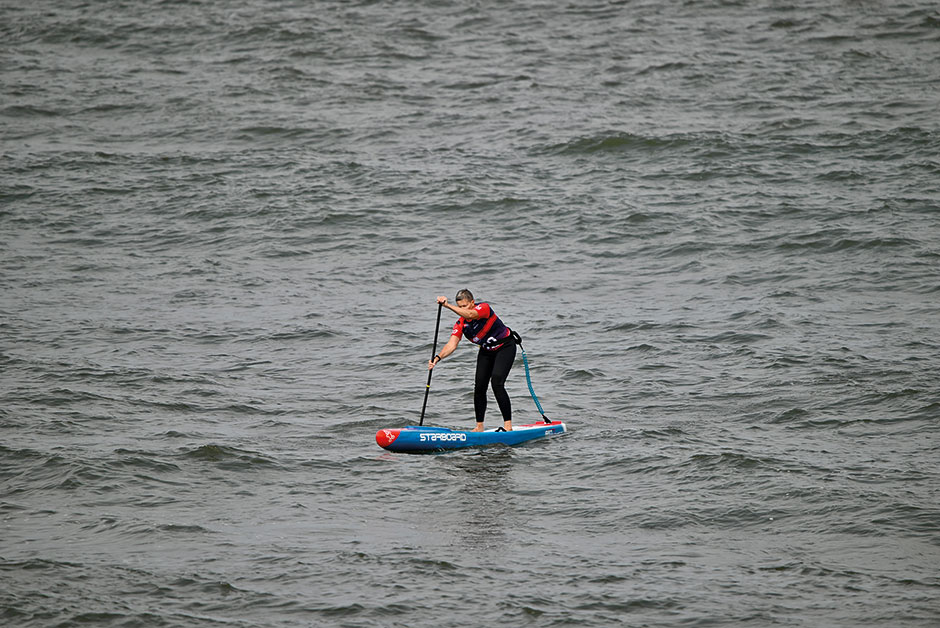
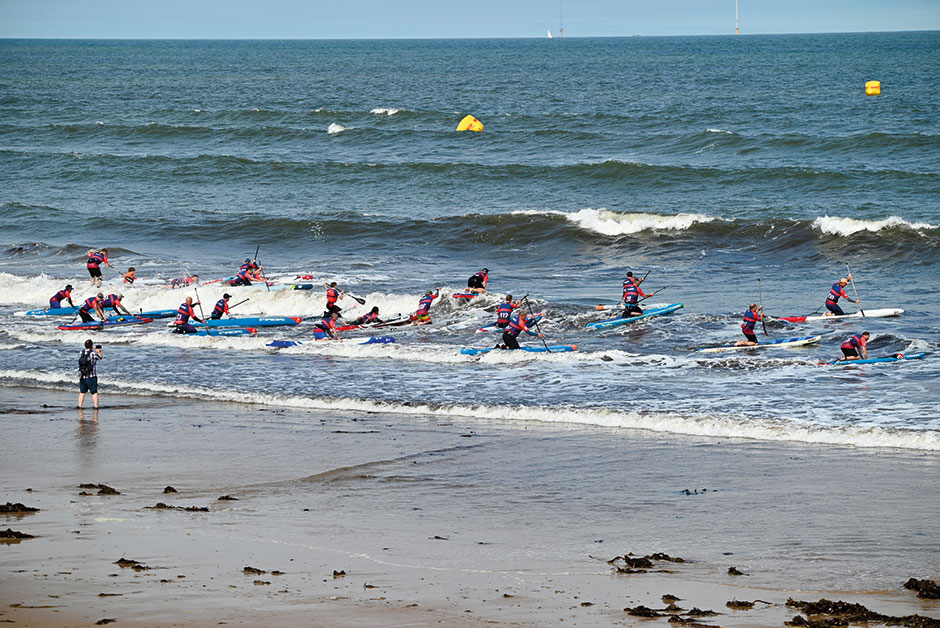
This happened recently at the Big Dippa race in Northumberland, and the conditions were probably one of the most difficult I have seen in all my years of racing, including two tough years at BaySUP on the south coast. So how do race directors make their decisions, and what makes paddlers put themselves into what others might perceive as ‘danger’?
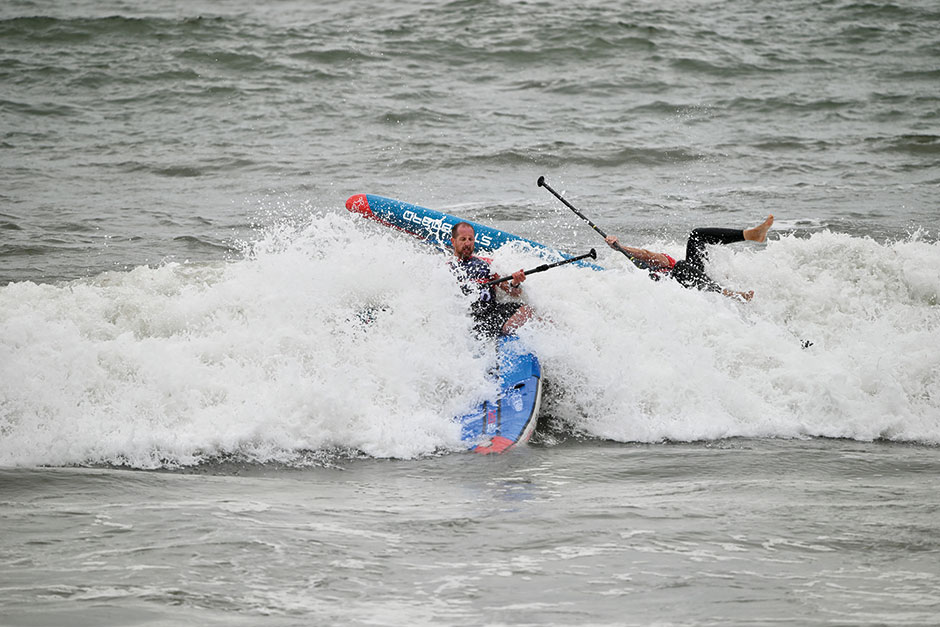
I was one of those paddlers who, after years of not racing, decided to get stuck in – I felt that if the race director had decided it was okay, then I was prepared to go out. I struggled to stand, although I did stand, I got battered by the shore dump and was eventually ‘encouraged’ to leave the watery playing field and call it a day. But do you know, I was absolutely buzzing after.
I was also frustrated that I had let someone else decide my fate on that day, and I would probably do it all again. My pride was intact, and the only thing I lost was my watch, which was dragged off my wrist whilst the waves were hurling about me.
Several comments on social media came up suggesting the race was ‘dangerous’ and should not have been run, so here are some very valid thoughts from race directors and paddlers alike from a good cross-section.
Anna Little – Race Director for the Big Dippa:
“This was a challenging day for a lot of paddlers. This is especially true for those who do not have much ocean experience. We decided to run the races with shortened courses, a reduced leisure fleet, and cancelled the juniors’ racing. The conditions were harsh, but it was a true ocean race. Some paddlers chose not to go out, but those who did came away with more experience and hopefully a drive to keep improving their ocean paddling skills.”
Glen Sloss:
“As forecast, the waves were up! An exciting scenario: getting the opportunity to race in big waves. For some, it might have been their first time facing such conditions; some people opted not to paddle, some people chose to give it a bash and see how they went, and if it was too much for them, they came back in, and for others like myself kept pushing and pushing until we got through the break. From my Surf Lifesaving experience, I know I can happily handle myself in water like that if I were to lose my board. After a 4-minute tussle with a huge batch of seaweed wrapped around my leash, I knew my race as such was over in the distance, but I persevered and completed it.
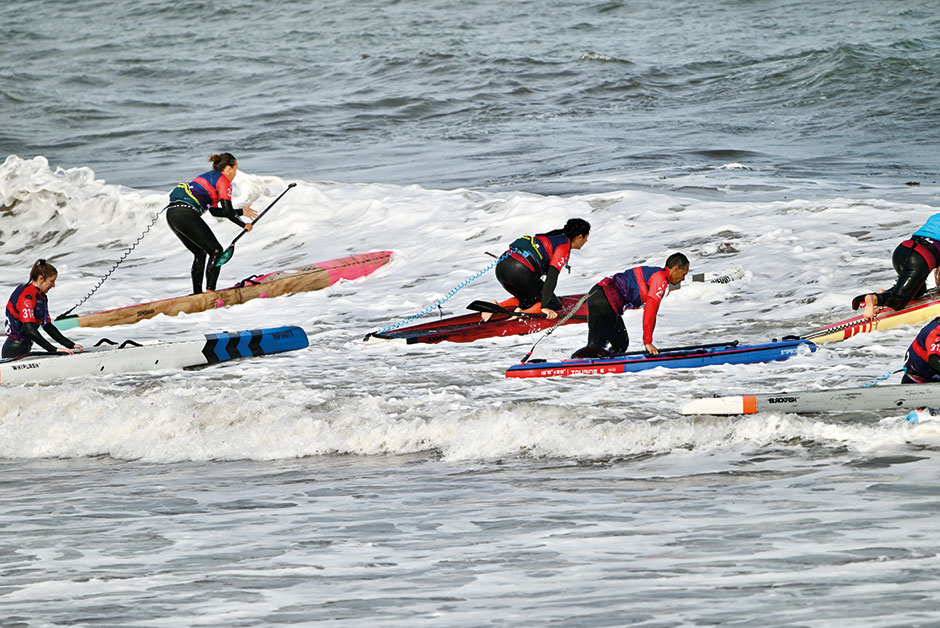
By the time the tech race came, the waves had more of a shore dump. This made it tricky for the less experienced paddlers, but the likes of Annie and Hector showed it’s possible to navigate the waves just fine. For me, part of the challenge of this sport is understanding the water and how to handle the board. The more chances people get to experience a race like that, the better we all become. Where I am from, we don’t get waves that size or with that much energy and movement, so I really enjoyed the challenge and experience. I knew what to do, in theory, but putting it into practice was a different story!
Anna and co. run a great and safe event; the safety cover was always visible and nearby, and with plenty of eyes on the water, everyone’s safety was ensured. Overall, I think it was a successful race day; there were a few bumps and bruises and damaged boards, but I think it’s all part of the sport we choose and love to do, especially when paddling on the sea. Mother Nature is in charge.”
Andy Burrows:
“It was fantastic to watch Hector, Annie and James paddle in those conditions. They displayed incredible balance and skill. Reflections for me were not to paddle directly into seaweed – it isn’t easy to pick out of your leash or board when you get dumped in the break; take two boards to such races, one of them wide and stable; make sure your leash functions before you go out – because paddling with it dragging behind you in such a swell is soul destroying.
“I didn’t enjoy the race, but I enjoyed the day. It was great catching up with people and hearing each other’s trials and tribulations. There’s a great spirit in those who come to these events, which overrides the actual race. It was a tough event to run. Great credit to the race director.”
PAUL SIMMONS:
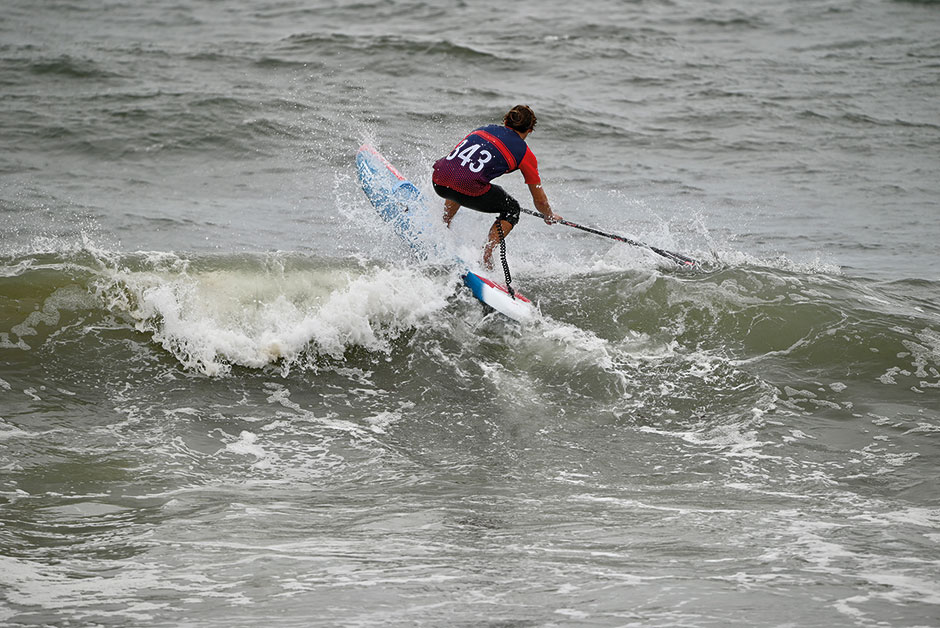
“The conditions thrown up by the North Sea for this event were exactly what I enjoy most, with breaking waves, chop and swell making for a true test of a paddler’s sea skills.
“Watching the top athletes (male and female) throwing their 14-foot boards around in the surf and negotiating the chest-high whitewater was impressive.
“It highlighted how those who are prepared to train and challenge themselves in ocean conditions build confidence in the surf and sharpen skills like board handling, timing, and using the paddle, to the point where racers perceive wavy conditions as fun rather than scary!
“I would love to see more SUP racing in waves, and with racers putting in more time training in the surf. Spectacular SUP racing on the sea could become commonplace, making for more exciting racing, more appealing to sponsors and spectators alike, plus, more importantly, the most fun of all race disciplines to participate in. BRING IT ON!”
EMILIA SOULSBY:
“I was nervous about entering the Big Dippa race in Whitley Bay, so I waited until the last minute to sign up, but I’m thrilled I took the plunge! The event was an incredible experience, and I’m so glad I pushed past my doubts.
“As someone who’s used to paddling on rivers, the sea conditions were a challenge. The waves were tough, and I was disappointed to miss the second lap of the tech race. However, the organisers made the right call, prioritising safety.
“Despite the challenges, I gained valuable experience and knowledge about ocean paddling. The following day, I attended Susanne Lier’s race clinic, which was an excellent opportunity to learn from her experiences and expertise as a four-time world champion, particularly in ocean paddling.
“The event was also an excellent opportunity to meet new people from across the country who share a passion for paddleboarding. Watching Annie and Hector’s masterclass was inspiring, with their skills and talent on full display, which was great for all ages, especially the children!
“I’m grateful to everyone who contributed to making this event a success. It takes a lot of planning and preparation to host one, and I appreciate the effort that went into creating a fantastic day despite the challenging conditions. I’m already looking forward to next year’s event and working on improving my technique and training plan.”
ANNABEL PAGE:
“I train on the North Sea, so I’m familiar with its wild conditions. Even so, the nature of the waves and the high-tide shore dump were factors I had to consider during the race. That said, I was happy to take the win and successfully surf a wave to the finish at the end of the technical race.”
ALICE STROYAN:
“Despite the conditions being a little ‘worrying’ to look at, I am someone who loves the sea, a challenge and any sort of risk factor, so I was ready to give the challenging conditions a go. I remember laughing with other paddlers on the way round about how I’d barely been able to stand up and never raced sitting down before, and that I couldn’t wait to ride the waves back in! I had a great time, and the organisers of the event were fabulous. I really appreciate all they do for the sport and the inclusion of everyone!”
SARAH PERKINS:
“On any given day, I might check Surfline three or four times in case there’s surf to be had! In the run-up to the Whitley Bay race, I was getting excited. Swell was forecast. Conditions came in as expected, maybe a bit windier, but it made for a great race that was a super challenge. Everyone who took part was pushed and came out feeling they’d achieved something. Annie and Hector, taking the wins, took it in their stride, and I’ve certainly seen them being chucked out in much tougher conditions in international races. Races like this can only help us up our skill level. We’re an island nation, and mastering choppy conditions should be our secret weapon for international races.”
We also caught up with Brendon Prince, Race Director of SUP Twelve and the SUPER Festival, which also often face challenging ocean conditions – here he gives a blow-by-blow account of the process of decision making:
BRENDON PRINCE:
“As a race director, one of the most challenging responsibilities I hold is deciding whether a race can safely take place. Every competitor, volunteer, and spectator wants the event to go ahead. The planning, training, and anticipation that build up to race day are immense, so calling a race off is never taken lightly. Yet my first duty is always safety, and this means weighing up multiple factors before making the final decision.
“The process begins with consultation. I work closely with the safety team, who provide a clear picture of the capabilities and readiness of our on-water rescue resources. This includes the availability of trained lifeguards, the positioning of rescue craft, and the number of personnel we have in relation to the size of the fleet or number of participants. If the safety team raises concerns about stretched resources or reduced visibility due to conditions, their input carries significant weight in my assessment.
“Alongside the safety team, the boat crew are a crucial voice. They understand the local waters in real time and can report on how the sea state is affecting navigation and rescue potential. Swell height, chop, and tidal pull may not look extreme from the shoreline, but once on the water, they can create situations where even experienced crews are at risk. The boat crew’s feedback tells me whether conditions are manageable for quick responses or whether rescue times would be dangerously slowed.
“Weather experts provide another vital perspective. Forecasts on wind speed and direction, visibility, and changes across the day allow me to judge whether conditions will improve, hold steady, or deteriorate. In coastal racing, wind shifts can transform an otherwise safe course into something unmanageable, while sea fog or sudden squalls can catch participants off guard. I rely on expert forecasts but also on my own experience of interpreting how the weather behaves along the coast. Years spent on the water have given me an instinctive sense of patterns, microclimates, and sudden changes that models alone may not capture.
“Tides and currents are another factor I consider closely. Understanding how the tidal flow interacts with wind direction and coastal geography is essential. A strong outgoing tide against a building onshore wind can create steep, breaking conditions that are beyond the ability of most competitors to handle. As someone experienced in reading seawater movement, I can assess not only what is happening now but also what will happen hours into the event. It is not just about whether the start is safe, but whether the finish will still be manageable for the slowest competitors.
“The final decision rests with me, and it carries a heavy weight. Cancelling or postponing a race will always cause disappointment, but it is far better than risking an incident that could endanger lives. The responsibility of leadership is to protect those who put their trust in me, even when it means delivering news that no one wants to hear. Every consultation, every forecast, and every instinct feeds into that decision, but ultimately it is my judgment that determines whether the race goes ahead.”
Final thoughts
Were you at the Big Dippa and did you make the decision to get out on the water? In that case, we applaud you – ocean racing is one of the most exciting disciplines in SUP and those paddlers on the continent regularly deal with conditions that most of us find challenging – so, maybe it’s time to upskill and spend a little bit more time (safely) messing about on the sea!
Thanks to all of those who contributed their thoughts for this article.

 SUP Mag UK
Leave a comment