Q&A with Stand Up Paddleboard UK’s, Anthony Ing

Anthony Ing
Interview: Emma Love
Photos: Warwick Redway. Portrait photos: Emma Love
Emma Love Interviews Anthony Ing, WW SUP Coach and British Canoeing National Trainer.
In March, I attended the recently launched Paddle UK WW Safety training provided by Anthony Ing. After an intensive two days, we sat down to discuss the start of his WW SUP journey, the new WW Safety courses, and his take on Paddle UK’s decision to ban the use of the QR leash in a WW environment.
Tell me about your first WW SUP experience.
This was when my wife, Lianne, and I were out working in California in 2010. I was coaching kayaking on the Kern (a grade 3 / 4 river) when Corran Addison paddled past on a plastic SUP and pulled up into an eddie behind me! Being young and cheeky, I asked my group to wait while I asked him many questions, ending with, “Where can I try this?” Corran was planning a five-day river trip with raft support and rough sleeping on the beach, and much to my surprise, I had an invite! On the way to the put-in, we stopped at a mountain bike shop and bought loads of body armour. And then it was four days of swimming down grade 5 water – it was awful!
What was your main takeaway from that experience?
Immediately, my head was filled with thoughts of,’ This is so new’! ‘No one knows how to do this’! And ‘there must be a really good way of understanding how to paddle SUPs on white water’! My wife, Lianne, and I made the big decision to spend all our savings on boards and find a way to ship them to the UK from the USA. No one was selling them in this country; that’s how new paddle boarding was!
Fourteen years later – how established is the WW SUP scene in the UK?
It’s just starting! Five years ago, there were just a handful of us, consisting of a small Nottingham group and one or two individuals in Scotland. Both have now developed into massive scenes, and we have smaller peer-led groups developing nationwide.



Let’s talk SUP safety!
To sum it up, ‘you don’t know what you don’t know’! Unfortunately, the UK SUP scene has had incidents where individuals and groups have had difficulty on flat, open, moving, and graded water. In the context of group paddling, it is too easy to find yourself following and dependent on one or two people who might or might not have had the correct training to deal with incidents or have had the training but have not kept these skills ‘live’. But, if all of us had completed safety training for the environments we paddle in and practised these skills regularly in the groups we paddle with, many of these incidents would never have happened. Prevention is key!
Can you tell me about the first two of the three new White Water Safety courses recently commissioned by British Canoeing in 2023?
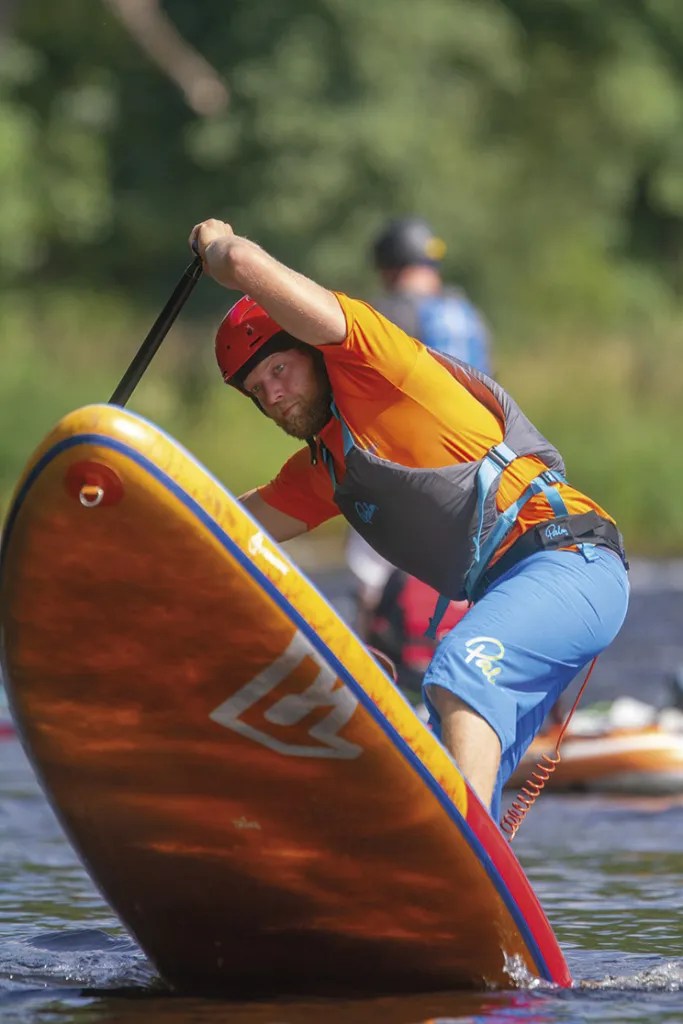
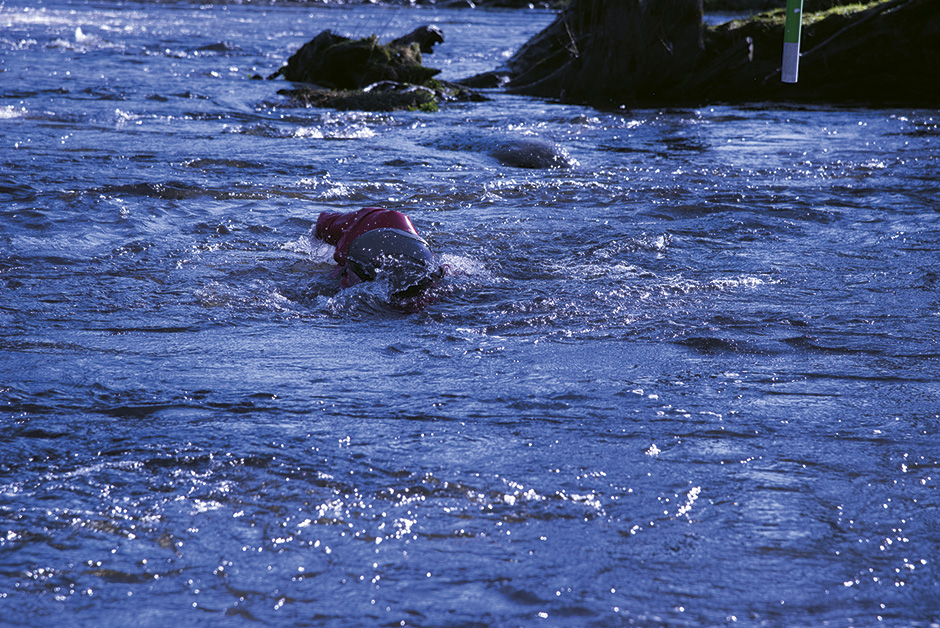
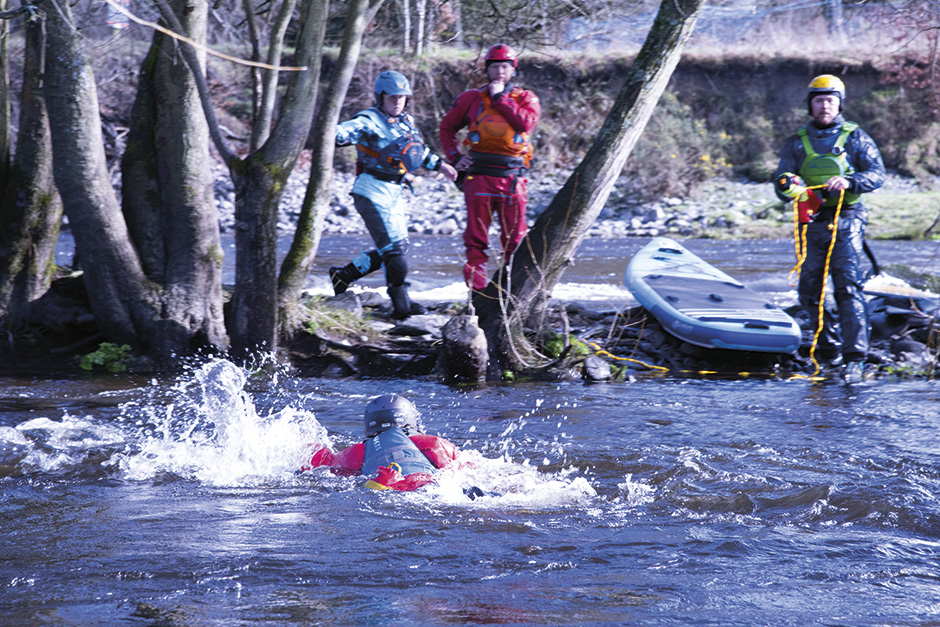
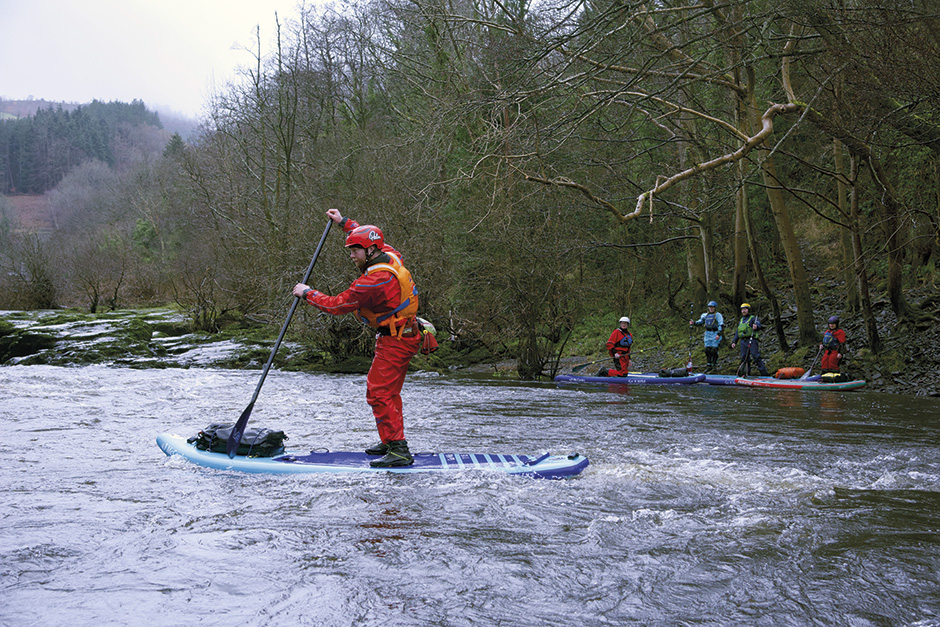
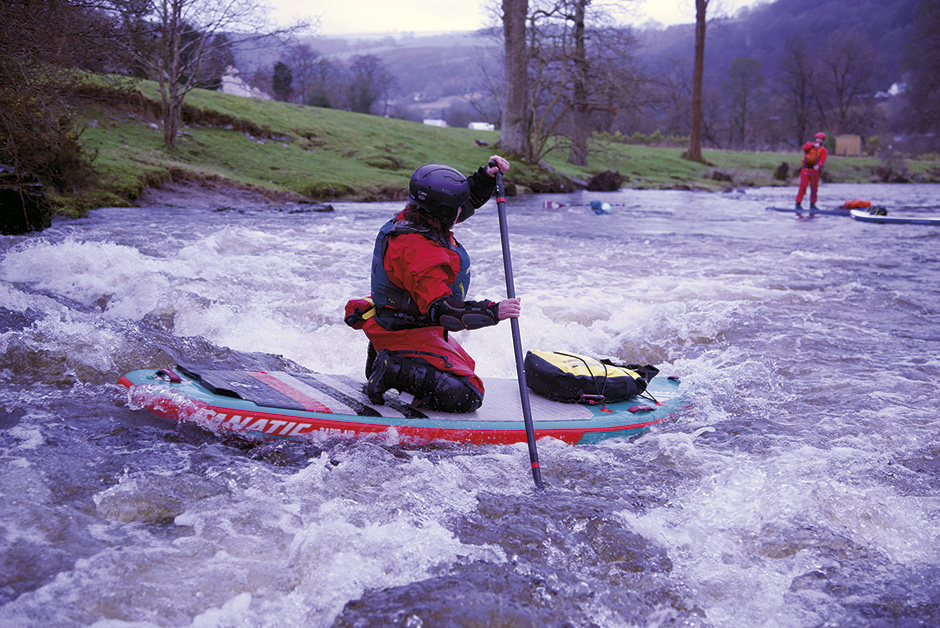
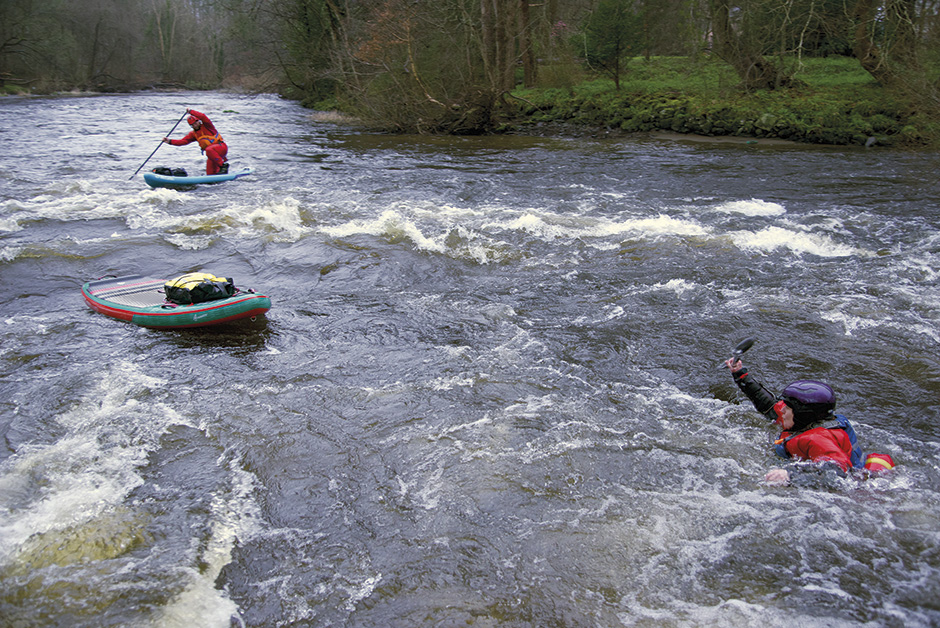
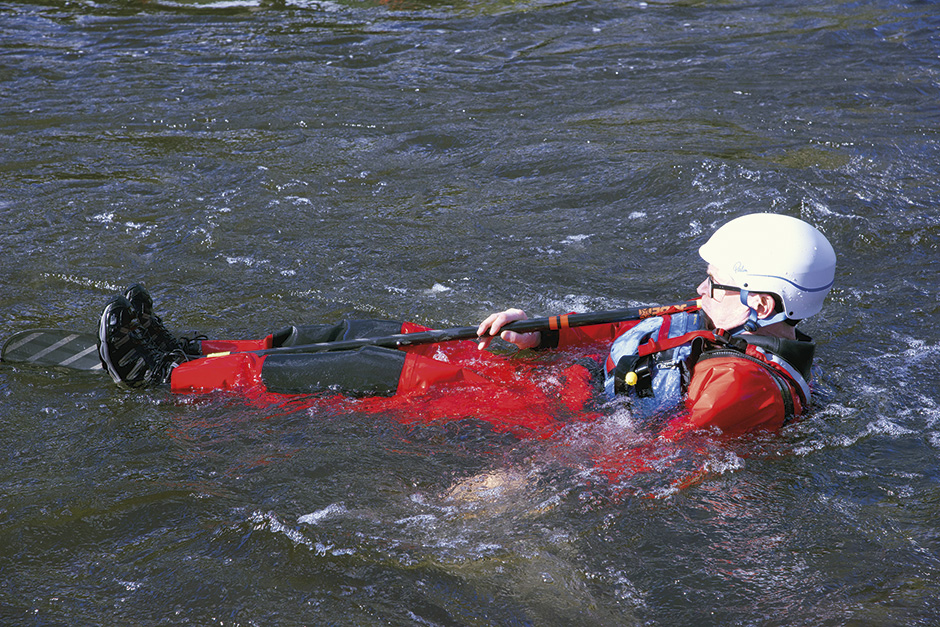
Introduction to White Water Safety is a one-day course (grade 2) that strongly focuses on individuals looking after their own personal safety within a peer paddling group. We practise the many different ways of swimming down moving water. This is excellent training for WW SUP because it includes when it is appropriate to go back to your board, when not, when to aggressively or defensively swim, and when to leave your board and swim to the bank. I don’t think many people have thought about this, but it is important now we are not using leashes.
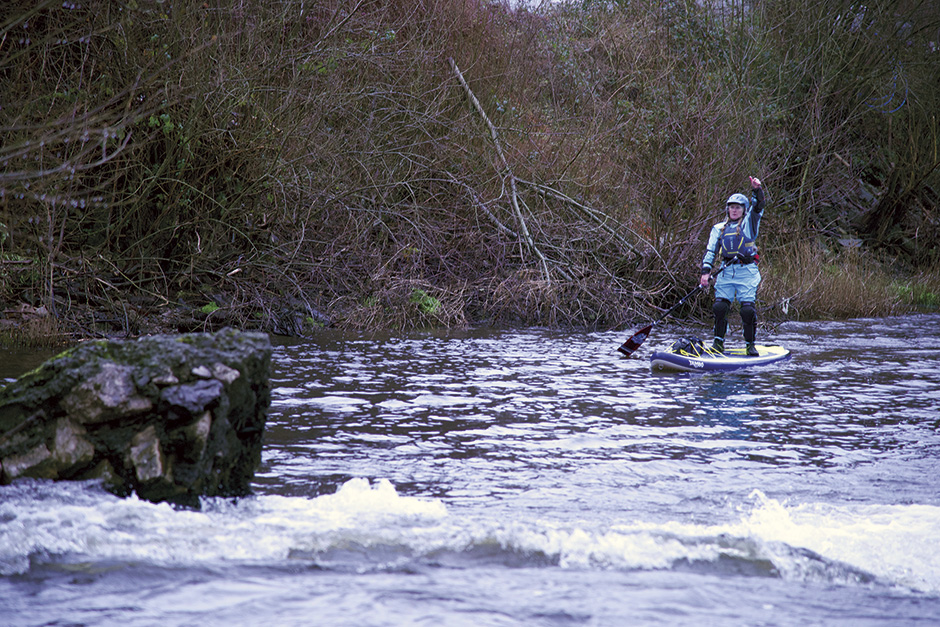
The intro’ is an excellent course for paddleboarders who are primarily paddling slow-moving water (ungraded) but are starting to think about or perhaps have already experienced paddling more dynamic water, including estuaries or rivers (for example, the Wye) where small sections are more demanding. And now recognise they need to upskill. And, of course, it’s excellent for WW SUP’ers whether you are new to the sport, looking for a refresh, or wanting some guidance.
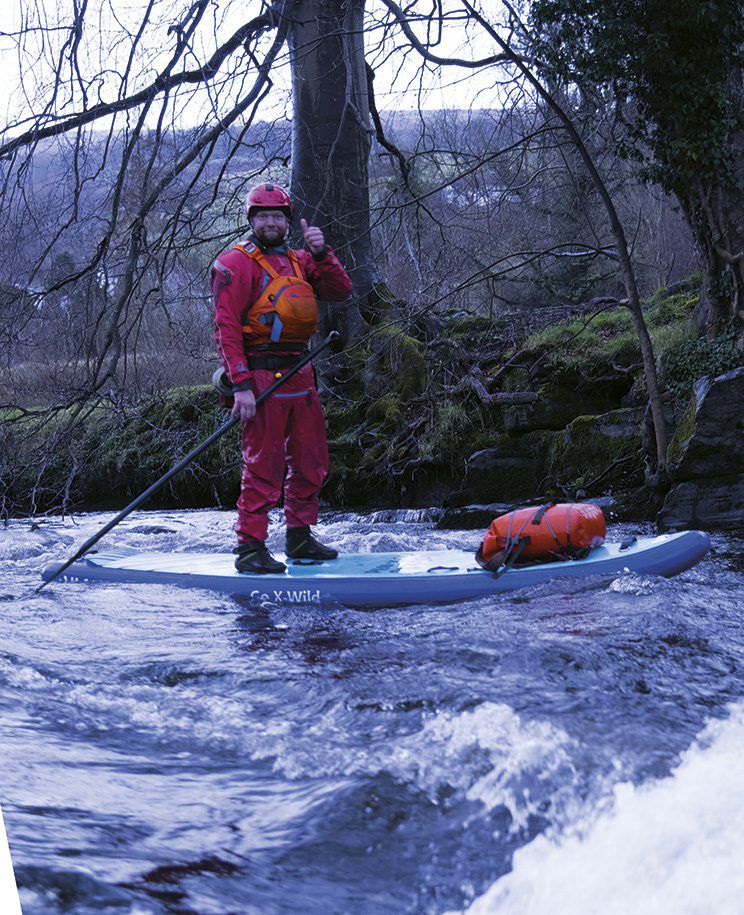
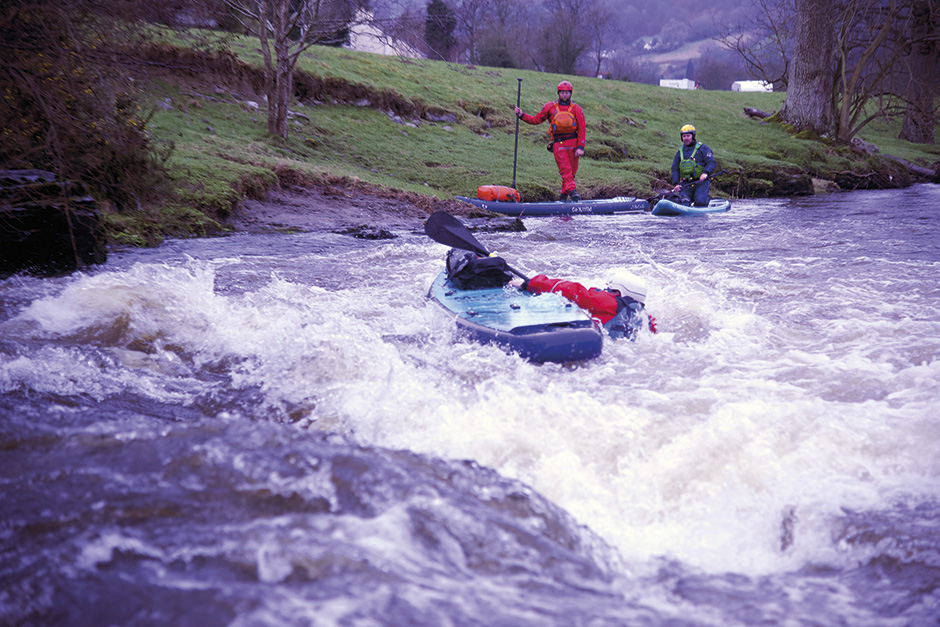
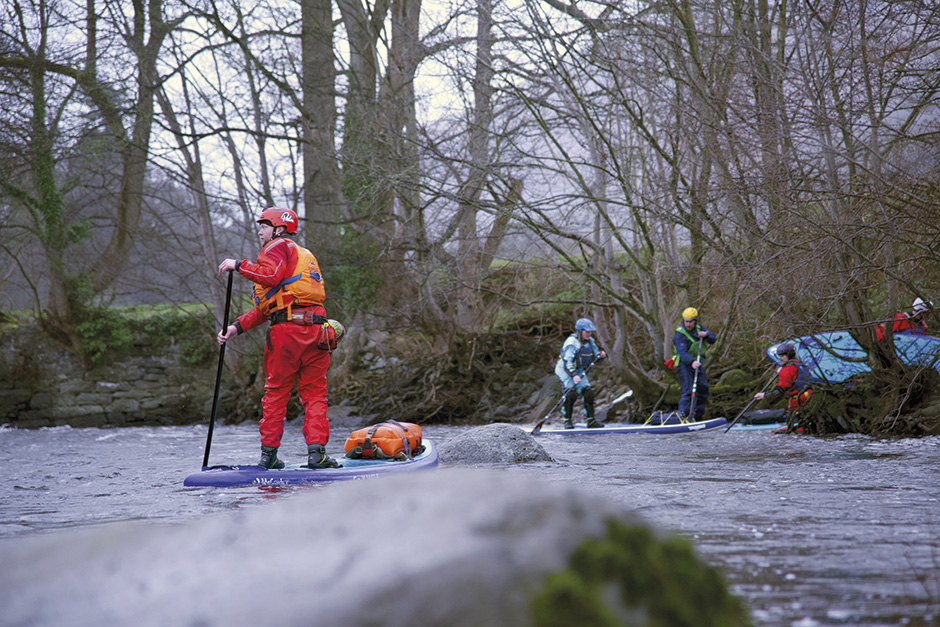
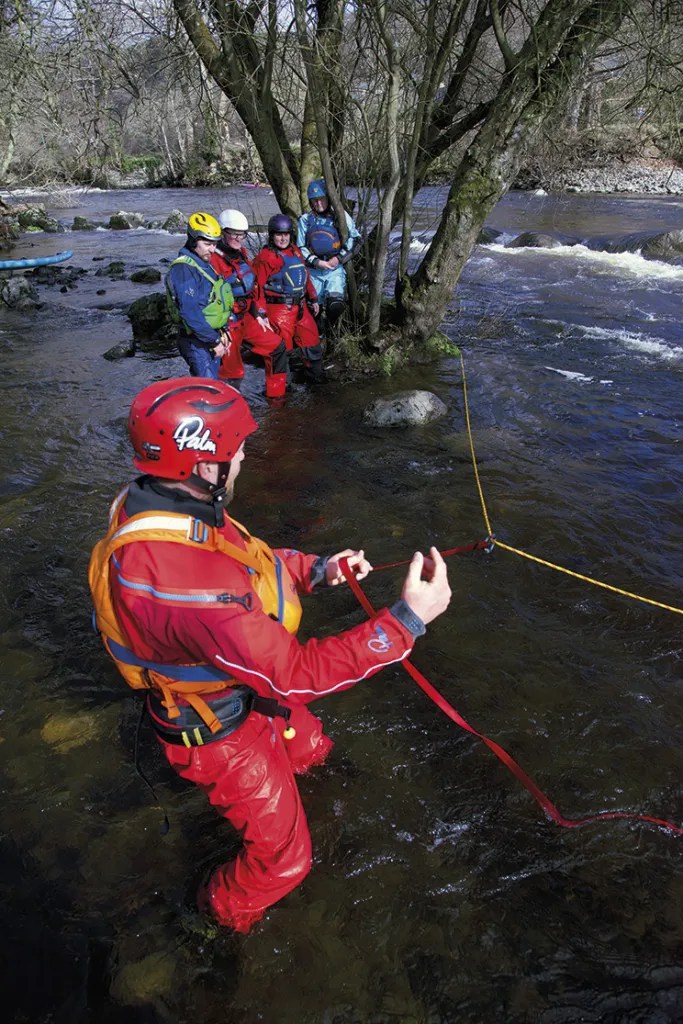
White Water Safety is a two-day course which builds on our learning (from the introductory course) and includes river running strategies and collaborative support in a grade 2 (simple 3) environment. Here, we emphasise how to avoid difficult situations that develop in the first place by increasing safety awareness and how a group should prepare in advance for paddling in a dynamic and challenging environment.




What can we do to avoid difficult situations developing?
By switching our group mindset from ‘something MIGHT happen’ on this rapid to ‘something is GOING to happen’, we immediately start talking to each other and acting proactively as a team. Rather than starting on the back foot, running features blind, and then having to react to a quickly developing incident, we approach the day ahead with awareness.
This means that before getting on the water, we take the time as a group to ask each other questions. Are we prepped in terms of the safety equipment we are carrying? Do we have an agreed-upon way of communicating that is clear and precise? Are we ready? And once on the water, where, if running a feature, are we standing? Who is spotting upriver? Who is ready at the bottom of the feature, both bankside and on the water? And, if a situation develops, could we deal with it as a group? If we have any doubts, we can then decide (again) as a group to walk around the feature.
What is great about this approach is that when something doesn’t happen, you think, “Oh, nothing happened on that rapid, but I thought something was going to happen.” This is a positive headspace and a great way to manage ourselves as a group on the water.
Is choosing who you paddle with an integral part of our safety planning?
Oh, massively. If I use myself as an example – I choose to paddle with people who have a similar mindset, are open, honest, neutral and have the same attitude. This means that if someone in our group needs support, we support them. If someone needs to walk around a feature or needs to walk off the river, we support them. None of this is looked down upon. Finding the right people for you, who you can trust and have an openness with, is key to enjoying a good and safe day on the river. Water is never a place for egos.


I found it invaluable to spend time working on how we manage portaging. Why was this considered important to include on the new course?
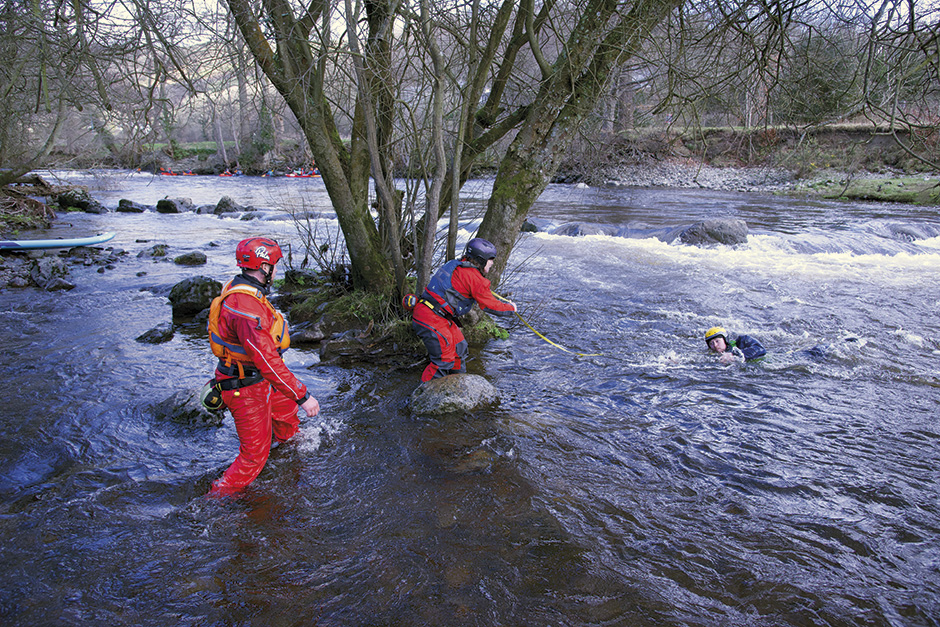
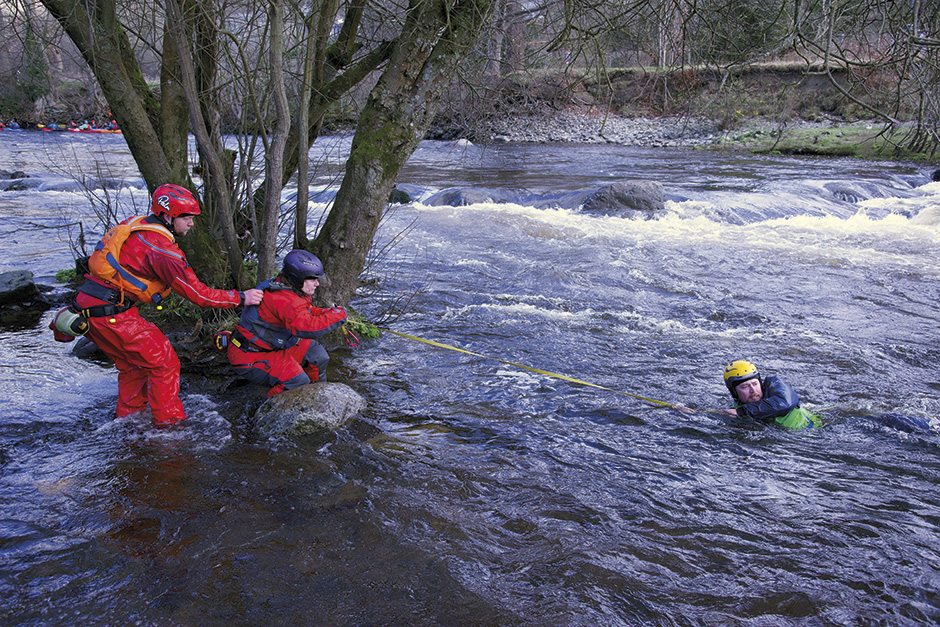
When we look at the accident logs detailing when and why people hurt themselves – not major incidents which might be life-threatening but including, say, broken ankles, sprains, dislocated shoulders, the stuff that is happening every day. The majority occur bankside when we are portaging (moving gear around features we do not want to paddle), and that’s because we’re in a wet, difficult, and slippery environment.
We cover this in detail during the course because it can be as dangerous as running the rapids. So, we must consider carefully how we support, monitor, and manage the individual(s) walking and moving their gear. As paddlers, we have tended to adopt a false sense of security once one or more team members move on the bank and leave them to get on with it. But this situation must be managed as carefully as a group on the water.
After recently commissioned research into the safety of using quick-release leashes, British Canoeing immediately banned leashes from being used by BC WW SUP Coaches and students on their courses. This has caused much discussion and debate within our community. I am really interested to know your own take on this.
My take is that the leash ban makes us better paddlers. I know many people would disagree with this statement, but let me explain why in the context of my paddling. It has:
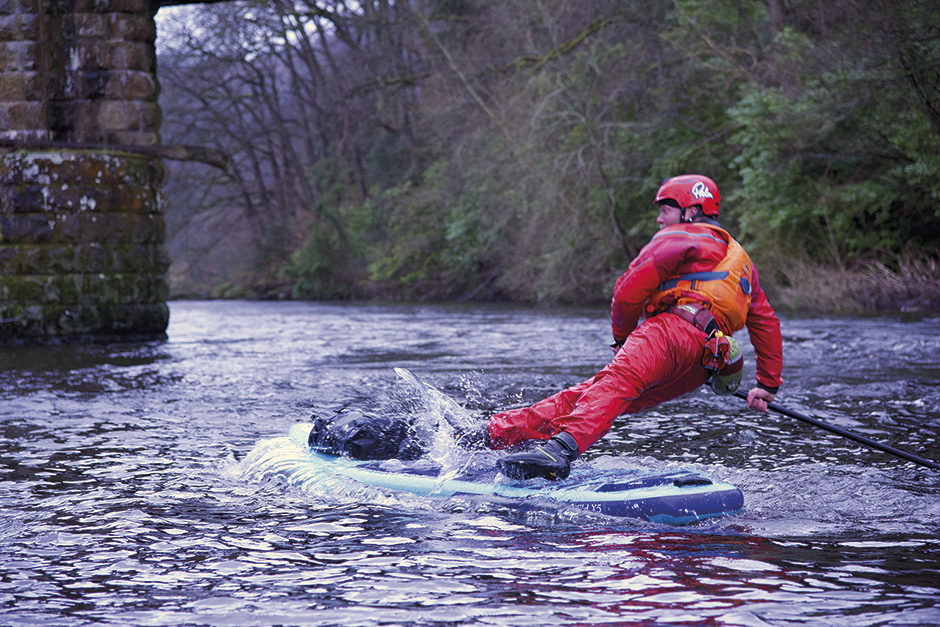
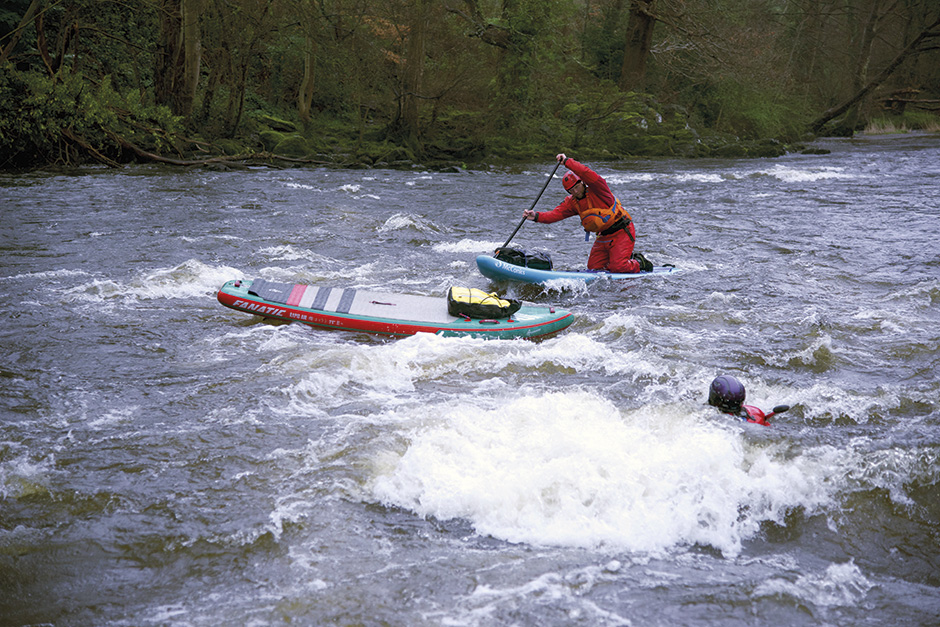
- It forced me to improve my height monitoring, which is sometimes known as height management. Instead of falling off and away from my board, I focus on getting a knee to it. This is key because we are paddling in and need to respond to the dynamic environment.
- This made me adopt a strategy I call falling friction. By this, I mean keeping as much physical contact as possible with my board when falling into the water. I can do this using my arm, leg (s), hand, paddle, and torso. The more that I can increase this contact, the more I can prevent a massive physical distance from being created between me and my SUP. The result is that I can get back on my board quickly and take responsibility for my own safety.
- I developed my dynamic swimming. If I am a greater distance than two strokes (a maximum of four) from getting back on my board, then I make a proactive decision and get to an eddie instead.
Until you’ve paddled for a couple of months without a leash and committed and practised, you will have difficulty agreeing with me, but I do firmly believe that you will develop as a better WW SUP paddler when you give up the leash.






Will we see a return to the use of leashes?
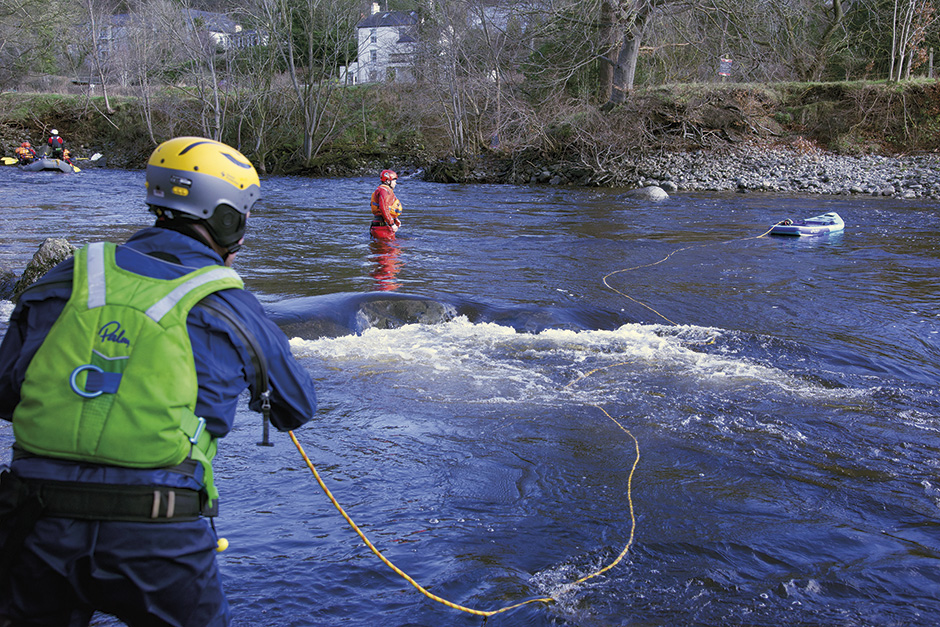
It is very early days, and I don’t see the ban as a negative. There are some interesting arguments out there for and against using leashes. Now, we have private individuals putting money into testing to see if they get the same results as the commissioned research. I view all of this as a positive because it creates a dialogue to inform the best approach for our sport. We are only discussing this in the context of up to (simple) grade 3 and are not even considering complex grade 3 and above.
In my opinion, the next generation of WW SUP paddlers (including my son) will be so much better because they will have had to develop without using a leash. Even if we do return to using leashes, I still think we will need to commit to paddling without one as part of our training.
Louise Royle
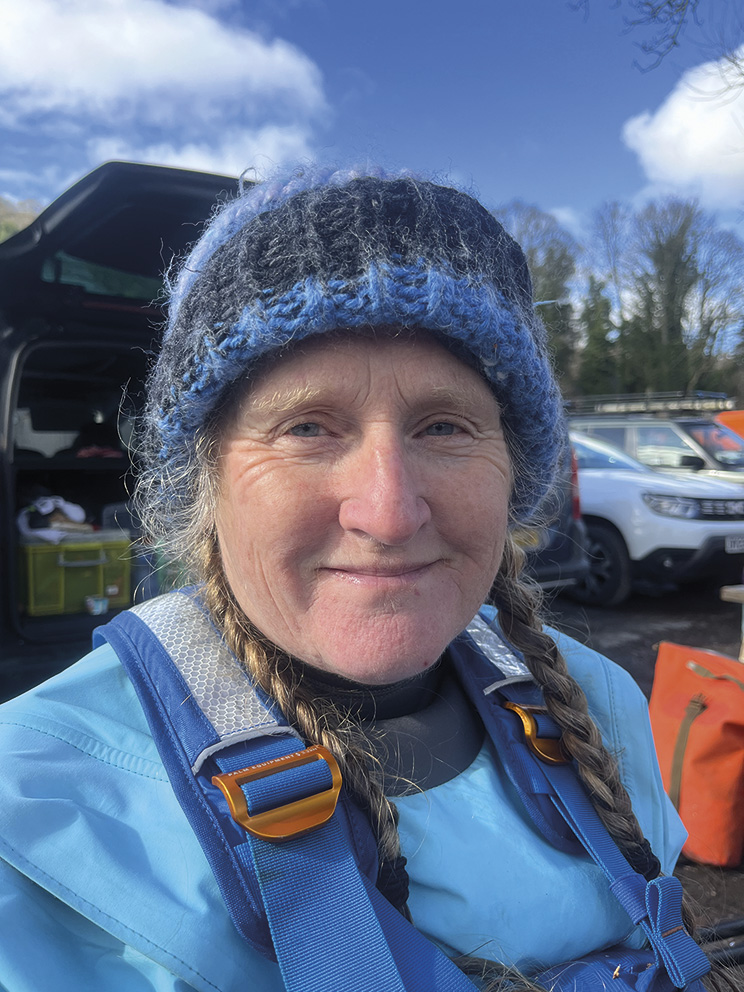
I have kayaked for 40 years and WW SUPing for over seven years. Even though I am an experienced paddler, keeping my safety skills & knowledge up to date is essential. If you are new to the sport, the course will give you a great foundation of skills and confidence as a team member. For paddlers with experience, it gives you loads to think about and work on.
Louise Royle
Dan Crawford from DC Outdoors
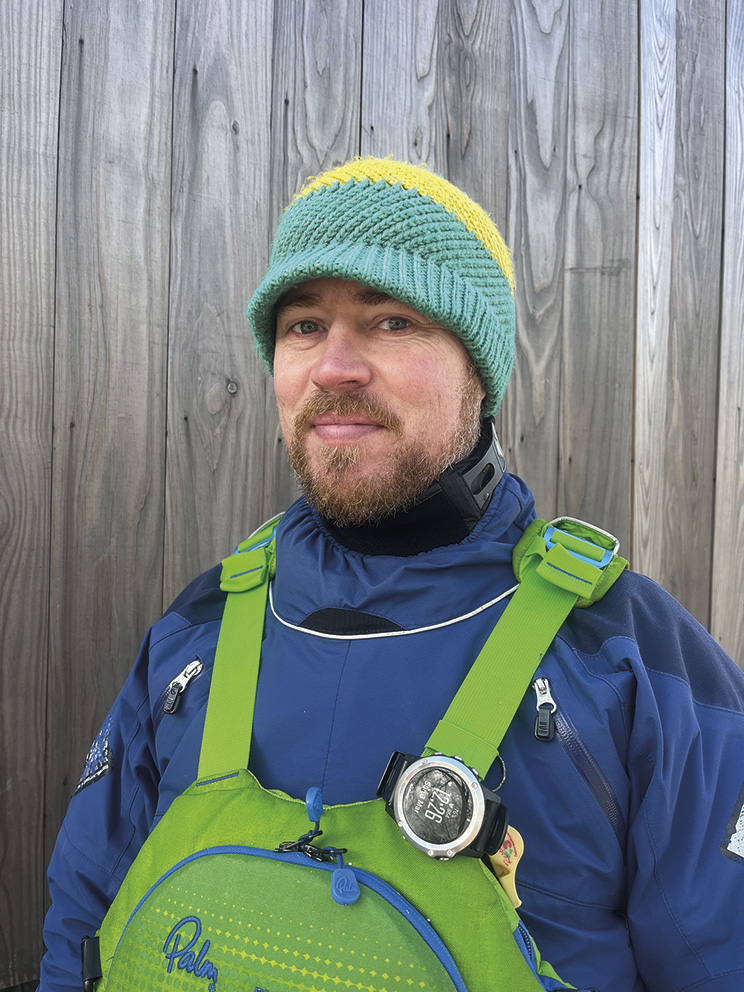
The course was fun and interesting, especially as I was on a SUP, a craft I don’t paddle as often as my boats. I like how the two days have a greater focus on safety and prevention and lay the foundations for safe paddling, inclusivity, safe portaging, and making safe decisions even before we arrive at the river.
Dan Crawford
Paul Goodwin
I chose to do White Water Safety because I want to be a competent group member. I am new to paddling SUPs in a WW environment, and the course has given me more confidence in my decision-making. I think the skills we covered are an absolute must now that we are no longer wearing leashes. It was a great course and a fun couple of days.

Paul Goodwin

 SUP Mag UK
Leave a comment