Competitive sprinting 101
Words: Scott Warren
Photos: P3T Photography
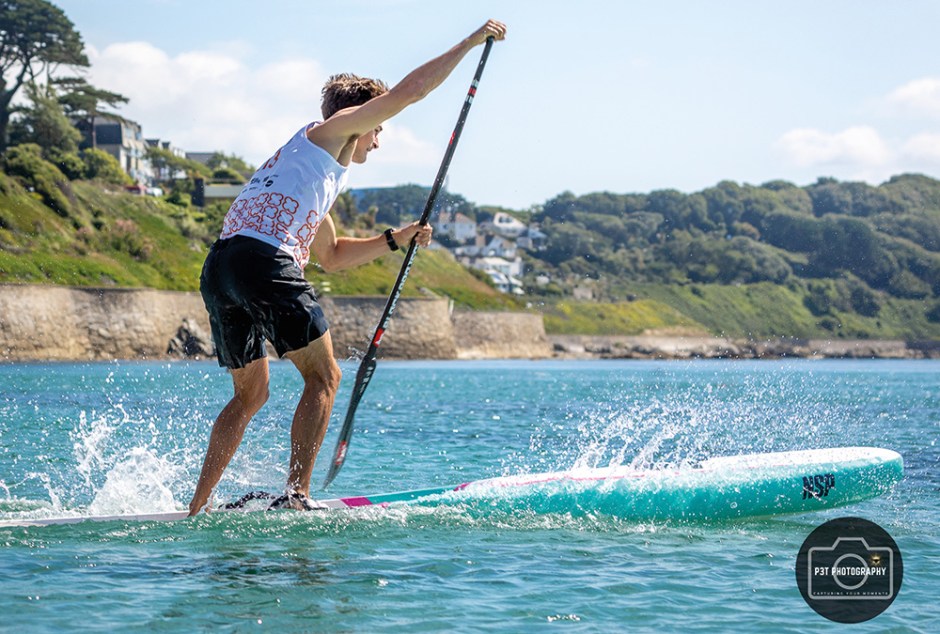
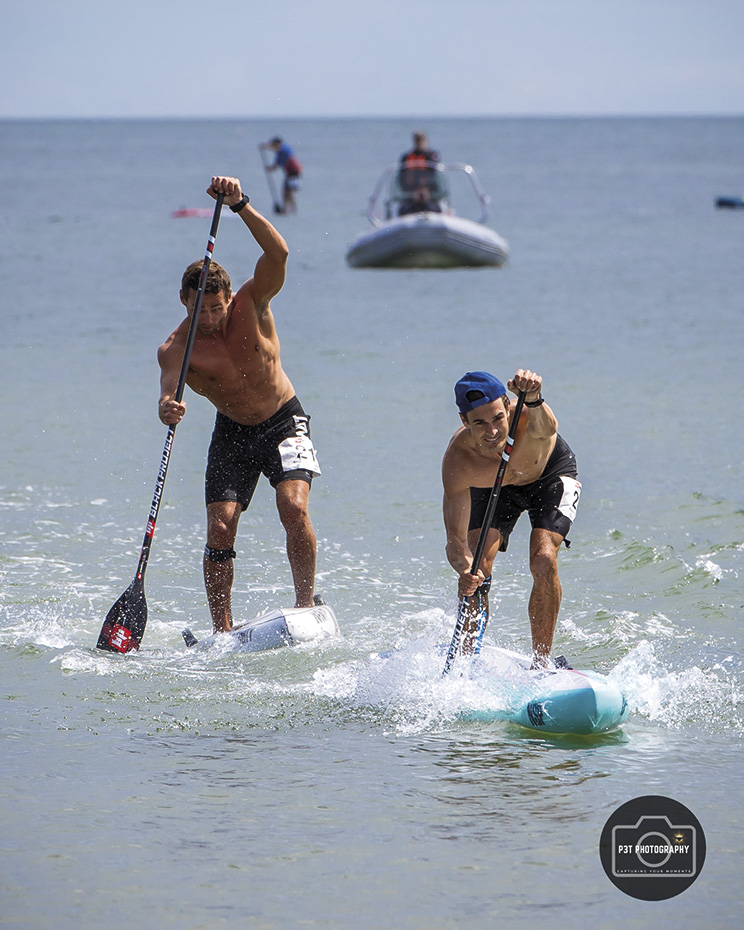
Sprinting is a fundamental part of SUP and is found in almost every discipline in some form. It’s how we accelerate our board beyond normal paddling, allowing us to catch waves, get up on the foil in SUP Foiling, chase down the ball in SUP Polo, or get through a particular stretch of white water. As a fundamental skill, it’s essential that we practise technique and learn skills about when and how to use our sprinting so we can unlock progression in our chosen disciplines. For this article, however, we will be focusing on the competitive element of sprint, which is often our first experience of paddling fast with the purpose of achieving our goal.
Where did it start?
Sprinting has been a mainstay of SUP in the UK since the first boards arrived on our shores and the first adopters picked up a paddle. Doing fun sprints with your mates or learning to catch waves standing up put sprinting right at the heart of the foundation SUP technique. Many of the early races were held at the club level, so were, in reality, versions of a sprint being short in distance and accessible for newcomers to try, with the Coke bottle races being a great early example. Simple drop in a bottle tied to a weight, and you have yourself a marker to race around. Sprinting at its core. From there, many of the big events tagged in fun SUP sprints as a way to fill the gap around the main distance race, encouraging paddlers of all levels to give it a go.
What about now – is competitive sprinting still a thing?
Over the years, with the development of the sport and the progression of paddlers taking part, distances and formats have become longer and more challenging, but sprinting has always been a fundamental part of the sport. Whilst it did not have the limelight or any real specialist sprinters who only did short distances, sprinting could be found at most events, culminating in the Sprint National Championships held at the National Watersports Centre in Nottingham as part of the then British Canoeing Sprint Regattas.
So what is considered a sprint?
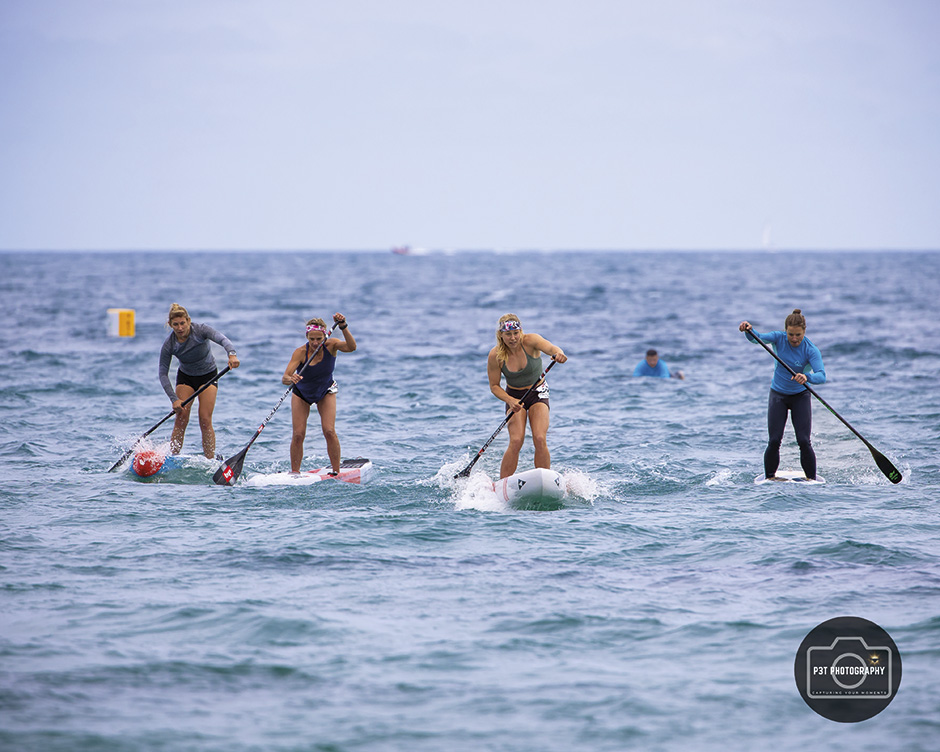
The easiest way to think of SUP sprinting is to compare it to athletics and track sprinting. Sprinting is competitive SUP in its shortest forms, taking place over distances of up to 500m. Beyond that, you can consider it starting to become a middle-distance race, just like a 1500m track race at the Olympics. Typically, sprints are held over 100m, 150m and 200m in various formats across flatwater and beach locations.
What formats are there?
The most common sprints are either a ltraight-line format similar to track sprinting, with paddlers starting a set distance from the finish and paddling a straight course, or a tech sprint, which is usually an out-and-back setup where paddlers sprint from a start position out to a buoy or set of marks, turn 180, and race back to the finish.
Sprinting technique
The fundamentals
There are many ways to sprint, making the short-distance side of SUP very accessible. You will see a wide variety of styles and skills deployed as paddlers look to reach their highest speeds and maintain their effort of the course distance, but to start, let’s look at the fundamentals.
The bottom hand
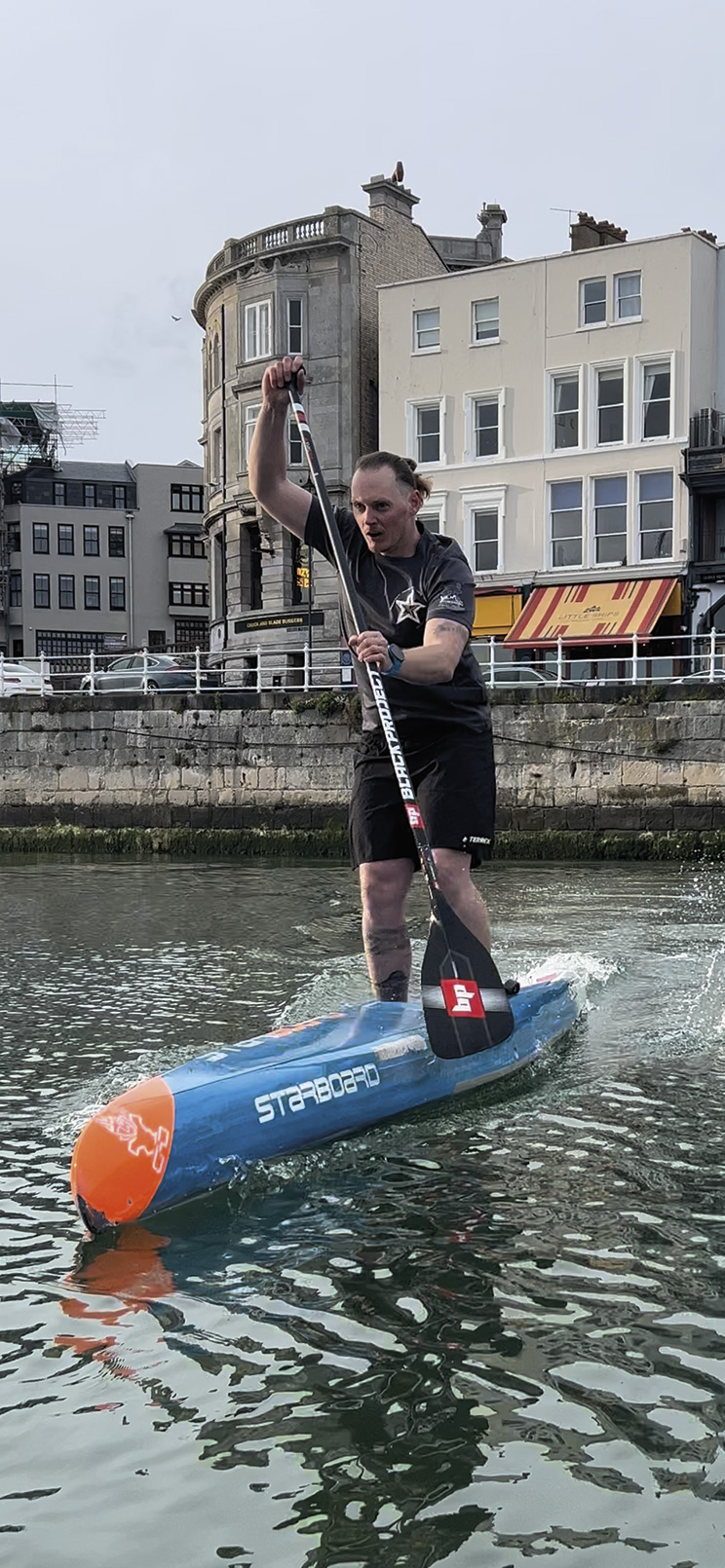
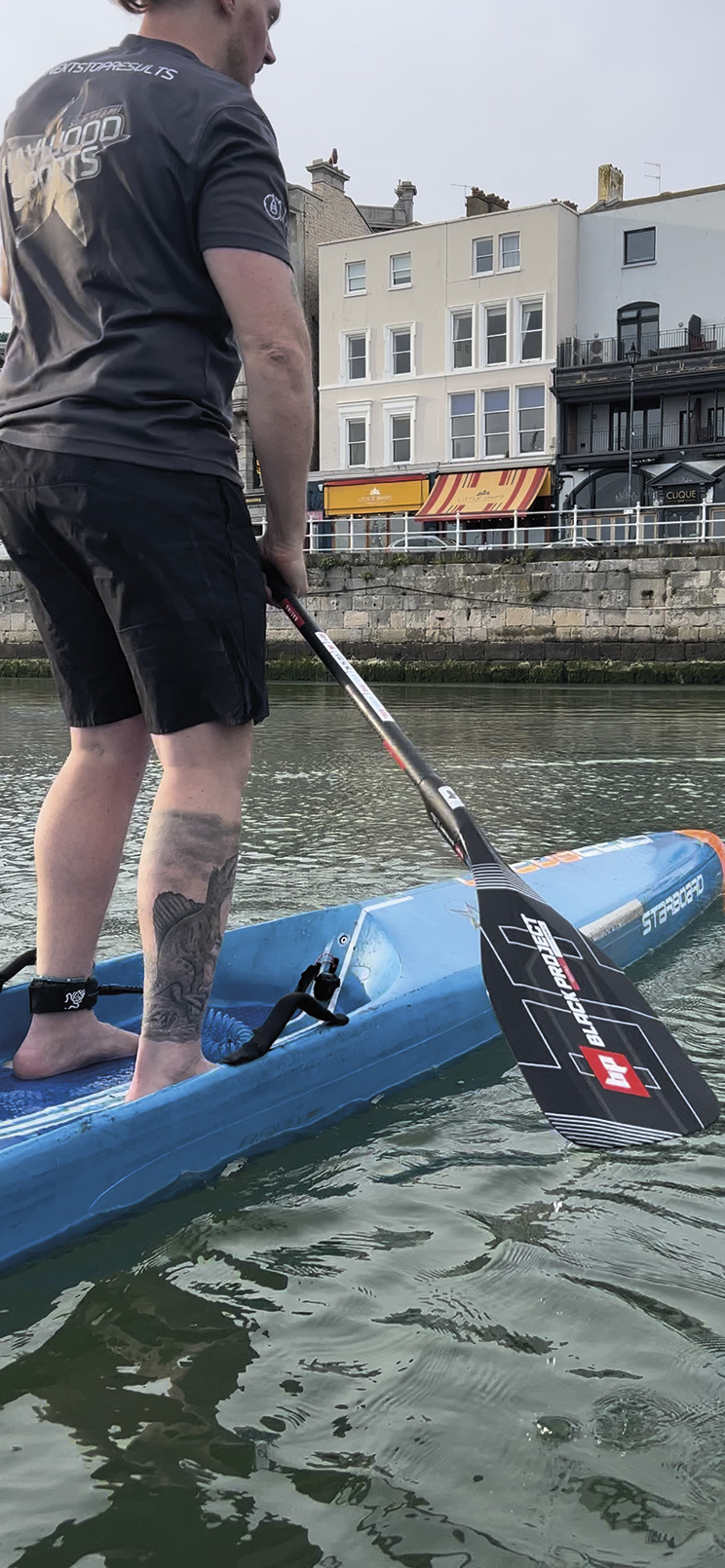
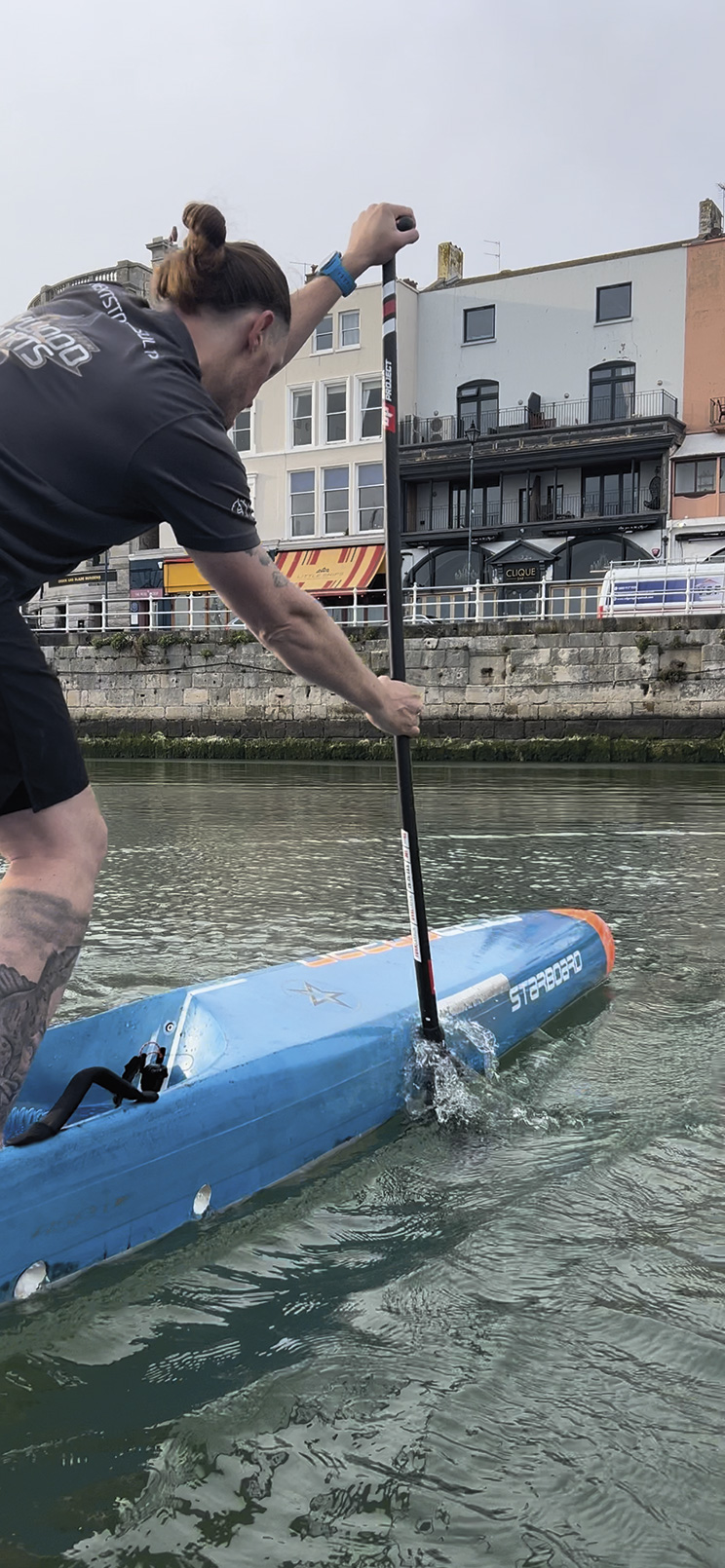
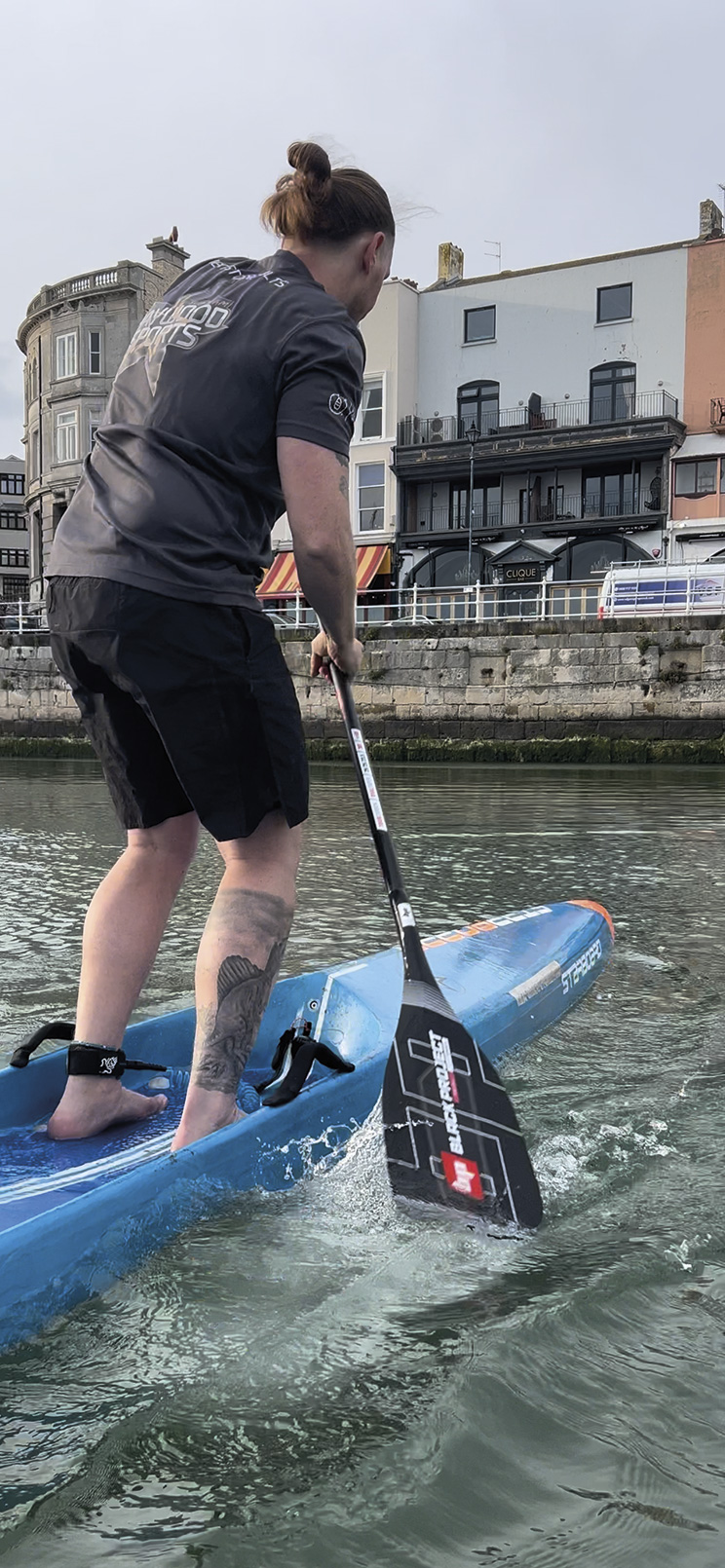
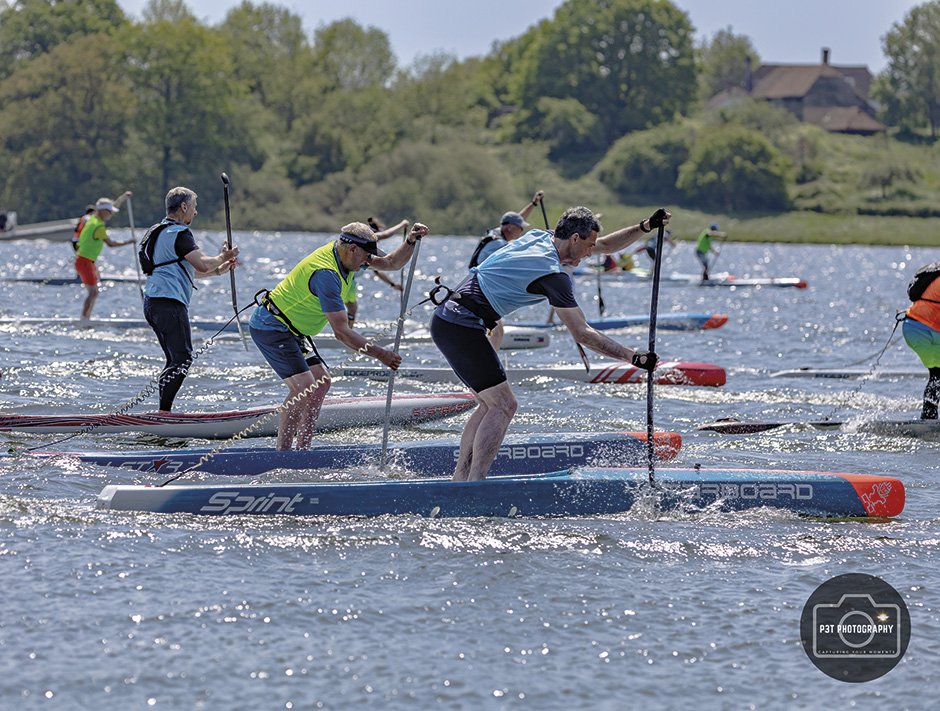
Generally, you want to use more power when sprinting, so the easiest way to do this is by dropping your bottom hand one hand’s width lower on your paddle than you would typically have if paddling fast for a distance race. If you are coming from a recreational paddling technique, then moving your bottom hand down a couple of hand’s width is a great place to start. Moving your bottom hand changes the leverage point on the shaft and blade, allowing you to put more power through your paddle stroke, typically unlocking more speed over a short distance.
Reach point and shortening your stroke
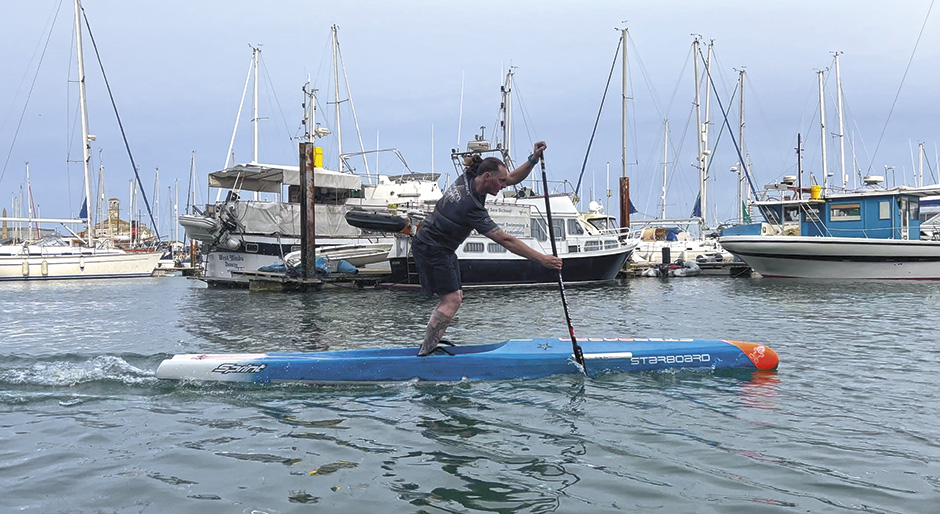
One of the most common misconceptions about sprinting is that you must shorten your stroke to paddle fast and start sprinting. Now, whilst this statement is true, which goes against that very statement, how we apply that principle is the key part. You should maintain your normal reach point, out in front of you, without overstretching too far. Shortening your stroke in sprinting usually means exiting earlier and achieving a shorter stroke length this way rather than putting the paddle in closer to you and still exiting close to your feet. The goal is to have an efficient yet shorter stroke to allow for a higher cadence.
What is cadence?
Cadence is the term used to understand how many strokes you take per minute when paddling, sometimes called stroke rate. Typically, when progressing, a higher stroke rate or cadence will allow you to achieve higher speeds by increasing the number of strokes you are taking per minute over your normal paddling style. As you progress further, there is a balance between speed, power, and cadence, but we will come to that later. Typically, achieving 60 to 70 strokes per minute is a great baseline to aim for when looking to sprint.
Adding power
Paddling at a higher stroke rate alone won’t necessarily make you start sprinting. Combining the bottom-hand placement and an increased cadence will start the process, but you will likely need to increase your power.
So what is Power? Put simply; power can be defined and measured as an increased output or effort over your normal baseline levels of effort when paddling normally. Increased power comes from a harder pull through your bottom hand, engagement of the core muscles and use of your body weight to drive the board forward quicker.
An excellent way to think about this is opening a heavy door. Pulling gently on the handle while standing square to the door will make it difficult to open. However, if you reach forward with your bottom hand and then engage your core to pull harder on the handle or even rotate your body while pulling, you will be able to open the door more easily.
Getting faster – unlocking progression
So now that you understand sprinting and its fundamentals, how do you progress? Several advanced techniques and skills come into play to get faster at sprinting, and for this, we will focus purely on the straight-line elements and miss out on more tech sprint-based elements such as beach starts and buoy turns.
Getting off the line
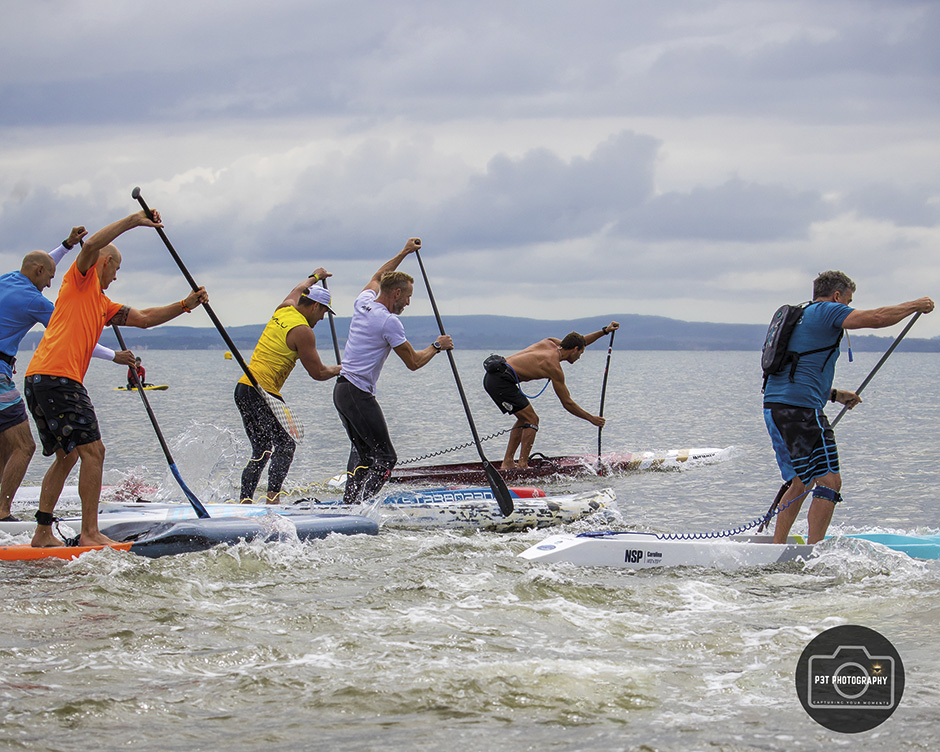
Simply paddling faster and with more power will allow you to start sprinting, but a key element to progression is getting off the line quicker and more efficiently. Returning to our track sprinters, especially in the shorter distances of 100m and 200m, the athletes have a starting phase where they drive out the blocks at the starting gun. The same goes for SUP in that you can’t reach peak speed immediately and must drive away from the line as quickly but as efficiently as possible to achieve your best start.
A great way to achieve this is to start with your paddle out in front of you ready, and at the start, single bury the blade deeper than normal to get hold of the water more effectively. Your goal is to initiate forward momentum in the most efficient way. What you want to avoid is a great big splash but smacking your paddle into the water surface, almost like the wheelspin of a car – lots of smoke and style but minimal forward momentum at first.
Acceleration
Much like getting off the line, you can’t suddenly reach peak speed immediately, so you must go through an acceleration phase to get the board moving effectively across the water. Each paddler is different, but experiment with 10-15 strokes or maybe 20, depending on the sprint distance and your preference. With each stroke, you push your speed up by increasing the stroke rate and power and bringing in other elements of your sprint technique, such as leg drive and rotational power. The goal is to get you through the acceleration phase efficiently without burning out before you hit the maintenance phase.
Maintaining your speed
The secret to a fast sprint is how effectively you can maintain your peak speed. Notice this is not top speed, which is your highest physical number. Given that we are in a very dynamic environment and with each stroke, we have acceleration and drag to contend with; peak speed is considered to be your highest average and sustainable speed across your sprint distance. Usain Bolt was considered not the fastest starter or accelerator, yet he often finished first. His success came from his ability to maintain his peak speed for longer than his competitors and, more often than not, take fewer strides to complete the same distance. Not bad for someone considered too tall for sprinting! The maintenance phase of your sprint will likely be the longest, so it’s important to work on that area the most. To maintain your peak speed, you can reduce the overall power so you don’t burn out, find a cadence that keeps the board moving effectively through the water without losing speed between each stroke and use your legs to spread the load and lactic acid away from your arms.
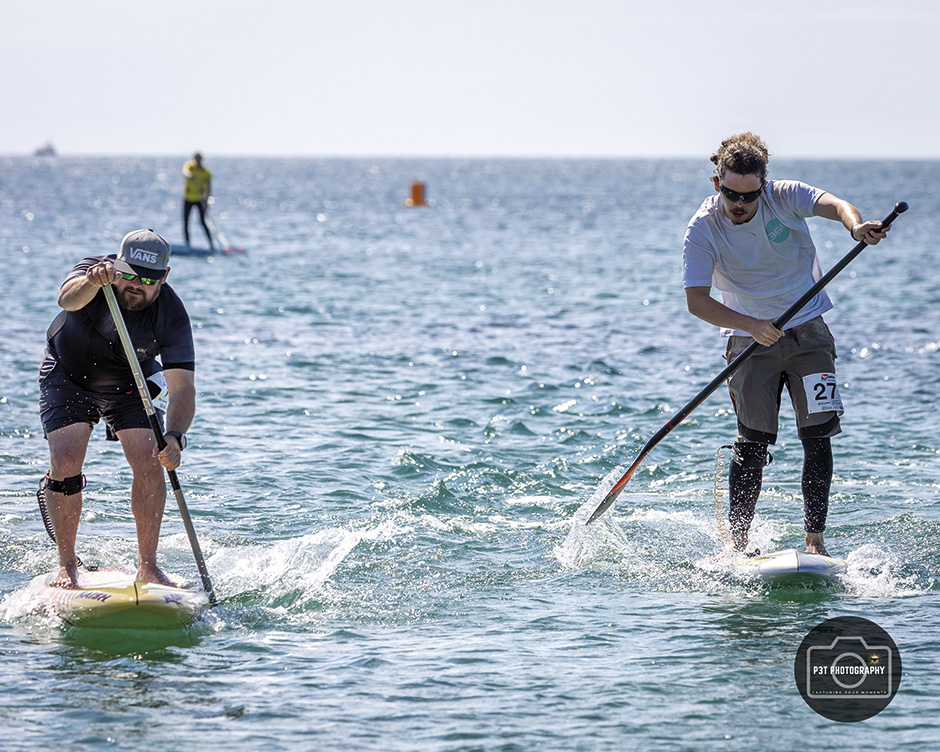
How can you start sprinting?
Sprinting is a great way to train, allowing you to do short bursts to increase your speed and power. Many short interval sessions (sub 2-minute efforts) can be done at a sprint speed. Sprints are also a fun way to get into racing if you’re a newcomer to competitive SUP. Pick a point a short distance away, line up with your fellow paddlers and see who gets there first. You don’t need any specialist kit; although there is a real skill in making a big round-nose iSUP move quickly, they are just as fun to sprint as a dedicated race board.
Most clubs will run fun racing with a sprint element, and dedicated sprinters such as Anni at Frangipani SUP are pushing the sprint discipline with introduction days and clinics.
What about competing in sprints?
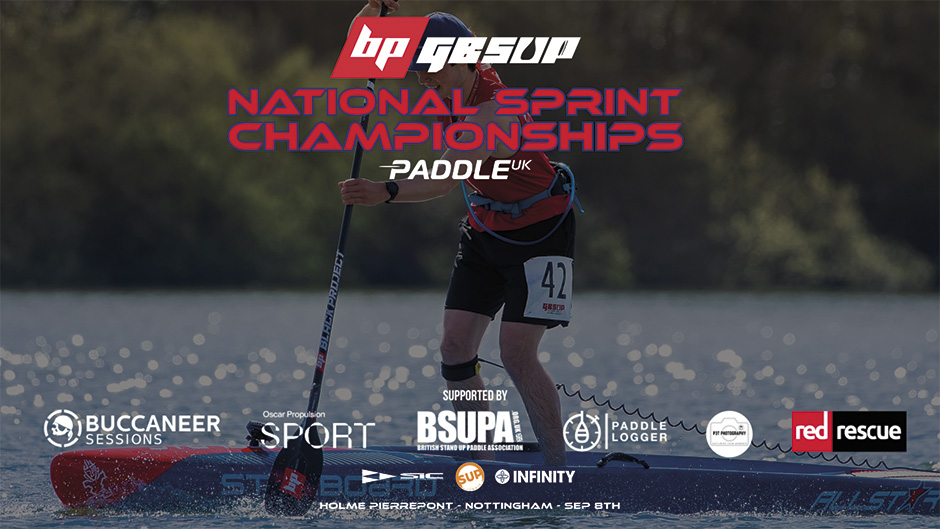
Sprints can often be found at various events, from Beach-based Tech Sprints on the GBSUP National Series to a Sprint element included in the GBSUP British National Championships. Other events will also have sprint elements, so it’s always worth checking out what’s on the schedule and what you can get involved in. 2024 also sees the return of the GBSUP National Sprint Championships at this year’s Paddle UK September regatta at the National Watersports Centre, which, as the name suggests, is a dedicated Sprint Championship held over 200m with paddlers competing in their own lanes.
Haywood Sports
Here at Haywood Sports, we are always happy to help. Our coaching covers all areas of SUP, and our home is on the coast in Kent. We are also always happy to answer any questions on paddling, from locations to conditions to kit and safety. Get in touch by phone, email, or social media. https://www.haywoodsports.com

 SUP Mag UK
Leave a comment