
What makes a great SUP coach?

Words: Andy Burrows
Photos: Andy Burrows & Peter Tranter
I am passionate about all things SUP. It’s wrapped itself into my physical DNA. I’ve learned a lot about myself through my SUP experiences, and it’s kept me reasonably fit for my tender years (sarcasm here). My encounter with SUP would have been very different if I had not had my long-time SUP companion and coach, Telmo Irogyen, with me for the last six years.
Particular characters can heavily influence our lives. Telmo has taught, challenged, competed, and inspired me throughout our time paddling together. My ability, enjoyment, knowledge and experiences would have been quite different without knowing Telmo. He is a great example of how coaches can make a massive difference in how someone takes to a sport.
Is there a difference between being an instructor or a coach? I would argue that there is a big difference. This difference lies in the depth of the relationship, the time in the relationship and the ways in which learning takes place. Coaches nurture learning over a longer time frame. They adapt their style to suit the individual and are happy to ‘go off script’ when required. While an instructor will pass on knowledge in predominantly a telling style, a coach enables learning primarily through facilitation – exposing the ‘student’ to situations that stimulate the development of skill and knowledge.
A great coach can have a massive influence on how someone pursues the activity of SUP. A great coach inspires someone to take their paddling much further than an ‘instructor’. A great coach has particular personal attributes, together with experience, intuition, and passion, that can be very influential on a paddler.
Thirty years ago, I was fortunate to study coaching with Sir John Whitmore, author of the best-selling book ‘Coaching for Performance’. The basis of his teaching is that coaching is fundamentally about unlocking potential. In order to do this, the coach can use a process that involves a series of open questions to raise awareness in the person being coached (the coachee) and then to help them arrive at actions that they are committed to.
The process is summarised using the acronym GROW…where
G stands for Goal: What do you want to achieve?
R stands for Reality: Where are you now in relation to your goal?
O stands for Options: What options do you have that could be used to achieve your goal?
W stands for Will: Having appraised your options, which do you choose? How do you plan to pursue this option?
The process is simple enough, but it requires skilled listening and questioning to be applied unforced. It also requires the person doing the coaching to be trusted and respected.


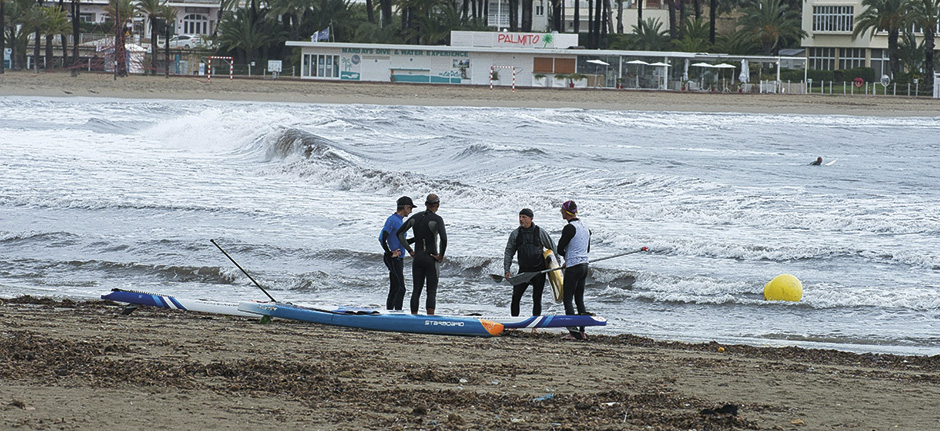
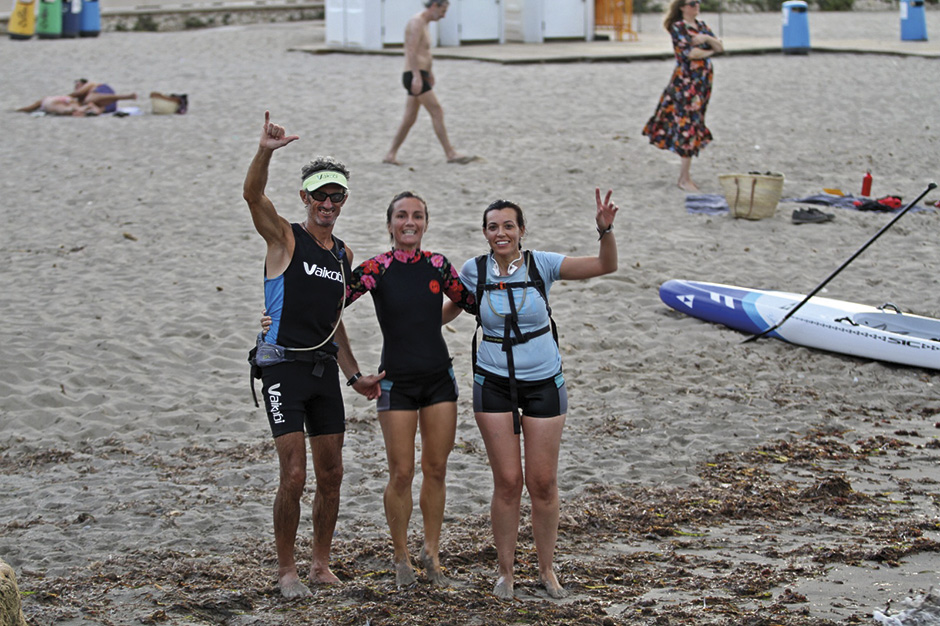

This might be too prescriptive for sports coaching, but the principle remains that the act of coaching seldom involves telling. Telling someone to ‘do it like this’ can backfire if the ‘student’ does not succeed with the ‘advice’ they receive. Their failure becomes the fault of someone else. Giving someone a choice of how they will approach an issue hands responsibility for action and results to the performer.
Effective coaches accept that there are multiple ways to approach any issue. They are patient and will even allow their student to fail (safely!) to facilitate learning. They create an environment of mutual trust and then use it to embed learning.
In this sense, coaching is not often used on day one of a SUP lesson. Most people would prefer to receive instruction in order to derive a tangible result within a short time frame. Aspects such as where to stand, how to stand, and how to hold the paddle are examples of some basics that do not require a coaching approach. However, once someone starts to develop ability and skill, the opportunity for coaching opens up.
A good coach will recognise the situation, the paddler, and the desired result and choose an approach accordingly. A coach will also identify the four stages of the paddler and adjust their style accordingly. The four stages of a paddler are as follows. (As defined by me!)
Keen beginner.
Driven improver.
Confident competent.
In search of mastery.
At each stage, the paddler needs something different from the coach.
Stage 1. Keen beginner
‘Keenness’ is essential to receive coaching. Keenness implies a desire to learn and improve. There is already a motivation inside the paddler. If someone does not have a desire, then only an exceptional coach will find a way to ignite it. Desire to improve is established within minutes of first standing on a board. Beginners need some simple guidelines and a safe environment that is conducive to achieving quick wins/results. The key outcome at this stage is confidence. Confidence is the requisite to continuing and experimenting – pushing the boundaries of learning. The coach must accept that the student will not deliver perfection from the outset. The coach needs to recognise that the individual’s improvement pace may differ from that of others. It is no mystery that a young paddler will develop faster than an older one.
A group setting can have quite an influence on how the ‘student’ feels. The same person can feel completely inadequate or king of the castle, depending on the paddlers they find themselves with. In this first stage, the coach must establish trust very quickly. The fundamental elements of trust are character and competence. Character is portrayed (or betrayed) by words and actions (and how these interact).
We quickly gain a feel for what kind of character we deal with by the behaviour exhibited in certain situations. Competence comes from blending skill, experience and attitude. Most people want to be ‘taught’ by someone who can do what they suggest others do.
Human beings are very astute at assessing each other. The first few minutes of a first lesson or coaching session will solidify our opinion of who is in front of us. Those first few minutes should never be lost on the coach. It is the marker to lay down in terms of the coach’s expectations for themselves and their student. Safe paddling is fundamentally about having consistently high standards. After all, we are talking about possible life-and-death situations. The coach must demonstrate integrity – that is to say, their words should be in sync with their actions on every occasion.
The beginner is the most accepting of instruction. Therefore, the coach carries considerable responsibility in conveying knowledge that ‘works’ and will act as a foundation for future development.
A keen beginner will make rapid progress. Therefore, the coach must be prepared to make frequent interventions to refine techniques and introduce more challenging situations. There needs to be a balance here. Paddlers must be challenged to leave their comfort zone and embrace failure, but do so in a safe environment.
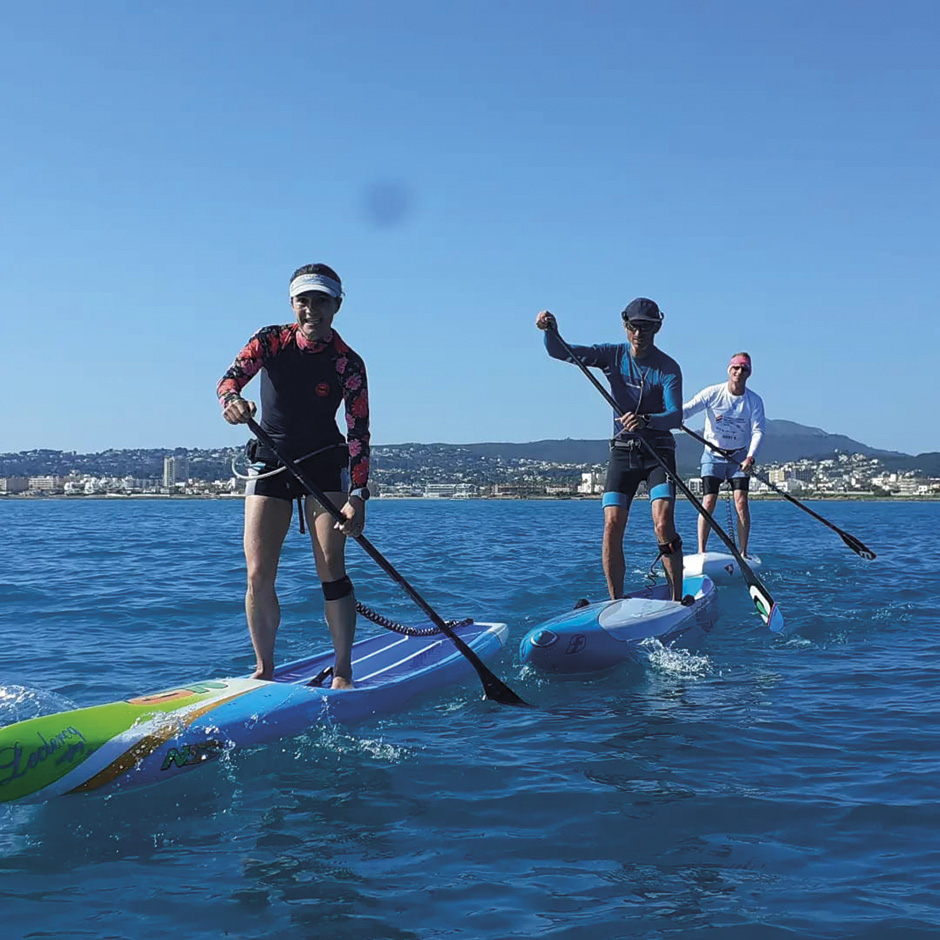

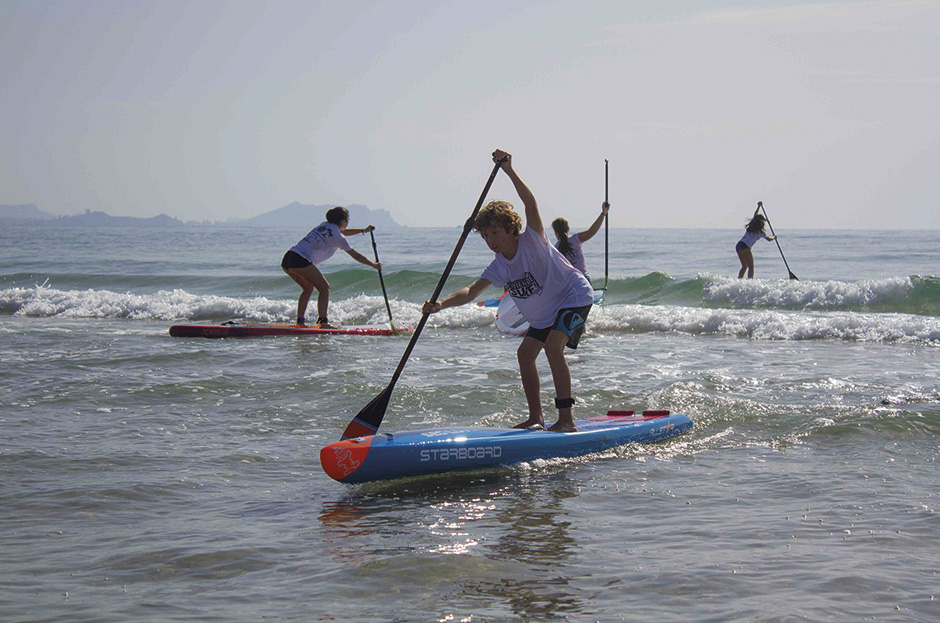
Stage 2. Driven improver
How do you assess how good a paddler you are? In order to answer that question, you need to use references. Without references, you don’t have a clue. Six years ago, after a few months of paddling on my 10-foot inflatable, I thought I didn’t have much more to learn. Why? I had nothing, and no one, to benchmark myself against. All paddlers are on a capability continuum. In paddling, the continuum is definitely not a linear line. Even ‘good’ experienced paddlers can find themselves struggling with slight changes in weather conditions. Being fully aware of one’s ability is critical for safety and identifying areas for improvement.
Many paddlers overestimate their ability, but I say this based purely on personal observation. Paddlers who are driven to improve usually have a strong motivator behind them: it might be a rivalry, a particular event, a race, or an upcoming challenge.
A coach with someone at this stage needs to know the primary motivation and focus the coaching towards the goal. Unlike stage 1, in stage 2 is really helpful if the coach has experienced what the coachee is seeking improvement in. The coach can help bridge the gap of the ‘unknown’.
At this stage, the paddler will recognise a wider scope. For example, physical capability becomes more critical to enable improvement, and time off the water, focussing on strength and power, will pay more dividends than just pursuing hours of paddling.
Experimentation is also essential. The coach needs to have a relaxed mindset about ‘the stroke’ and encourage the practice of a range of strokes – short, long, fast, slow, rotation versus hinge. Everyone’s mind and body are different. Every pro’s stroke is different – so surely the same applies to ‘normal’ humans? Avoiding injury and adherence to key principles is essential, but experimentation takes paddlers to new places. This might even involve going ‘backwards’ to go ‘forwards. Recognising that improvement is a process and not a daily result is important here.
In this stage, the coach should be more challenging of the coachee. This can mean being ‘harder’ and having higher expectations. Sometimes, there might be friction, which, although uncomfortable, helps to create step changes in progress. Sometimes, at this point, the coach and paddler part ways.
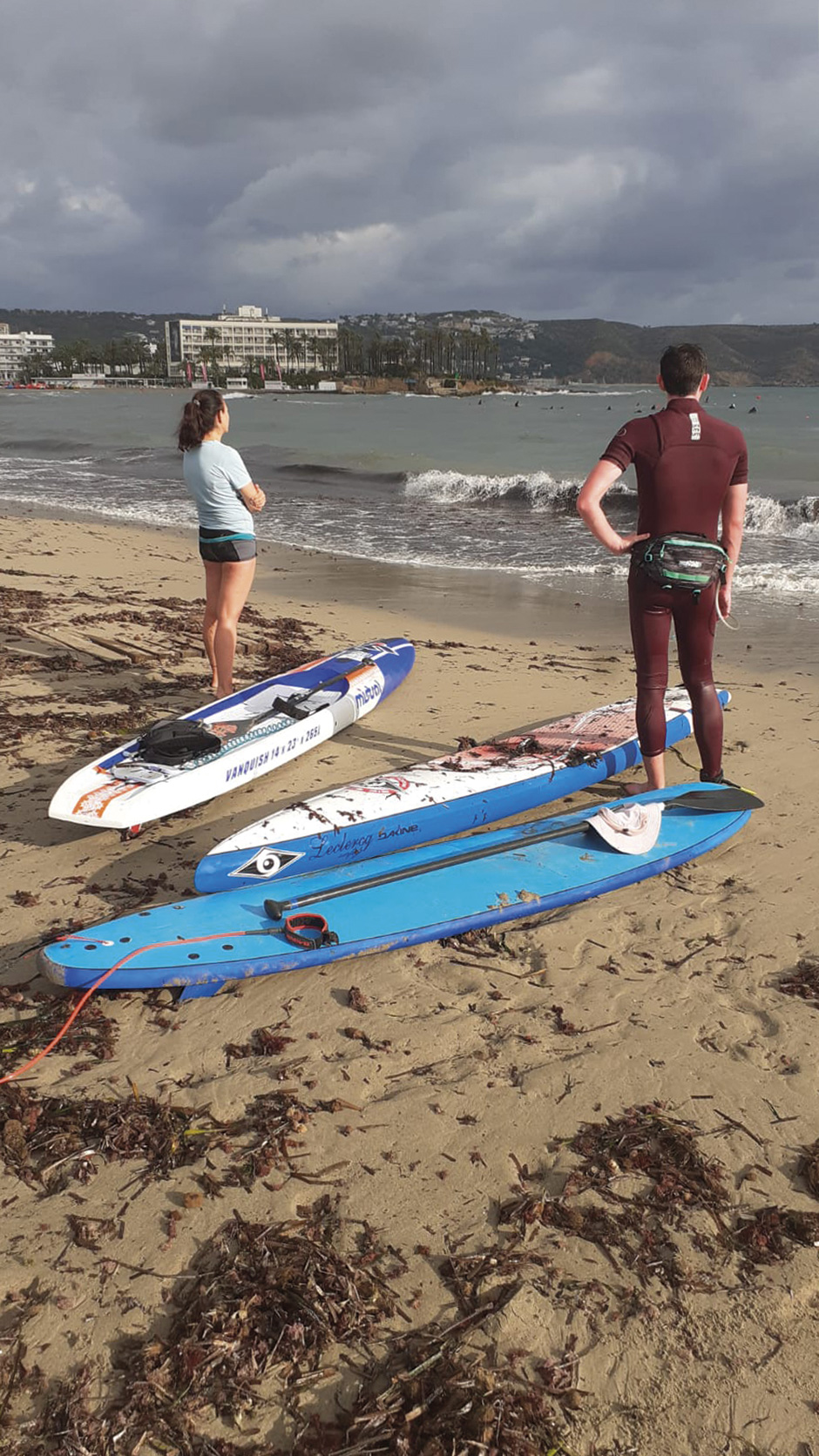
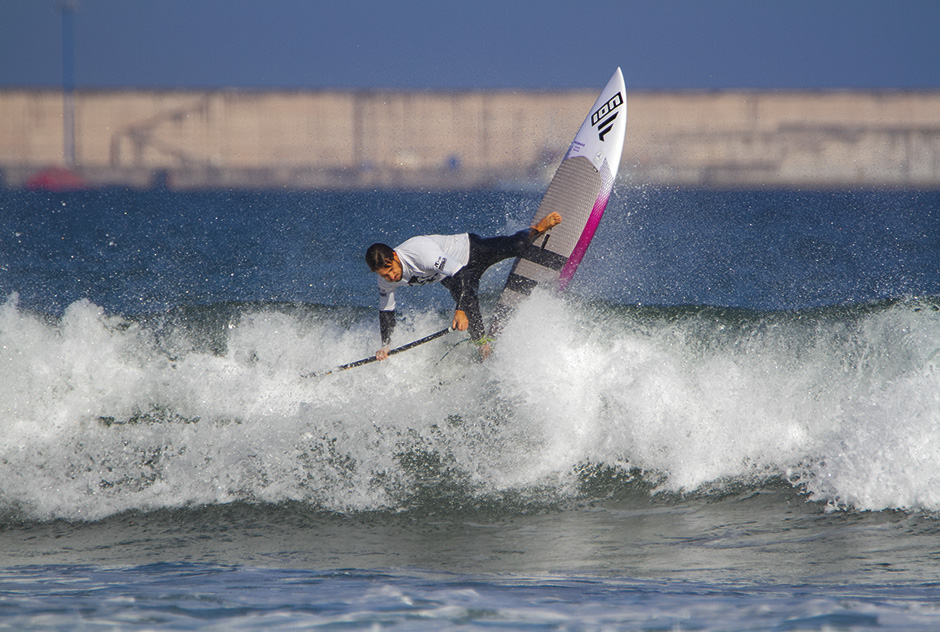
Telmo would take me into the break and do SUP surf sessions on our race-boards. I’ll be candid: These sessions were not my favourites. I would start the sessions with a degree of fear and hesitancy. He would let me suffer for a few minutes and then call me back to the beach. ‘Pick a wave and own it’, he would say, with an element of impatience in his tone.
His confidence and insistence that I could do it would stir something inside me, and I would go back out more positive and more determined to own a wave. It worked; without him there, I would not have been going back out. Such experiences are transformational – they shift our opinion of ourselves. But we sometimes need someone else to make that change happen.
Stage 3: Confident, competent
At this stage, the paddler has a good grasp of the ‘fundamentals’ of technique and can handle various conditions. If they race, they can finish in respectable positions and may begin to feel there is not much more to learn. But, of course, there is always more to learn. Sometimes, paddlers at this stage can lose interest and stop paddling altogether. The coach’s role is to find ways to continue challenging the paddler. This can be related to a specific skill or completing a difficult event.
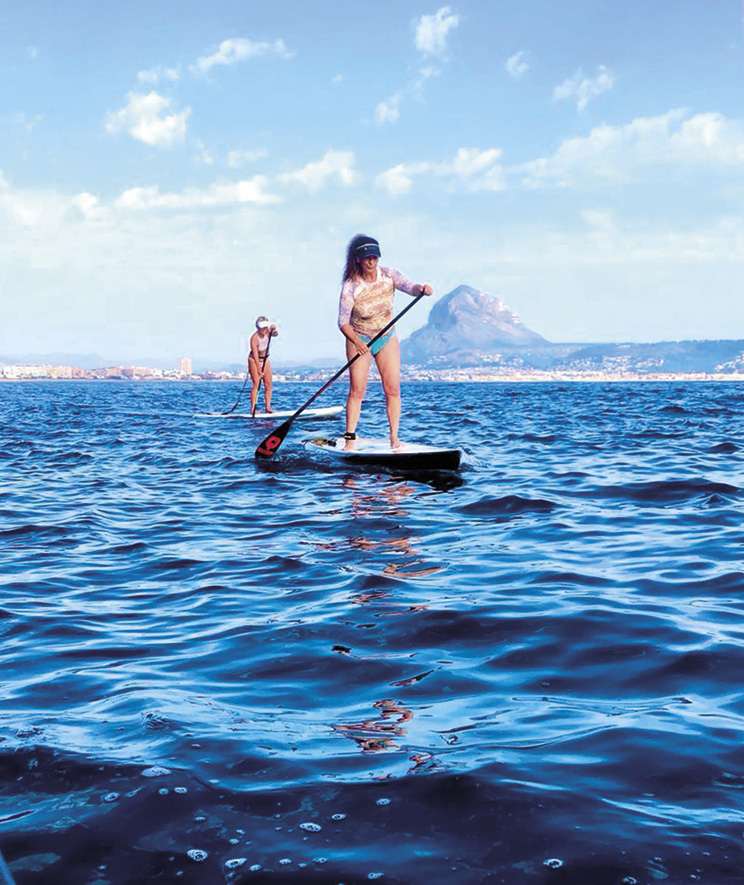
Telmo started taking me on quite technical downwind runs, which brought home to me how much more I had to learn. I bought a downwind board and experienced a marked improvement in performance and enjoyment. Good coaches find ways to help the paddler have a look in the paddling mirror to appreciate what they need to work on next.


Stage 4. Pursuing mastery
This stage is really an extension of stage 3. Once a paddler starts to pursue new avenues, they realise that their skill level can be developed much higher than they originally thought. This leads to a new iteration of physical development and focused learning. It may be that the importance of winning or being better than someone else becomes much less important to them. At this stage, the paddler is looking for ‘mastery’. They remove the pressure of comparison with others and look to paddle in challenging situations because they enjoy it for no other reason. Training becomes an adventure, not a chore. The coach facilitates such occasions by being there, supporting them, and joining in. Technical input is minimal. The coach becomes a mentor and friend.
I am not sure anyone claims true mastery of their sport, but the great paddlers inspire the rest of us to emulate them and feed a desire to constantly improve.
Where are the inspirational SUP coaches?
My personal experience is quite privileged. There are not world-class paddlers at everyone’s doorstep. However, anyone can now access the knowledge, advice and encouragement from the best paddlers on the planet. YouTube, Instagram and Facebook are stacked with tips and advice that are easy to digest and relate to. Any paddler looking to improve has access to hard-won secrets at the click of a mouse.
The use of video analysis and Garmin-style information provides these SUP legends with rich data from which to provide great input to aspiring SUPers through online channels. These professionals also have access to cutting-edge training plans and insights into the best physical preparation for specific events or the race season as a whole.
Meeting the expectations of a committed, invested coach can be highly motivating. Telmo is generally always the first to comment after I have completed a race. He looks for feedback and a running commentary before passing his thoughts. Over the years, it’s been about 50 % praise and 50 % concealed disappointment (with the feeling that he thought I could have done better). Both forms of reaction have pushed me to continuously improve.
Having someone who goes out and paddles in all conditions and distances and even participates in races with you provides the best opportunity to receive honest feedback on performance. When there is no one to offer an alternative view, it can be easy to be either too hard or too soft on yourself. A coach can provide valuable perspective on a particular performance.
A good coach can help you recognise the sweet spots to hit in your own training. Despite all the research, there are many things we still don’t understand about the human body. Pushing it to the limit, day in and day out, certainly won’t deliver a sustainable, enjoyable paddling future.
In this respect, great coaches (with whom you paddle) can take the heat off the paddler. By this, I mean remove the guilt of not training 100% on the days you don’t feel 100%. In the lead-up to a race (about two weeks out), Telmo would say to me, ‘All the work is done now; these two weeks are maintenance of what you have. Respect that – don’t push for anything else.
Short intervals and no long paddles from now until the race’. This would fly in the face of everything I wanted to do, which was to keep ‘squeezing the lemon’ with the idea that more pain would deliver more gain. How many paddlers turn up to a big event with the body fully rested? How many actually turn up on the day tired and over-trained?
Great coaches provide perspective and help the paddler keep the goal of mastery (not winning) as the priority.
So, what makes a great SUP coach?
I have shared some of my experiences, illustrating some characteristics that make a great coach. Ultimately, the dynamics in a coaching relationship will always be unique between individuals. However, trust, respect, and understanding are the foundational elements in this relationship. Great coaches have a lasting effect on their students. Their influence can make a massive difference in how paddlers enjoy their future years of paddling. Coaching is, therefore, a venerable and worthy activity to be valued and appreciated.
Andy Burrows is the author of the book ‘Improving your Stand Up Paddling.’ He spends most of his time living in Spain, where he paddles with some of the best in the world.
https://fernhurstbooks.com/books/permalink/172/improving_your_stand_up_paddleboarding

 SUP Mag UK
Hello!
I subscribe to the paper Paddler magazine but didn’t think I’d subscribed to anything via email.
Please can you stop all the emails and just leave me with the paper Paddler.
Thanks!
Andrew Millest
LikeLike
Apologies Andrew – I have removed you from the list.
Cheers Pete
LikeLike