
Behind the brand: SUP Inflatable’s Emma & Gary
Interview: David Partridge
Photos: SUP Inflatables
Historically racers used hardboards because of the better glide and stability. Things are changing. Inflatable manufacturers have responded to paddlers looking for faster, longer touring or racing boards with rigidity, stability and pointy fronts.
I’m a typical paddler, taking ages to research Chelmarsh Sailing Club’s purchase of school boards (we ended up with Red 10-foot-6). I wish I had met Gary and SUP inflatables back then!. Wanting to try longer routes and to carry camping equipment, I bought a 13-foot 2 Voyager, then a narrower, faster board — a second-hand SIC Maui — for the Trent, Broads Ultra, and Glen. Red loaned me an Elite race board for the Barrow Blitz confirming how technology has moved forward. That board was as quick as a hardboard, especially when you take into account portages and hauling it on and off the water.
Inflatable technology hasn’t stood still, and you need experts to guide you, as websites can often be misleading, false or even fake!
The roadshow experience
SUP Inflatables created roadshows in 2025. I asked Nikki Downing for her recollections on the event at Chelmarsh:
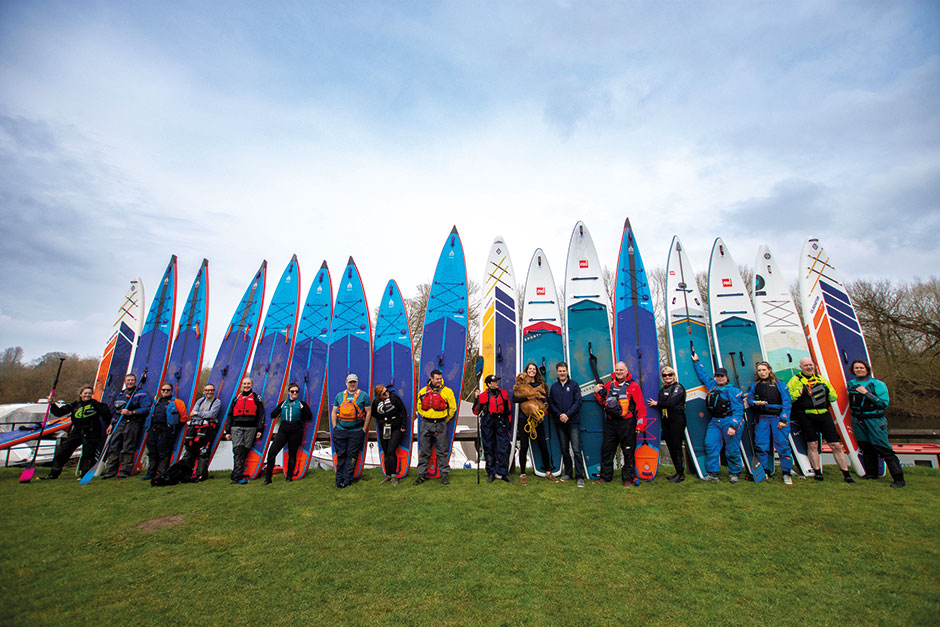
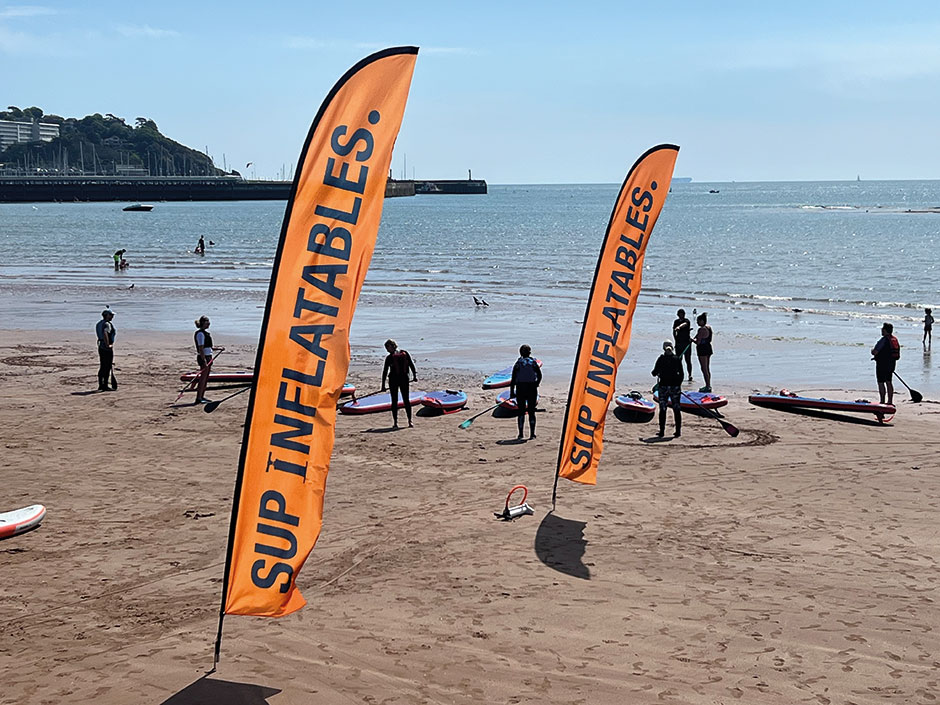
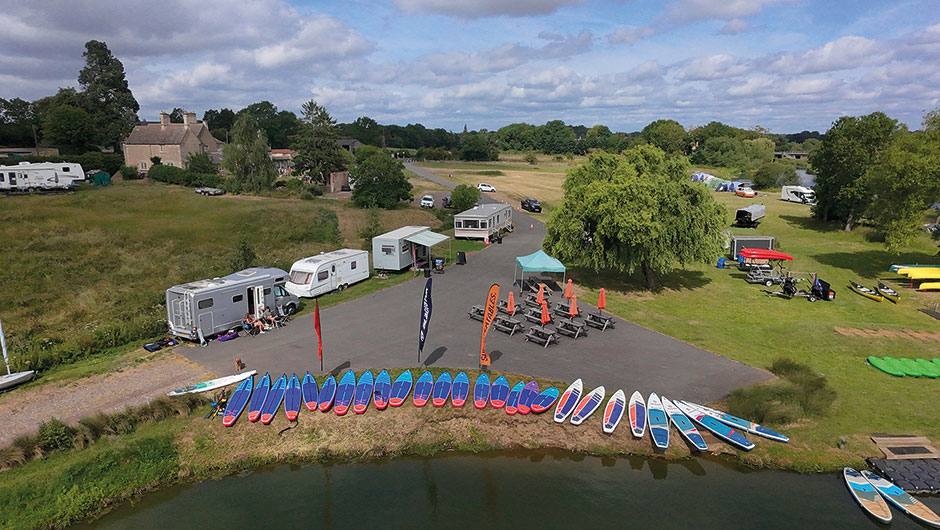
“Well, I can say it was very busy! It was easy to set up Gary and Emma did most of the work! The event was free and booked via Eventbrite. This gave us details for club insurance. People booked on directly. The club provided changing rooms, showers, a canteen, and a large area of grass for the boards to be laid out for display.
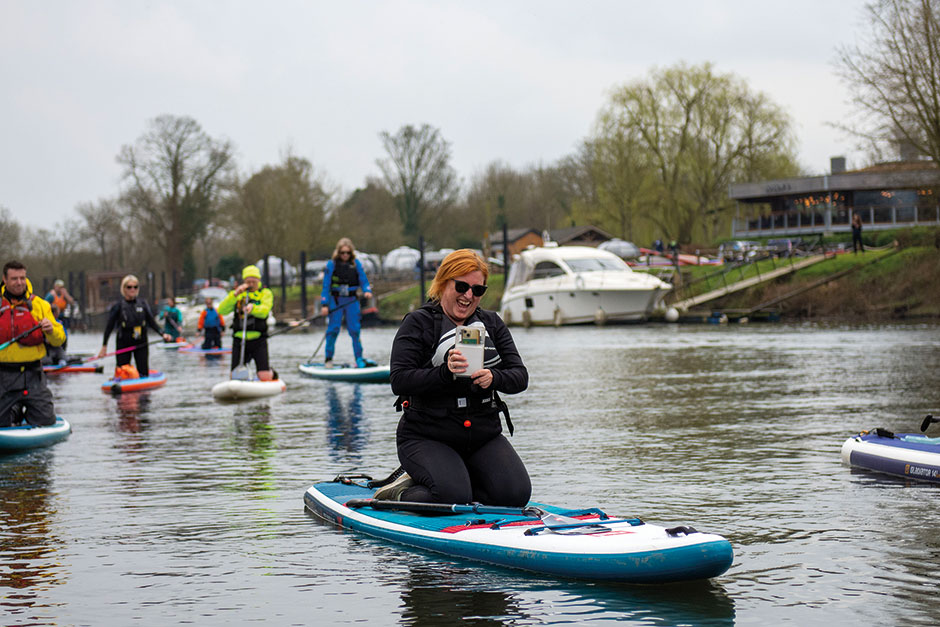
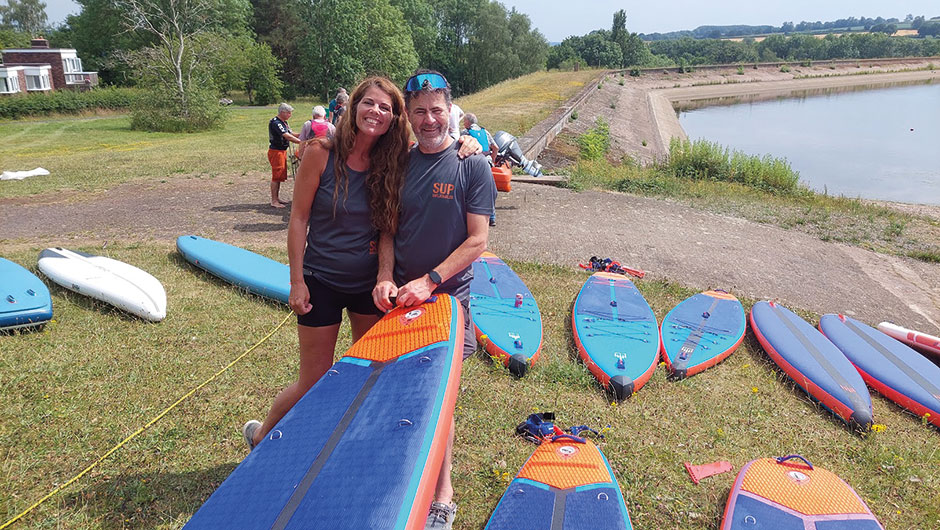
Gary and Emma inflated the boards. People stayed most of the day as they were having a great time! There was opportunityto try a range of boards and paddles and to chat with fellow paddlers. They were very knowledgeable on the boards and paddles and helped people choose the right sized board for them and their experience. They kept going all day offeringtrials and allowing paddlers direct board comparisons.”
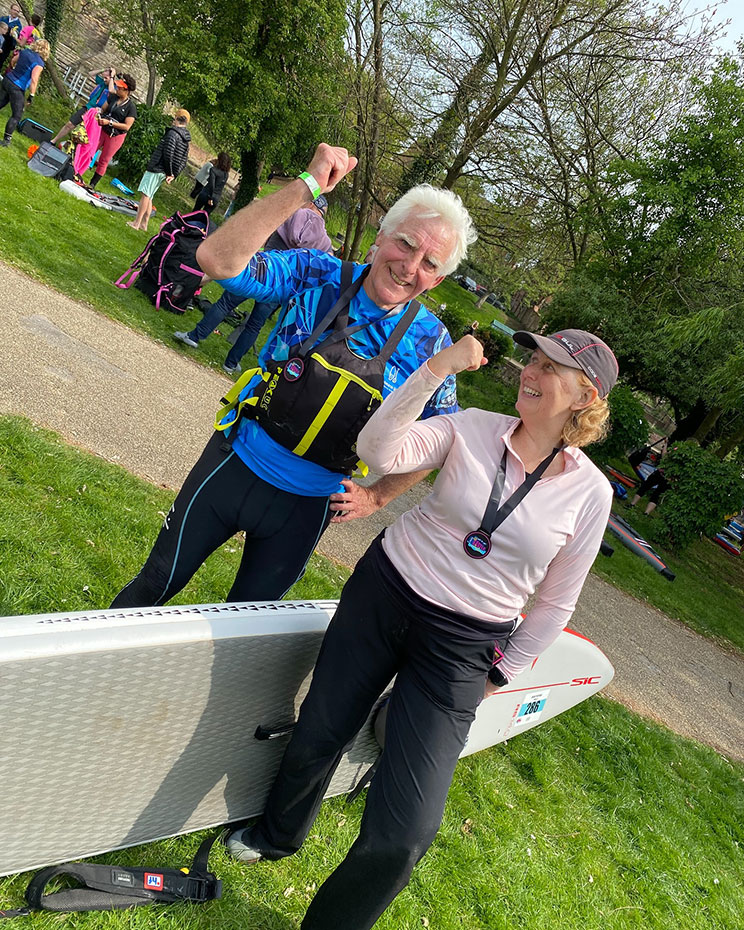
David Partridge and Nikki Downing at RTC 2025
Paddler Feedback
James Griffiths: “My wife and I did an intro to SUP at Chelmarsh Sailing Club. We were hooked instantly. I started researching boards online, but ended up in a minefield. I posted on a Facebook group, and Emma from SUP Inflatables messaged me. I called her the following day, and we had an in-depth conversation about what we both want to get out of SUP and about some recommendations. Her knowledge and customer service was excellent and we have got some boards that will last for years to come”.
Elaine Bethell came to the demo day. “Emma was really patient with me, and Nikki was fantastic. I tried several boards. Emma asked me what I wanted, and I replied that I wanted to go in a straight line. I wanted to take part in the Chelmarsh 5km Sunday morning paddles. I was gently moved from a wide 10-foot-6-inch board to the Shark Venture Flow 12-foot-6-inch, and I love it” Elaine had a good look online and then communicated with Emma on Messenger. She was great at getting back to me, 12 out of 10 for service. They chased up the delivery for me and sent a waist leash and carrying strap after I ordered these as extras, they were just so good at answering all my questions.”
The Q&A
We met for the interview during a rainstorm in September. Things normally quieten down at this time of year, but Emma was at the back door of the warehouse in Wimbourne, Dorset (a calm stretch of the Stour just a 100 metres away), talking through a trial paddle with a couple. Tailored advice on their choices absolutely captured where SUP Inflatables feel their Unique Selling Point (USP) is. “Getting the right choice for the paddler, taking everything into account.”
So, what’s your background in the sport:
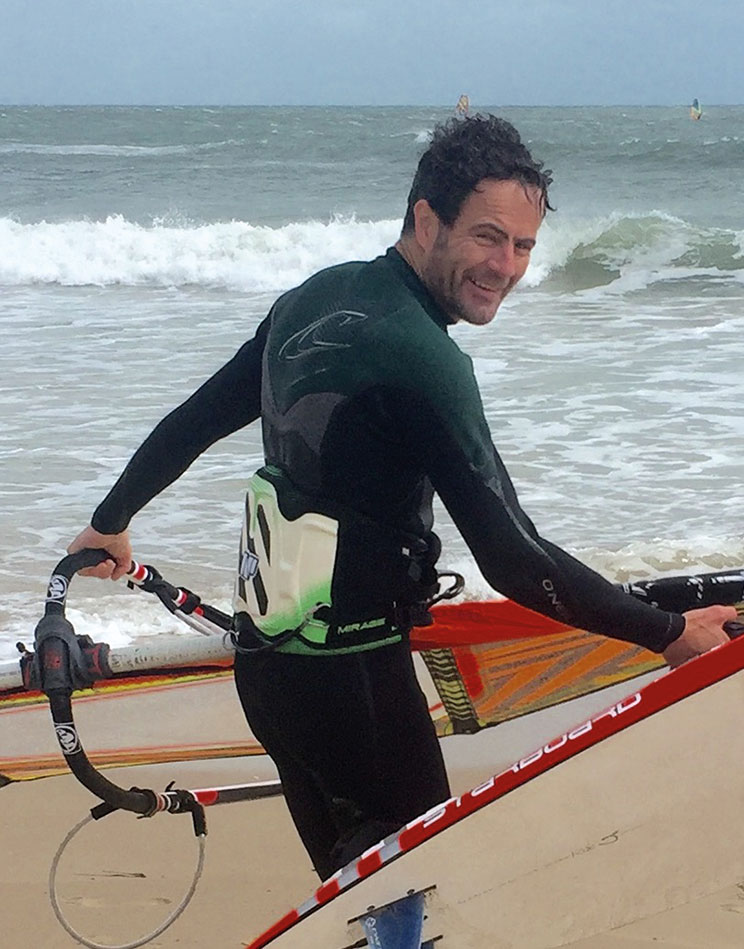
Gary: “I was a windsurfer in the early ’80s. Dad had a windsurfing shop, so I grew up with windsurfing, then wakeboarding, mountain biking and all the diversification of water sports. Seventeen years ago, paddleboarding arrived, and immediately, I knew it was accessible and relatively easy to do; you could get on a board and paddle. The early market was water sports enthusiasts looking for something to do on a calm day, but I knew this was going to grow.”
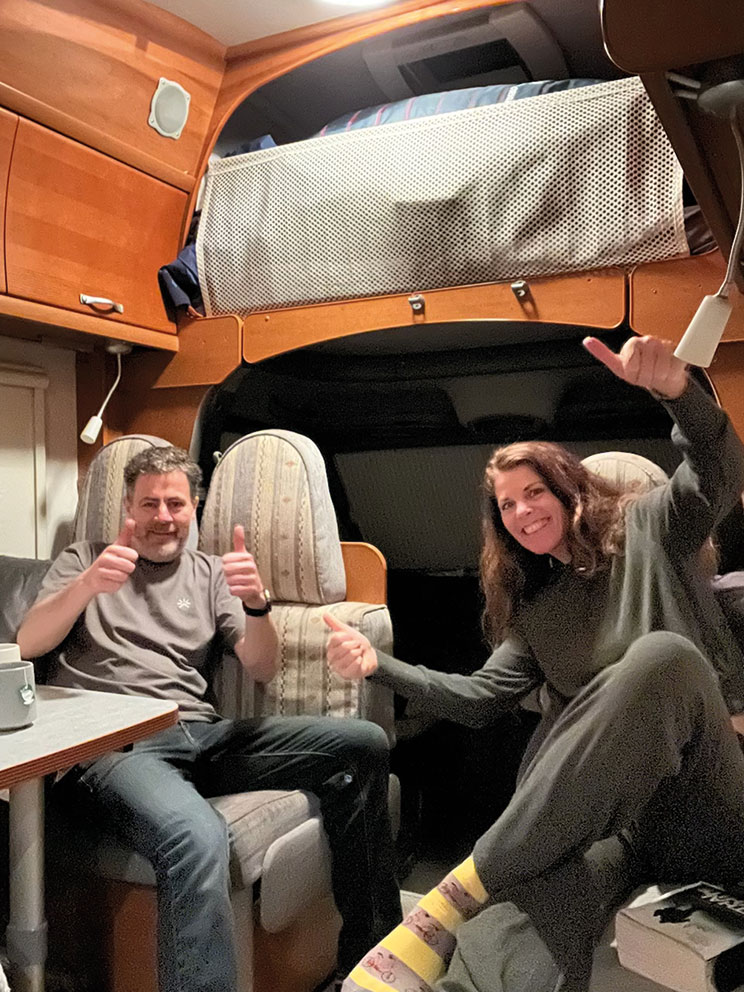
Emma: “I am from Halifax, and water sports weren’t really a thing for our family. I travelled a lot while working in marketing. I got on a SUP in the Middle East, maybe 11 years ago, and loved it. Back in the UK, I found myself on a mountain bike ride, overhearing Gary talking about windsurfing. We met and immediately sensed our passion for the sport. Gary is great with IT. I am passionate about addressing and engaging with the needs of women and understanding what people want from a sport. It was clear we could work together well, and here we are nine years on.”
And SUP Inflatables?
Gary: “I looked up the domain names Inflatable Sup had gone. It was a balloon business, so SUP Inflatables was next. I had a friend who developed the website, and right at the beginning, we wanted lots of information and advice. The info zone was critical then, as SUP was new, and it remains critical now, as people need good advice and help in making choices. The learning curve for SUP is so much shorter than, say, windsurfing, so people can buy a board after a 2-hour lesson, it’s accessible, transportable, easy.”
In the early days, the core business was beginner boards, mostly 10-foot 6-inch boards; lots of stability, easy to learn on, most of our customers were new to the sport. Now this is a ‘saturated market.’ People still need advice and help, especially since many of the cheaper brands are unreliable, have poor quality control, and tend to be less robust and prone to deformation. Our customer base is changing, we still sell a lot of starter boards, but more and more we have repeat customers or people looking at slightly longer boards with better glide. Our ‘go to’ often now is an 11-foot-6-inch board for the new paddler, allowing them development and ensuring the boards have a good life and don’t end up being discarded.”
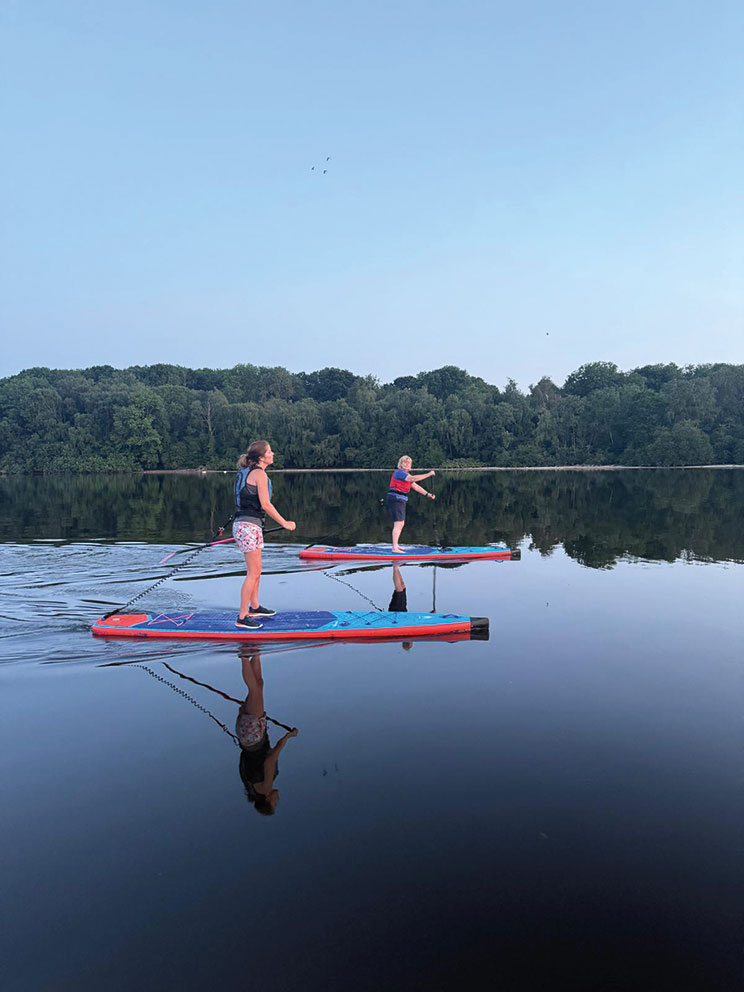
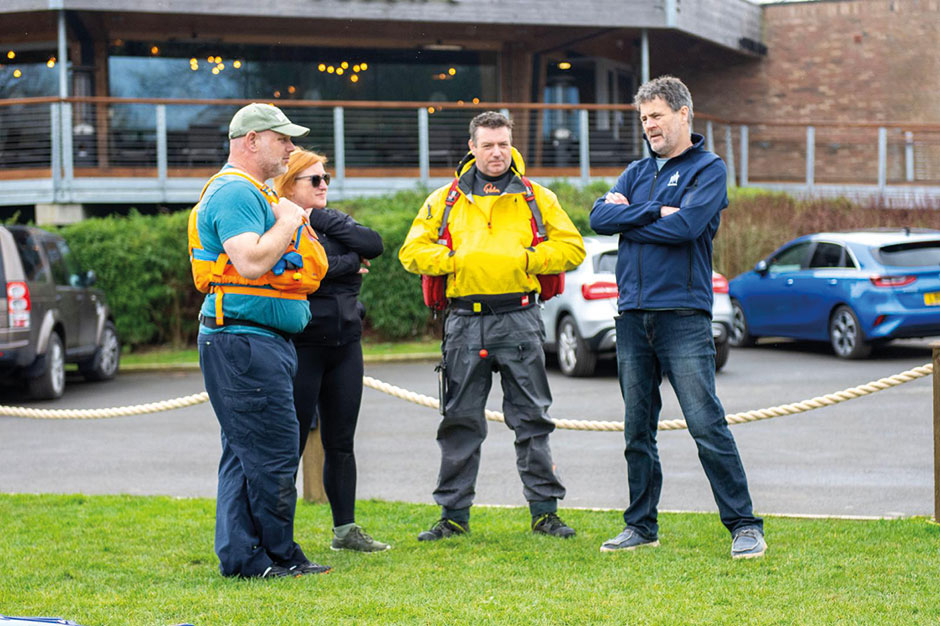
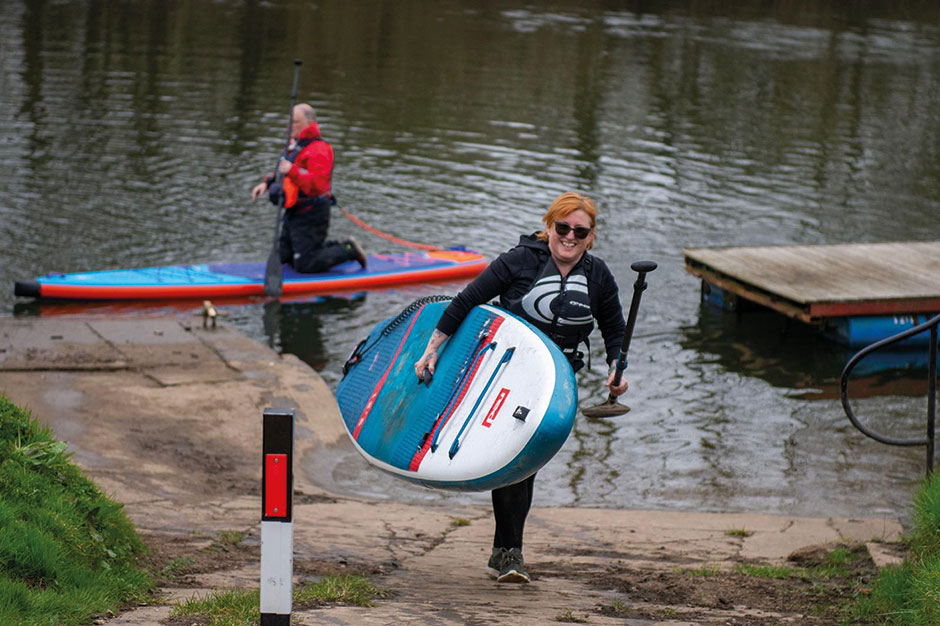
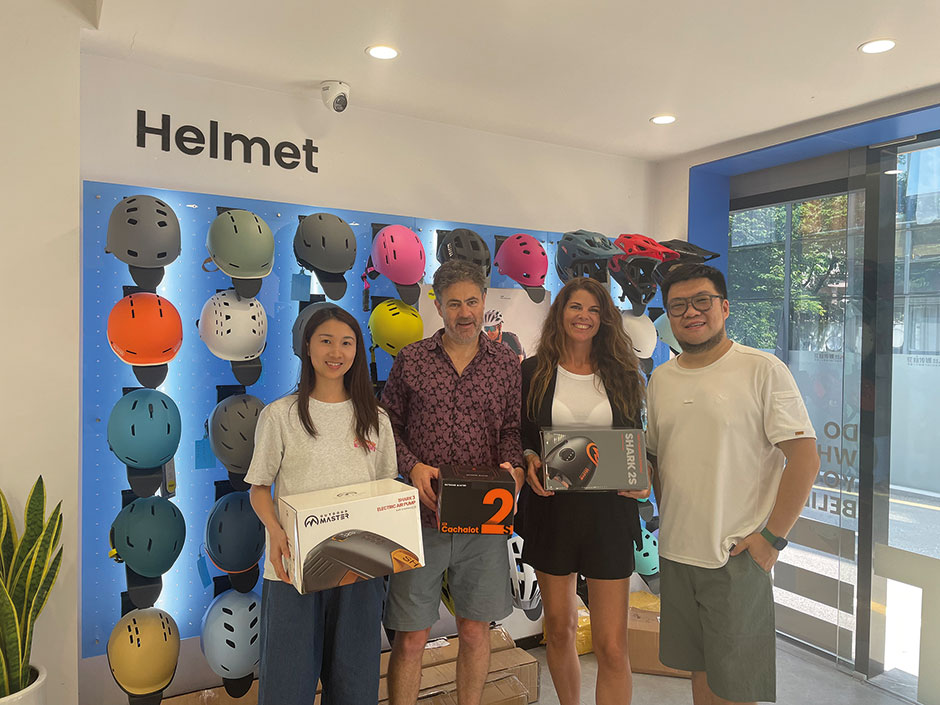
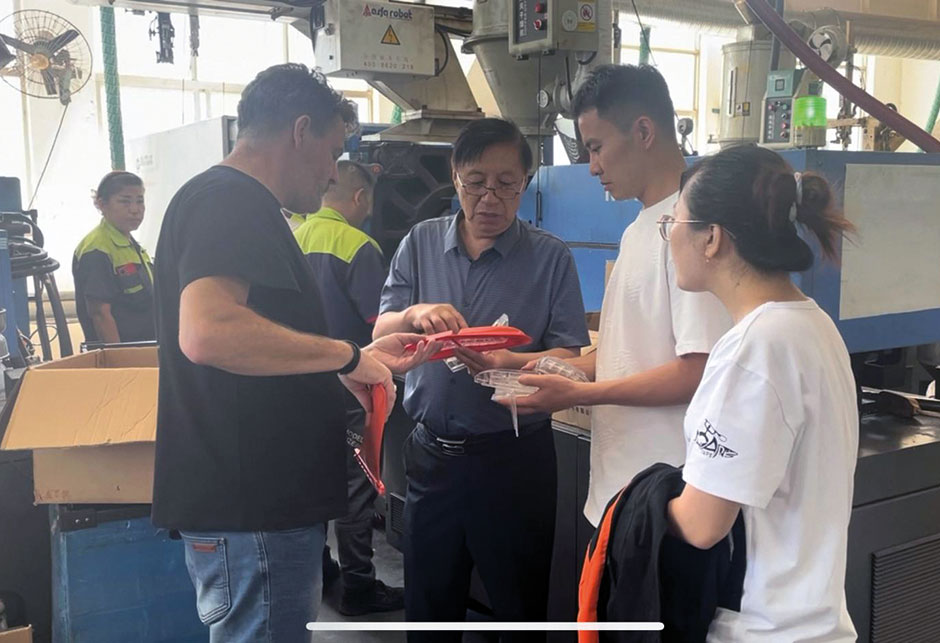
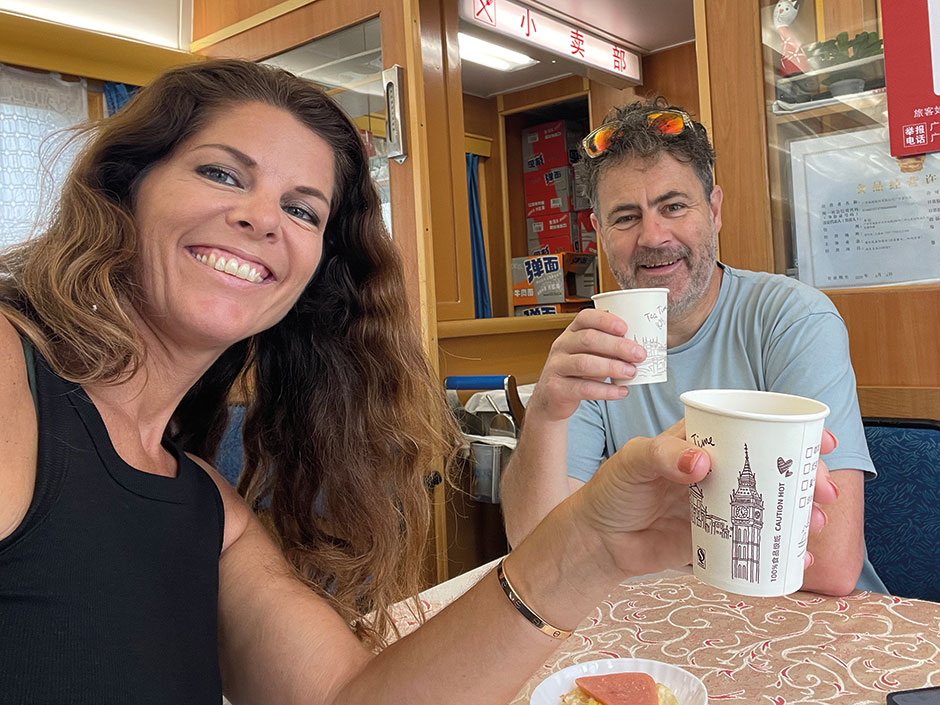
For Gary and then Emma, there has been a continual learning curve. They have visited the manufacturing plants in China, spent time with designers, manufacturers and brands providing direct customer feedback and ‘influence development’. Gary says, “We in the UK are probably more technically advanced, our market and customer base is for longer, thinner boards or specialised boards. For much of Europe, the retailers are offering standard products, so I really feel we can help and advise brands and manufacturers with all our customer feedback over the years.”
A key finding for Gary has been the improved stability and reduced resistance of the thinner boards. “This comes from my windsurfing. Red has great quality, and its 10-foot-6-inch was 4.7 inches deep. The thinner the board, the better the construction needs to be; the shape relies on higher pressure. Red uses better materials and construction, allowing for thinner boards. We are passionate about this and encourage other manufacturers to reduce the depth of their boards. Lower price point boards often twist or distort, so understanding the construction for us has been key.”
Discussing the construction, use and best board size and shape all take time. “It’s hard work talking to customers, often we are on the phone for 30 minutes or so, this is a totally different selling experience to the click and buy of many internet sellers, where even finding a telephone number can be a nightmare.”
Some wisdom about construction
Depth
Gary discussed Shark, which has built identical length and width boards in both 5-inch and 6-inch thickness. The deeper boards are seen as for the heavier paddler maybe 100Kg or more but actually often when compared side by side on a trial even the heavier paddlers prefer thinner boards. One key point is that the rider’s weight is over the centre of the board. Luggage (camping gear, bags and equipment) is stored fore and aft so doesn’t lead to board bend and as such shouldn’t prejudice board depth. If you want a board for adventures, you can still go with thinner profiles.
Dropstitch
Dropstitch is a universal mesh that allows the inflatable structure inside a board to withstand pressure. The materials are bought in by manufacturers but there are some quality differences: the amount of fibre of course (creating the tiny dimples on the board structure). Align the two layers to match, preventing distortion. Gary explained that quality manufacturers tend to laser cut just two layers at a time to ensure the drop stitch lines up properly. “If you are cutting multiple layers, it’s cheaper, but the risk of misalignment and warping goes up.” Unfortunately, the material used for dropstitch is not recyclable, so even if a different, recyclable material is used for the outer layer, the boards are still not environmentally friendly.
Rails
The rails (sides) of the board are where the upper and lower layers are joined. You can glue the rails, allowing a rounder shape. “You don’t need to get a welder in, so the seams are smaller and there is less gap in materials. The glue is also much easier to fix, so that a small leak can be reglued.” Welded rails rely on the layers of PVC being melted together in a welder. Failures are fewer if the process is well-executed, but repair is far more challenging. At the end of the day, as Gary says, “whichever works well, so long as you have good quality manufacture.”
Who do SUP Inflatables work with?
“The key brands are Red, Starboard, Shark and Gladiator. We also retail many other brands, but these are the main quality brands we work with.” Gary is keen to offer a range of premium, well-made boards. They are retailers for Red and Starboard but distributors for Gladiator and act globally for Shark, advising on development and design. I asked about conflicts of interest; Gary is keen to stress it’s all about feeding back to all the premium brands and ensuring development and innovation. “There is no real difference, at the end of the day, the customers choose, and it’s our job to try and show them options which match their needs.” He also notes that as a distributor “we have more influence than a simple retailer so can feedback from many thousands of customers what developments and innovations are needed which benefits the whole industry.”
Gary, Emma, and the team are on webchats and meetings two or three times a week with all their suppliers to discuss ideas, provide feedback, and address any quality issues. Having a choice of premium, reliable, and dependable brands is key. Gary says, “Customers are advised on length, width and profile, but, at the end of the day, brand and colour choice is down to them!”
Plans and thoughts
Would there ever be SUP hardboards sold by SUP Inflatables?, Gary quickly answered “No.” The key differentiator for inflatables is ease of storage, ease of handling, transportability and all of this makes retailing hardboards difficult, “besides, there are great suppliers out there.” SUP Inflatables does have a clothing and SUP accessory brand, ‘Riding not Hiding’. “We have added colour to paddles and tried to open up new ideas.” They also provide a wide range of products, from socks to PFDs, from a huge number of suppliers. “We provide everything for paddlers from river fins and pumps to spares, leashes and paddles, but the core of the business remains the supply of boards.”
Demo days – will we be seeing more in 2026?
Gary: “We are planning soon, maybe longer events in one place so that customers can make a weekend of it. It is great to see people trying new brands and comparing boards. Regarding safety, we discuss leash, clothing, but we can’t sell safety, key is providing information and advice and trying to get people to understand risks and the environment they paddle in.”
Emma on lifestyle: “Paddling when you’ve been chatting about paddleboards all week is not always what you want to do at the weekend. Summers are always busy, so we tend to paddle in the winter. Sometimes, I am so jealous, but we still have so many enquiries we just can’t get away or even develop a strategy until the nights draw in.”
Gary: “Getting our passion over. We have been told social media and TikTok need quick videos, but our video guides are 25 minutes long! Similarly, engaging with customers and understanding their needs can be a lengthy process. It’s good to have weight, height and paddling ability as a starting point, ambitions and plans as the next part, but then the conversations become deep and technical.” Indeed, the company’s website offers a wealth of advice and information, which has always been a key resource.
Where does the future lie?
Gary has seen trends and developments over many years in water sports, skateboarding and biking, “It’s developing still, our customers are better informed, developing as paddlers and needing better equipment. There is still a core of new paddlers buying starter boards, but the proportion of these is decreasing. I think we will have another good year next year. “Our business is all about offering the right board to the right person. The growth in events aimed at inflatable SUPs is also, of course, going to act as a market driver.”
Emma is really keen to keep listening to customers. She is particularly passionate about addressing female needs in a male-dominated manufacturing and retail environment. For her, the core of the business is “Engagement and maintaining quality. Poorly manufactured and cheap products are damaging to the environment and the sport.”
I am really concerned about misinformation and false claims. People gain confidence now through TikTok or advertisements, and the closest some sellers have come to paddling is taking a walk on the beach! Funnily, those quality manufacturers who are most technical often suffer from too much content and detail, and people often can’t trawl through it all.”
We utilise assistance with social media and advertising. There is a constant balance between content and information. For us, the most important thing is that we are there at the end of a mobile to talk through any issues. If you lose a fin, we have a new one out to you in the post immediately.”
Gary and Emma are very keen to support sustainability. Still, it is difficult to envisage a step change in construction even if TPU or other materials can be developed, as the vital dropstitch will, in the medium term, remain unrecyclable. “We can work on packaging and distribution, but most importantly, longevity of boards to try and address the environmental concerns.”
I could have talked to these two all day, and indeed, many SUP enthusiasts do just that. I hope this inteview allows you to have shared some of the insights, to think about your next board choice and about the guidance you can find on the comprehensive SUP Inflatable website.


I found this a strange read as I had nothing but appalling customer service from SUP inflatables when I had a Gladiator paddle fall apart during a paddle on the the river Stour. After inspection by several very experienced paddleboarders it was clear that the insert into the 3 part paddle had NOT been properly glued. Despite several emails and offering to send the upper part of the paddle to SUP inflatables for their inspection they showed NO interest whatsoever and even suggested that I should not be doing 5km paddles on a touring board. They clearly had no intention of resolving a QUALITY issue or providing feedback to Gladiator (who were equally has dismissive). The paddle was clearly NOT FIT FOR purpose but all SUP inflatables would say is “its outside the 1 year guarantee” and then “its wear and tear”). I offered to go to ADR which SUP inflatables initially agreed to but then said they would not be bound by the outcome. I therefore informed DUP inflatables that they had left me no alternative other than to go to a small claims court. At this stage they finally offered to “repair” the paddle (which they have since done).
I would be more than happy to share the emails I received from SUP inflatables which shows them in a very poor light when dealing with a customer issue
They are very knowledgeable (I was extremely impressed when I bought the board) however their customer service is awful when something goes wrong
LikeLike