The art of drafting: why paddlers should practice it

Words: Andy Burrows
Photos: Andy Burrows, Sarah Thornely (SUPjunkie.uk) & Albert P. Laborda
I love drafting. It is both a mental and physical challenge. It has improved my technique and my SUP fitness and definitely helped me achieve any success I have enjoyed in racing. Once, it even played a key part in helping me escape from a difficult situation in the water.
Strangely (to me), many of my paddling buddies are less enthusiastic about it. In racing, it is often perceived to be freeloading at best and cheating at worst. In general paddling, it is largely seen as irrelevant.
So, why should paddlers practice drafting?



Racing
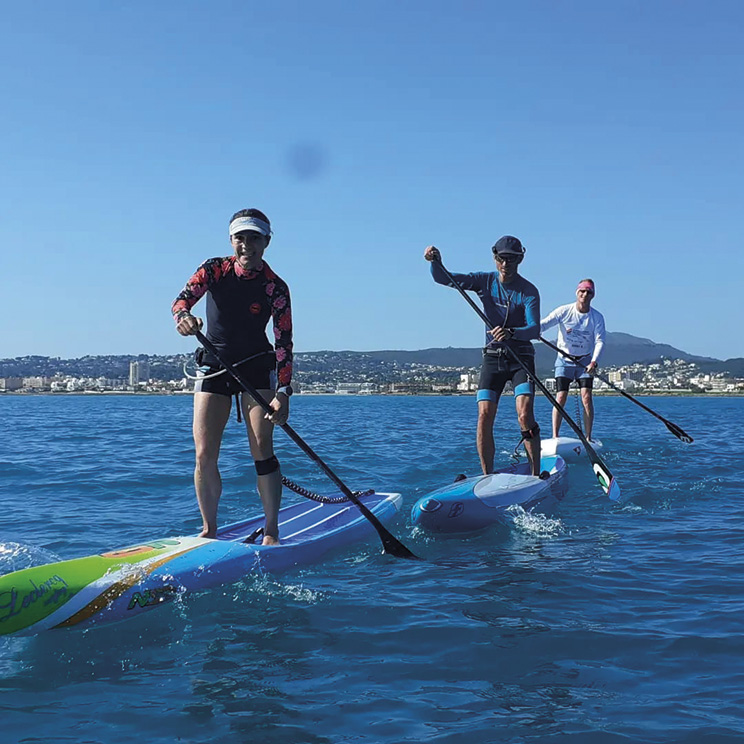
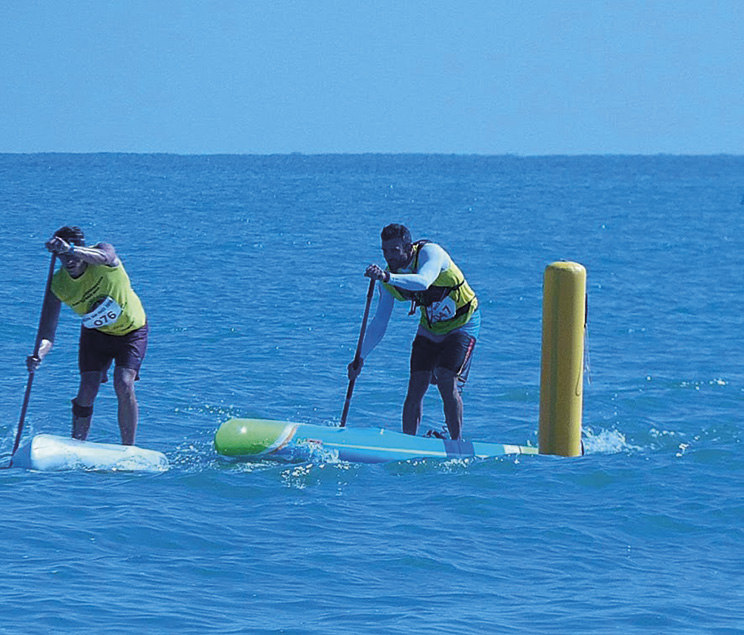
Drafting is an essential skill if you intend to race. It offers the biggest opportunity to finish as high up the field as possible. Why? Because you can paddle faster and further in someone’s draft than you can on your own. In my experience, it lifts my average speed over a 10k race by 0.2 to 0.4 km/hr. This might not seem much, but in terms of places, it is quite meaningful.
You can use the draft like a ‘step ladder’ through the field. Always start a race as fast as you can. After 0.5 km, you will feel the effects of an intensive start, so look for someone to draft. Don’t leave it too late, or the opportunity will be lost, and you will have a lonely race. Use paddling in the draft to settle down your breathing and heart rate. Get into a rhythm and gather your energy.
If someone goes past you faster, catch their draft. When you feel you are ready, look ahead to see if there is someone in front that you could catch to make more progress through the field. Conversely, if you are feeling stretched, then hang on in there. It will be much harder paddling on your own if you lose their draft.
Don’t feel guilty about being in someone’s draft. You are making them faster at the same time. They have the choice to allow you to draft. They could go faster to lose you or slower to invite you or force you to overtake.
Don’t feel intimidated if it’s you who is being drafted. Just paddle the way you want to. Don’t get forced into paddling faster than you want to. The person behind can overtake whenever they want.
If you find yourself in a draft train and the race is nearing the end, you need to decide when and if you are going to make your move to try and improve your position. In SUP, overtaking is not instant. It can take minutes to get past someone. It can also be exhausting and possibly counter-productive (it could cost you places). If you are leading the draft, slow it down about 1k from the end to conserve some energy for the sprint finish. If anyone tries to get past, make it difficult by upping the pace. Keep your lead at all costs.


Drafting in non-competitive paddling
You might wonder why you would ever bother drafting if you are not racing. But it is a skill that any paddler can benefit from.
Why?
It is enjoyable. You feel part of a larger unit in the draft – a single mass of paddlers. Each person has a role in maintaining the integrity of the whole, whether leading or following.
It develops your paddling skills. It’s a different challenge to paddling on your own. You mirror the person in front, observe their strokes, and predict where they are going while always being aware of the water around you.
It is a strangely hypnotic experience. After a while, you might become ‘resonant’ with everyone else. Your stroke matches others, and you fall into an altered state of consciousness. You feel hugely energised and feel like you could paddle forever.
It will collectively increase the paddling range substantially. Drafting saves each paddler energy. This has been estimated to be about 30 per cent. If a group gets caught out by a change in weather conditions and faces a stiff headwind on a return, the ability to draft will help get everyone safely home. This happened to me once when an exciting downwinder suddenly became particularly challenging because of a change in wind direction. The strongest paddler in the group led the rest of us into a safe haven through drafting. Without the draft, I might not have made it back.
Cooperation
It fosters cooperation. In the act of drafting, the lead paddler changes after an agreed-upon period, so everyone shares the load. Each paddler takes the responsibility of being both leader and follower.
It allows you to experiment with your stroke and judge the results immediately. For example, you can play with stroke length and cadence rate to see how they affect how the board behaves in the draft.
It offers a direct opportunity to compare the effectiveness of your stroke with others. Before I got into racing, my coach insisted on our group paddling extensively in the draft. I learned a lot about technique in these sessions. I got to observe better paddlers at close quarters. I realised how my positioning and timing differed from theirs. I could see first-hand how much power they were generating per stroke and how they used their bodies differently from me. It was a great route to self-awareness and a stimulus for self-improvement.
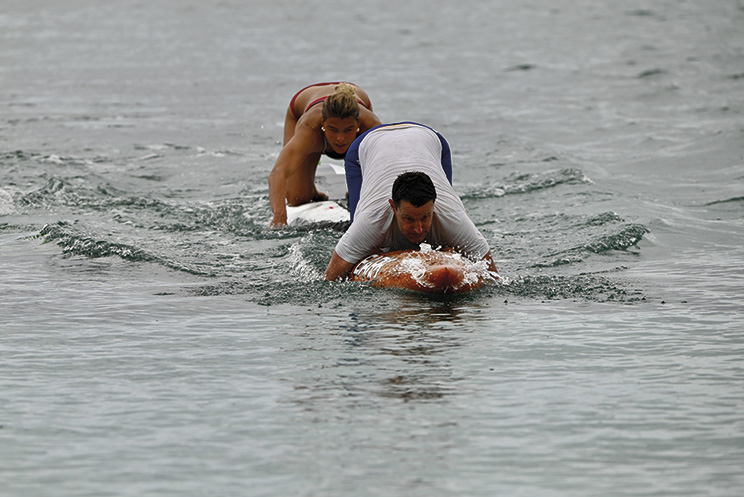


The drafting technique
I called this the art of drafting. And it is an art. It’s not something that can be executed perfectly in a matter of hours. You develop an intuition for it.
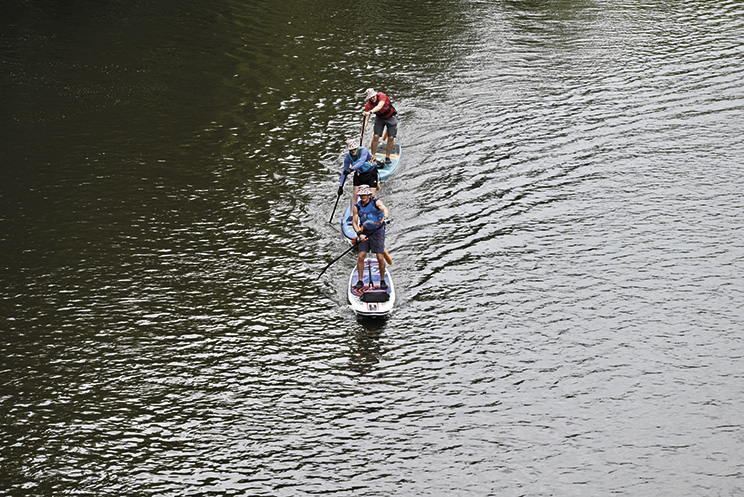
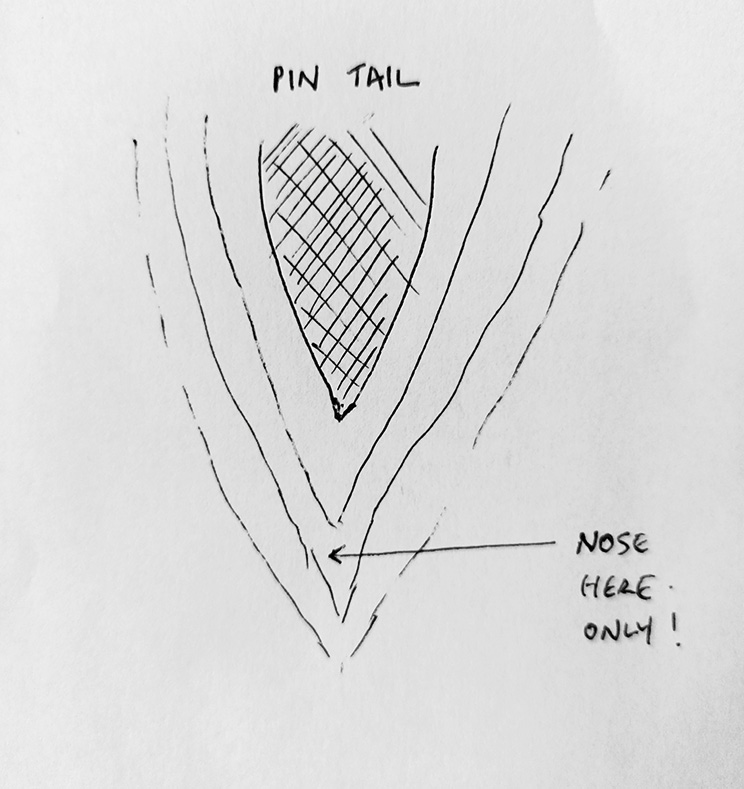
Simply put, you aim to keep your board’s nose approximately two feet from the back of the board in front. I say approximately because this distance depends on the wake you observe from the board in front and the type of board you are on. Technically, you are trying to ‘mount’ the little wave that comes off the back of the board in front.
This little wave varies depending on the tail shape of the board in front. Square tails are generally easier to draft than pin tails because they have a wider area of water to aim at. You know when you are successful in the draft because your board starts to feel lighter and easier to paddle. The nose of your board will also dictate the best location. Planing boards with upturned noses love finding this sweet spot, and because of their rocker, they will need to get closer to the board in front (sometimes it feels that the nose is almost over the tail of the board in front.) Flat water boards, with little or no rocker, will sit further from the tail.
Maintaining a rhythm
Once in position, try always to copy the paddling side of the paddler ahead. When they change sides, you change. Maintain a similar rhythm. This will help you to match the behaviour of the board in front. Also, observe the water around you. If you don’t, it’s easy to get caught out by waves, fishing lines, or speed boats. If you are in a draft of multiple boards, look ahead to the lead paddler. Watch how they are paddling and use them to predict direction and pace.
If the front of your board strays, you must correct it as soon as possible, or the draft will be lost. Try to predict when the leader will change sides so you don’t get caught out. Aim to keep your board’s nose pointing at the centre of the tail in front and your board travelling in the same alignment as the one in front.
When you are leading, pick a spot ahead and try and keep a straight line to it. This will make it easier for the paddlers behind. Try to look back now and again (using your peripheral vision) to ensure your colleagues are still with you.

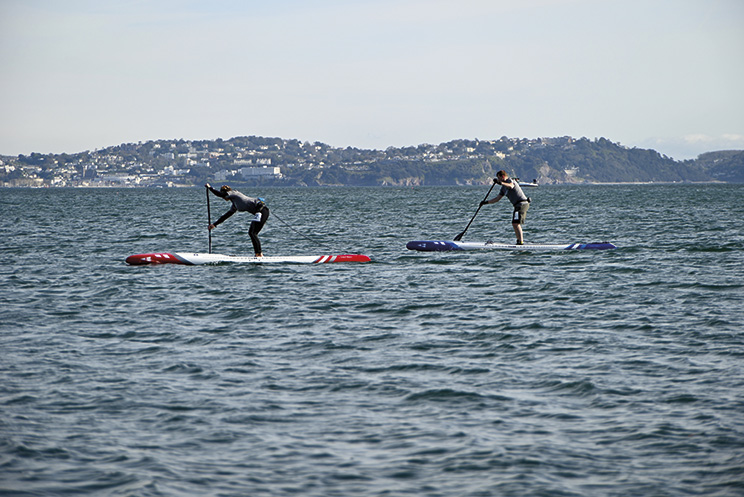
Flat water in calm conditions
Drafting is easier on flat water in calm conditions and gets progressively more difficult as conditions deteriorate. Drafting downwind is not worthwhile, as catching bumps might easily take you into the back of someone else.
You can also experiment with drafting at the side of the board in front. There is usually a prominent wave to catch about two-thirds down the length of the leading board. Maintaining your board in the sweet spot requires more skill, and you will find this demands a greater range of paddle strokes.
You can also use your feet to steer the board to keep in the draft. If you are looking to take the board slightly left then move your right foot further to the edge of the board than normal and lift your weight off the left at the same time. The board will track left.
My favourite form of training involves drafting. I’ll go out with someone else or a small group, and we’ll hit a challenging pace and change the lead every 1 km to share the load. My average speeds are always faster in such sessions, creating a great bonding experience.
Drafting is also an excellent way to undertake interval training. The leader creates the interval through a change of pace, and the rest try to stay in the draft for the duration of the interval.
To summarise, practice drafting whether you race or not. It will improve your technique and your fitness and bond your group. It might also get you out of a life-threatening situation.
Andy Burrows is the author of the book ‘Improving your Stand Up Paddling.’ He spends most of his time living in Spain, where he paddles with some of the best in the world.
https://fernhurstbooks.com/books/permalink/172/improving_your_stand_up_paddleboarding

 SUP Mag UK
Leave a comment