SUP coaching – is it worthwhile?

Words: Devan Crawford – Crawford Coaching PGCE, BSc Adventure Leadership & White Water SUP Coach
Photos: Taylored Outdoors, Jim Miller & Devan Crawford
With the dramatic rise in SUP, many paddleboarders may have overlooked the benefits of coaching due to the very reason the sport has become so popular in the first place: accessibility. Paddleboarders can find access to water much simpler than canoeists or kayakers. With no need for roof bars, the RRP generally being much cheaper and a fin to assist with going in a straight line. Self-rescues can be simple, with no need to drain water from the craft in the event of a swim, and the option to stand, kneel or lay down means anyone can access the water.
As an active paddleboarder and WW SUP coach, this article will delve into some of the reasons paddleboard coaching may be overlooked, what some of the benefits might be, what a good coach may look like, and if there are any limitations of coaching that I have observed.
Accessibility
While SUP has taken the UK by storm, evidence suggests that paddleboard coaching may be overlooked due to the very reason the sport is so popular: accessibility. As an avid white water paddleboarder and coach, I love sharing experiences on the river where people unlock new skills and achieve new objectives, all while in a beautiful environment that many non-paddleboarders are able to experience.
Easier to rescue than a canoe or kayak, fins that help riders go in a straight line, kneeling, standing, or even sitting options available, the paddleboard can be paddled without any training or experience. Lakes to rivers, grade 1 to grade 3, paddleboarders can rapidly progress without necessarily feeling any desire to spend time working on their foundational skills. For example, a kayaker will probably spend time upside down on the flat water to learn to roll before having long-term progression in white water.
Even paddling a canoe or closed cockpit kayak in a straight line is pretty tricky to work out on your own, and therefore, the coach’s role is often present right from the beginning. The coach may be an experienced friend with no formal qualification, a club member or a professional. Either way, someone helping you build on the foundations will help the longevity of your paddling journey, help prevent injury, and inspire you to progress in your paddlesport.
With many paddleboarders, the first interaction with a coach may be from a hire company that fits you out with a buoyancy aid and keeps half an eye on you for an hour. Once you have your board, you may book onto a WW safety rescue course or take an intro to white water weekend. With this, I have seen paddleboarders move through grade 2 to grade 3 white water and into the advanced grade 4 environment without continuing their development with a coach, whether formally or informally. Is it just a matter of time that serious injury, or worse, may occur due to the lack of foundational skills that the white water paddleboarder may have?
Wearing a leash, though slightly controversial, is a very quick and simple way to rescue yourself. One quick tug and you are back with your board, an easy self-rescue that doesn’t take much practice for most. A fin to allow you to go where the water goes, a stable 34-36 inch wide platform that doesn’t fill up with water and throw lines are rarely used because swimmers can climb back on. The accessibility of the sport is definitely an attractive quality, but without proper education, are paddleboarders putting themselves at unnecessary risk and perhaps selling themselves short on what is achievable?
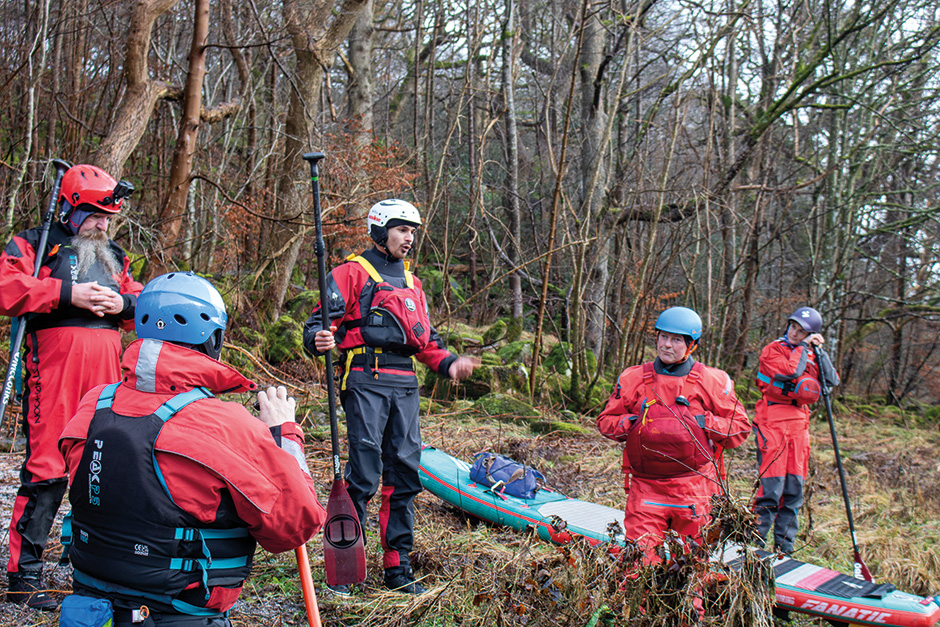
As both a coach and a student of the sport, I’ve experienced firsthand the power of coaching and its tangible benefits to paddlers of all levels. While some may take to white water after basic instruction or through self-taught methods, coaching can elevate your skills and ensure you get the most out of every session on your board.



The power of coaching in SUP
Magical moments & the perfectly imperfect river grading system
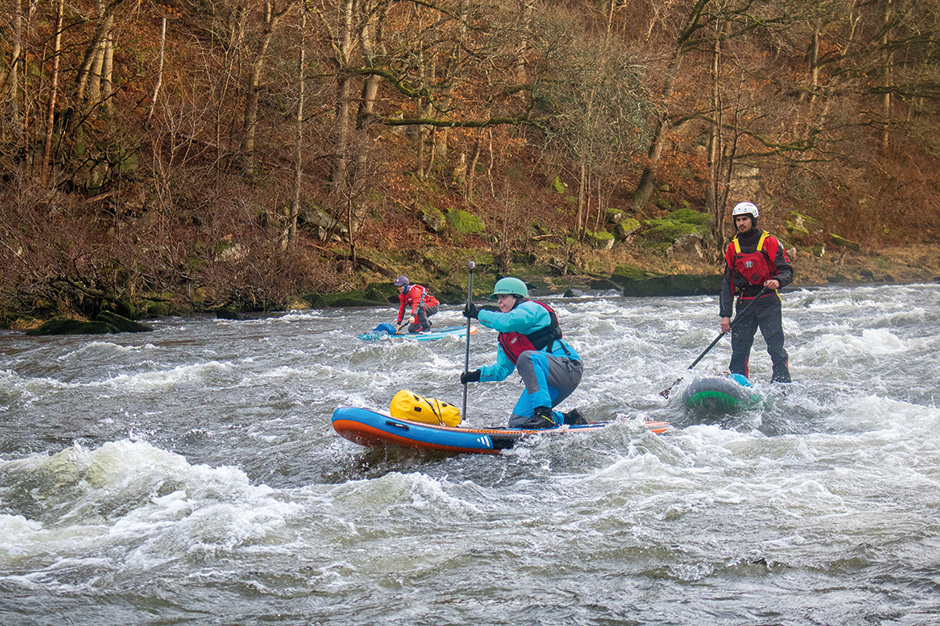
White water offers a perfectly imperfect scale of chronological grades that combine the river’s technical difficulty and severity. However, the grades do not necessarily reflect the natural environment or the type of skills required to manoeuvre safely. For example, a grade 2 river in high water may be much more consequential than a grade 3 in medium levels. A grade 3 river may be more technically demanding than a grade 4 section.
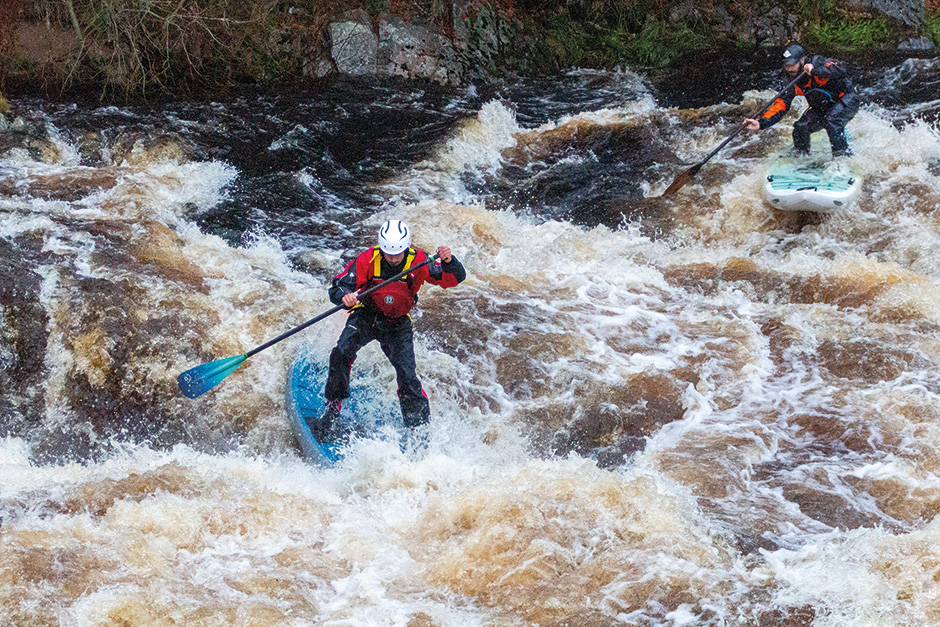
Wearing a leash can be more dangerous to wear in tight tree-lined rivers. A good coach can help the paddler understand whether they have the skills to paddle in a particular environment and how they may paddle that river. The coach can then help the paddlers to prepare for this. My professional mentors/ coaches have confidently inspired me to enjoy beautiful gorges, bouncy alpine white water, waterfalls and steep rapids through technical, tactical, psychological and physiological preparation. Where skill, safety and judgement combine, resulting in experiencing some magical moments that will stay with me for a lifetime.
Flat water progression – the missing piece
Like the kayaker progressing in white water, flat water paddleboarders should utilise training in a controlled environment to truly understand their board, balance, ability, fitness level, equipment, skills and even their team dynamic. Off-the-water training can also benefit those with limited mobility or those performing at high levels, but playing around and training on flat water or calm white water can have huge benefits.
White water is dynamic by nature; therefore, the amount of feedback a paddler can process in this environment can be too much to digest. Let’s take the forward paddle stroke for example; the flow in white water can hide the inefficiencies the paddler has, but there is no hiding your speed when the water is still.
Additionally, understanding and training specific muscle groups can be feedback more precisely in flat water, where targeting specific muscle groups can be encouraged. In contrast, a wider range of muscles is needed frequently in white water, again, due to the dynamic demand of the environment.
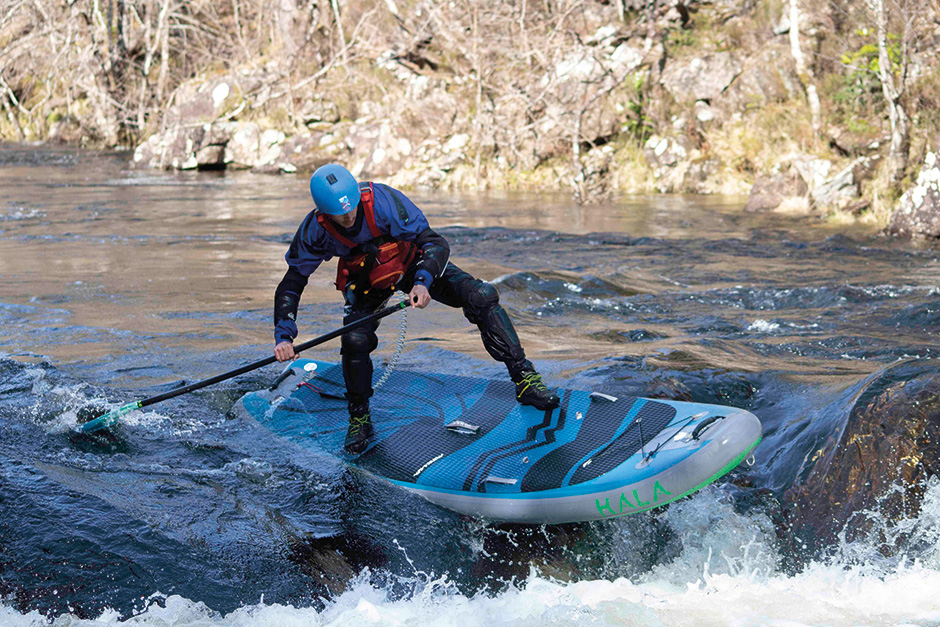
I am a very dynamic white water paddler, so when I train in flat water, I focus on strong static movements to increase my power in whitewater. Others may be very static paddlers with fixed foot positions and restricted mobility when reducing height. Therefore, their flat water training should be more dynamic, with footwork drills and on-the-water mobility training.


Paddling for fun vs training for gains
Many people I have spoken to have shown reservations toward coaching because they want to enjoy paddleboarding rather than taking it ‘too seriously’. By training technique, strength and safety skills, you simply have more paddleboarding games to play around with. Next time you’re out surfing your local spot, why not see if you can prone paddle to the other side of the river to learn the best position to do this in? If you ever drop/break your paddle, you’ll have another tool in the box to keep yourself safe.
Coaching can create a structured learning pathway which offers enjoyment through progression. Often, paddlers jump straight into complex environments without mastering the basic techniques. For example, I’ve found myself paddling in grade 4 with paddlers who struggle to ferry glide on their left side, making them unable to get on the right line. Their enjoyment and success on the water would have increased if they had spent time in grade 2 learning to cross deck ferry glide or switch stance.
The limitations of coaching in SUP
While coaching can be a game-changer, it’s essential to recognise that it’s not a magic bullet and has limitations to consider. One of the primary barriers to coaching is cost. For many paddlers, paying for professional coaching may not always be financially feasible, especially if a whitewater trip means booking additional accommodation and £100 in fuel for a round trip. While some people can access group coaching sessions to introduce them to whitewater, private progression lessons can be out of reach due to cost.
I offer online coaching, including training plans, drills, and off-the-water exercises. These can be prescribed after an initial assessment with a new client. Additionally, a flat-water session with a whitewater coach can iron out some creases before your next session on the Dee or at HPP.
The need for consistent practice
Coaching provides invaluable insight, but it’s only effective if you put in the work outside of your sessions. I’ve coached paddlers who attended a few lessons and left with improved skills but then failed to practice what they had learned between sessions. Like any skill, consistency is key. Regular practice, even if it’s only for short sessions, is necessary to see lasting improvements. Coaching can guide you, but it’s up to the paddler to apply that guidance on the water.
Individual learning styles and pace
Coaching can also be less effective if the coach-student dynamic isn’t right. Everyone learns differently; some students may feel more comfortable in certain environments than others. Some paddlers may thrive in a one-on-one lesson, while others may learn better in a group setting. Equally, the coach’s personal style may not suit everyone. Kev Brady has set up a fantastic platform to help you find the right coach. Check out http://www.supescapes.com to learn more.
So, is SUP coaching worthwhile?
In conclusion, coaching in SUP offers tremendous benefits – personalised feedback, skill progression, confidence building, and injury prevention. As both a coach and a paddler who has received and delivered coaching, I can confidently say that coaching can accelerate your learning, enhance your enjoyment, and improve your safety and efficiency.
That said, it’s important to recognise that coaching isn’t a one-size-fits-all solution. It requires investment in both time and money, consistent practice between sessions, and alignment between coaching style and student needs. Whether you’re a beginner or an experienced paddler, the key is finding the right coaching approach.
So, the next time you’re on the water, consider the minor adjustments that could take your paddling from good to great. Whether new to SUP or looking to refine your technique, a coaching session might be the best way to achieve your goals.
I’d love to hear your thoughts on coaching. Emails to devan@crawfordcoaching.co.uk are always welcome, and feel free to check out my page on Facebook and Instagram to keep in touch @crawford.coaching x @de.van_adventures

 SUP Mag UK
Leave a comment