
Skills and drills to boost paddling thrills
Words: PJ Simmons. Photos: Starboard
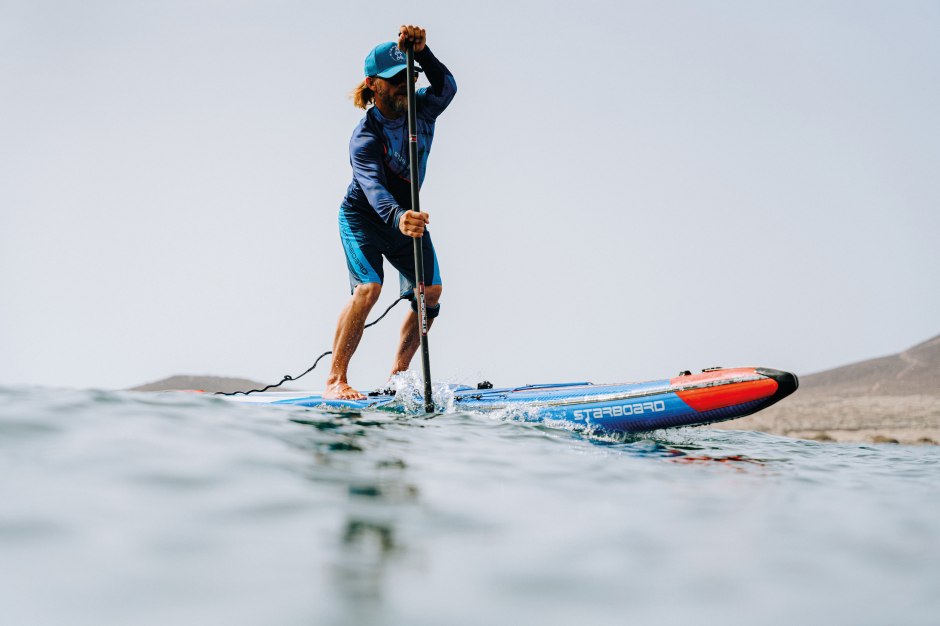
From SUP surfing to SUP Polo, on ocean adventures, downwinding or white water paddling, agility and anticipation are key skills for enjoying the sport beyond cruising in very calm conditions.
Motivation
As an escape from the stresses of modern life, SUP can bring a special kind of freedom, where paddlers captain their vessels, controlling their pace and direction. Often a very leisurely experience, for many, being taught formally or having to apply effort to paddling doesn’t have the same appeal as drifting around in calm, serene conditions.
Those aspiring to progress down the various exciting avenues offered by SUP are usually driven to improve by their pursuit of adrenaline and excitement. Yet, others don’t appreciate the value of learning fundamental skills. Those of the latter mindset should consider that the ability to deal with some wind and chop makes them safer on the water, especially in a country like the UK, where both weather and currents can change the water state rapidly. It also opens up a far wider range of conditions that can be enjoyed rather than limited to paddling on flat-calm windless days.
Comfort zone
After the initial learning phase, where falling in is likely, confidence and balance build over time, leading some to adopt an, “I can stay dry, so I will try to at all costs” mindset. Of course, not every session needs to involve immersion, but sometimes (particularly in the warmer months), donning a wetsuit, being prepared to get wet and taking on choppy conditions improve muscle memory and sharpen paddle bracing techniques. ‘Goofing around’ sessions where moving about on the board, paddling backwards, on one foot, spinning off the nose and the tail develop balance that hugely helps towards the more technical areas of the sport. Solid foundations also make for safer paddlers, improving the ability to power through chop and wind.
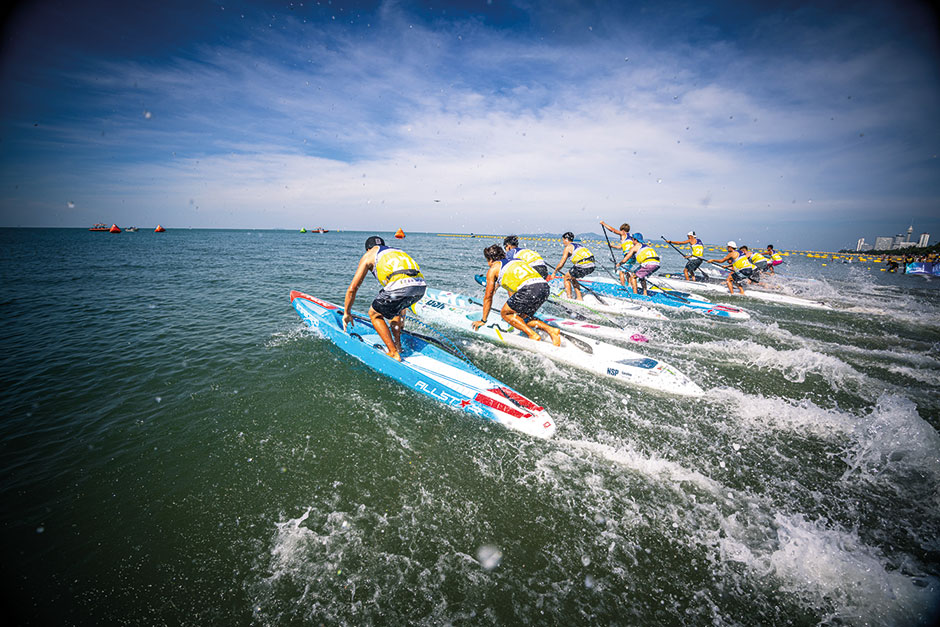
Georgia Schofield ICF SUP World Championships
This isn’t a detailed safety article, but planning and safety are crucial for any paddler going afloat. Preceding every paddle session should be a conscious risk assessment, particularly when expecting to be leaving one’s comfort zone. All safety aspects should be considered, such as choosing safe paddling locations and sensible equipment choices.
Locations and conditions
Finding challenging conditions to improve balance and board handling skills doesn’t require a trip to the North Shore of Hawaii, and choppy water doesn’t even have to be exposed to the open sea. Estuaries can be very choppy in certain conditions, such as when wind opposes the tide, yet still allow relatively safe paddling not far from the shore.
In some locations, an upwind/downwind route is good training: spending half an hour smashing into the wind can feel slow, but it’s possible to ease into a rewarding rhythm, popping over each piece of chop. Then turn and feel the boost from the wind on your back, flying downwind, gliding on the bumps.
Consider taking on a paddle that offers a different exit to the entry point, where the conditions are too difficult to return to the start. Flowing rivers are the obvious example, but a breezy day on a lake can also be a good challenge. Being dropped at the upwind end of a lake and collected at the other can present a fun and technical experience and give your first taste of ‘downwinding’!
Build up to taking on more challenging conditions gradually: a jump from paddling a calm lake to launching into a head-high shore break might just be a step beyond sensible and probably isn’t conducive to improving paddling. There are plenty of rungs to the ladder of progression but reach too far too soon, and sessions can easily become unproductive, demoralising, or even downright dangerous.
Knowledge of your local paddling spots is essential when planning sessions. With time and experience, you will learn what each spot delivers in different tides, wind directions and strengths. It’s fascinating but potentially also terrifying how much a stretch of water can change after even an hour. While lifeguards are the best to ask, in their absence, don’t be afraid to ask other water users, particularly those demonstrating their proficiency: the majority will only be happy to assist.
Waves
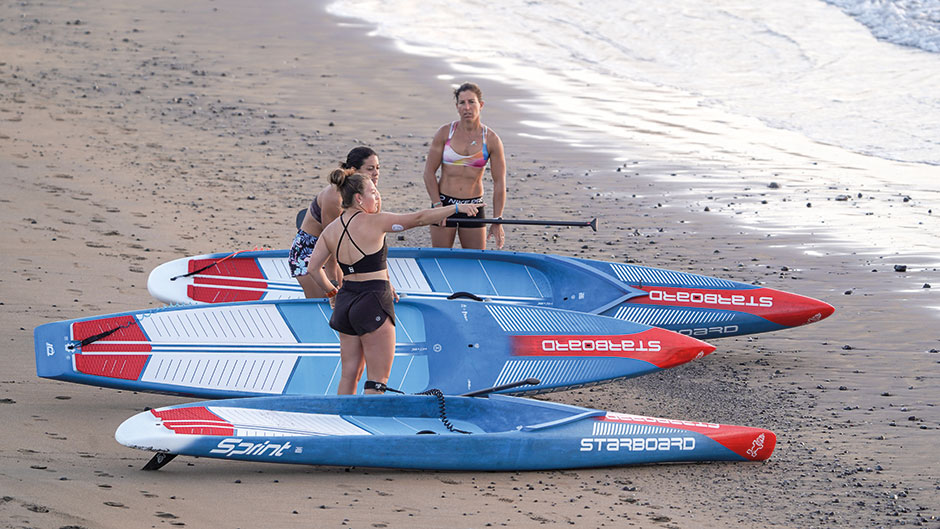
Many top racers spend much of their time on the sea, with chop, swell, and even breaking waves, challenging balance and board-handling skills. For beginners, even ankle-high waves can be considered the enemy, but in certain conditions, paddling in small waves on a race or touring board can be rewarding, even for those lacking experience on the sea. Having a few lessons in SUP surfing from a professional coach is a wise investment, saving considerable wasted energy and bringing the thrill of riding waves more easily.
Events
Racing is one of the best ways to improve as a paddler, and the UK has a fantastic range of events at both local and national levels. These events strongly focus on mass participation rather than being elitist. Tips and advice from fellow paddlers will boost skills and confidence. In addition to racing, some clubs offer SUP Polo, arguably the best way to improve many balance and skill techniques, with fun and excitement that doesn’t ever seem like formal training.
Aquapaddle is a non-racing 5km set route with a growing number of events nationwide. If there’s one near you, it’s a great way to meet other paddlers and hit the water in a safe, controlled environment.
Boards and board-specific techniques
Paddling for hours on flat water may help develop a good paddle stroke and fitness, but when venturing onto more exposed and choppy waters, rider skills and board type become more critical. The natural progression to a touring board or even a race board can bring faster, more efficient paddling, but the narrower boards don’t automatically improve the rider’s skill set. Going too narrow early on can lead to a paddler avoiding tricky conditions, slowing development rather than enhancing it.
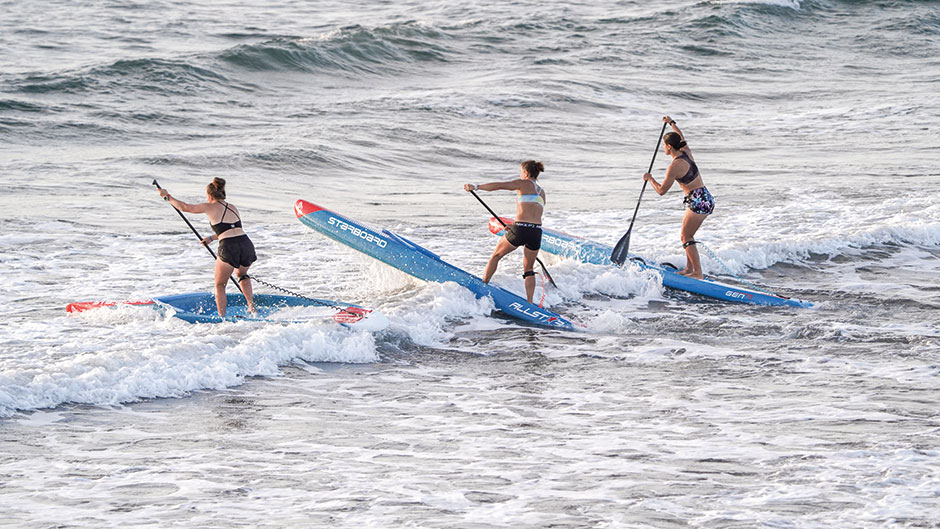
Moving down through the sizes when testing a range of the same model, a paddler will reach a width that they can paddle well on the flat, but the added stability of the next board up in width brings far more range and versatility. The wider board can end up faster due to greater stability, allowing a more committed and powerful stroke.
Matching the board style, particularly the width, to rider ability and conditions is crucial for enjoyable and rewarding paddling. A board designed to excel in chop is the Starboard All Star, which comes in both composite and inflatable versions. The composite model, in particular, offers excellent secondary stability from the high side walls in a dugout design, with carefully designed rocker and volume distribution. While some boards prefer to be planted on one rail when paddling, the technique required to extract the best performance from this board (from the skinny 20.5” model to the widest 28”) involves keeping the legs slightly bent and allowing the board to “rock and roll” slightly below your feet, trusting the secondary stability is there when it rolls further. This can feel disconcerting initially, but the high-volume nose and rocker almost ‘feel’ the path of least resistance through the water once the rider learns to absorb the roll with their legs, remaining focused on paddling as the board does the work beneath you.
Paddlers often test a model in conditions that aren’t its forte. Very much like taking a downhill mountain bike for a spin on the public road, the full potential will not be realised unless it’s ridden in more testing conditions. Many brands offer different models for various conditions. Almost every board tends to work ok on the flat; the differences only become apparent when pushing them in chop and waves to gauge stability and suitability.
Challenges
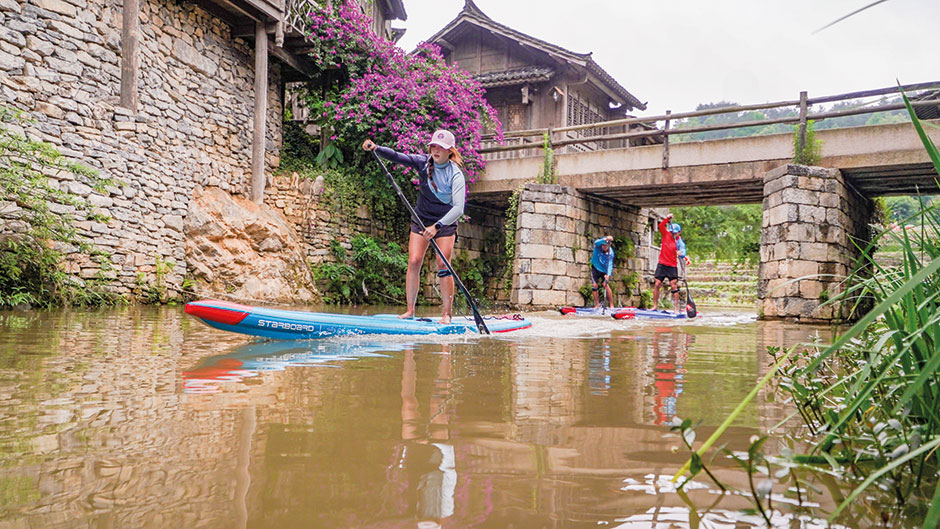
There’s no substitute for time on the water, and the best way to improve is to take on conditions a little more challenging than comfortable. In situations where rough water isn’t available, balance on a SUP can be challenged in numerous ways, like paddling standing on one side of the board, paddling on the nose, or on one foot. Don’t remain planted in the central position: movement is key to becoming a better paddler.
Training ‘hard’ doesn’t just mean volume and intensity of paddling. It means taking on ‘hard’ conditions that help develop efficient paddling techniques while boosting paddling strength. The skills honed on the difficult days unlock exciting paddling on the days when many others are seeking shelter indoors. Remember, falling in is part of improving; if you never fall, you’re definitely not trying hard enough!


great article, gives me the boost I need during the dark winter months to get out on my board.
LikeLiked by 1 person